
August 13, 2026 at 07:10 AM 2 min readindiaanalysis
The Growing Policy Debate Over Scaling UPI Without Transaction Fees
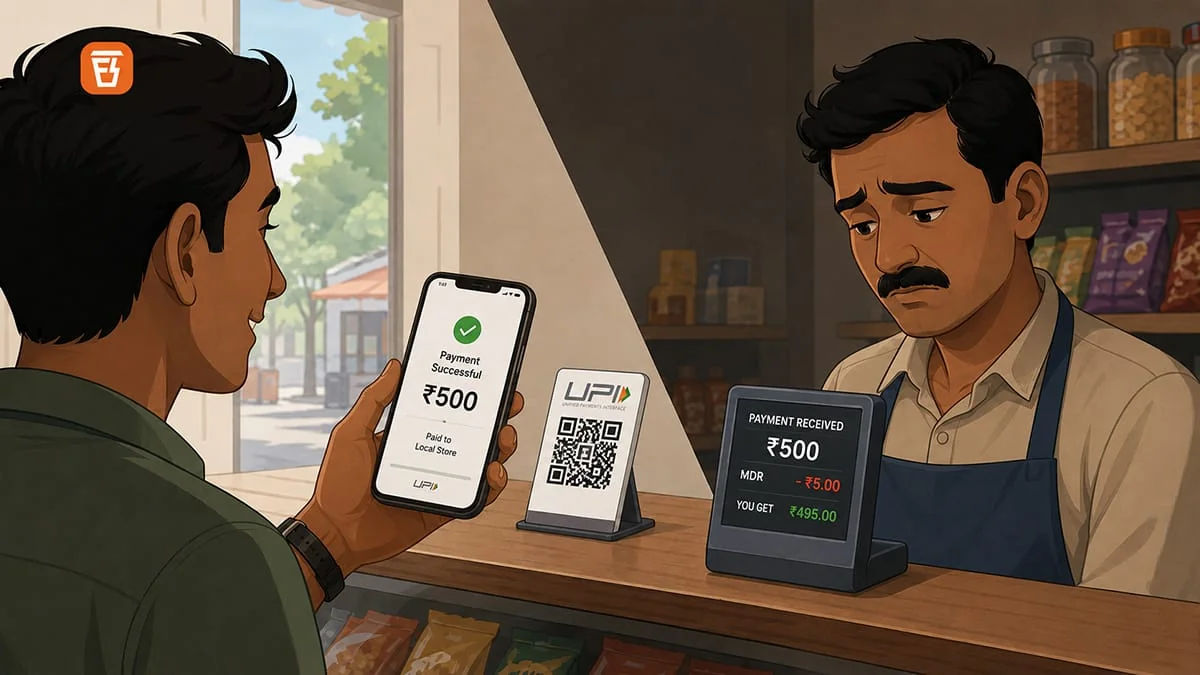
UPI Scaling Challenges:
The rapid proliferation of the Unified Payments Interface in India has ignited a complex debate regarding its long-term financial sustainability. As the system scales to handle billions of transactions, stakeholders are increasingly questioning the feasibility of maintaining a zero-merchant discount rate model. Experts argue that while free transactions have fueled widespread adoption, the operational costs for banks and payment service providers continue to rise, necessitating a move toward a more sustainable, calibrated fee structure.
Policy and Economic Considerations:
The push for a calibrated merchant discount rate on high-value transactions comes from a parliamentary panel concerned about the burden on banking infrastructure. Critics of the current model highlight that the lack of transaction fees leaves little room for innovation and security enhancements within the digital payments space. Proponents of the current fee-free regime maintain that it is essential for driving financial inclusion and digitizing the informal economy, arguing that any introduction of charges could severely dampen consumer trust and usage levels.
Future Market Impact:
The resolution of this debate will define the next phase of India's digital payment growth. If a balanced fee structure is implemented, it could stabilize the ecosystem for payment providers while potentially slowing the blistering pace of transaction volume growth. Market analysts suggest that policymakers will likely seek a middle ground, favoring nominal charges for large corporate transactions while keeping small-scale peer-to-peer transfers free, thereby protecting the core base of the digital economy.
Pulse Intelligence
Context & ImpactContext & Background
- The Unified Payments Interface has been a cornerstone of India's digital public infrastructure, achieving record-breaking adoption since its launch.
- Previous discussions regarding the introduction of merchant fees on UPI transactions have faced significant pushback from political and consumer groups.
Key Consequences
- A shift toward a calibrated fee structure could improve margins for payment service providers but might face significant resistance from merchants.
- Government policy will likely prioritize balancing financial inclusion with the operational sustainability of the digital payment infrastructure.
- Financial institutions may increase their lobbying efforts to secure a more sustainable fee model for high-value commercial UPI transactions.
Market & Economic Impact
Implementing transaction fees could impact the profitability of major Indian payment aggregators and fintech companies listed on the exchanges.
The Indus Pulse is committed to accuracy and transparency.