
21 Aug 2026, 06:10 AM 2 min readworldbreaking
Trump Threatens Total Economic Isolation for Iran Trade Partners
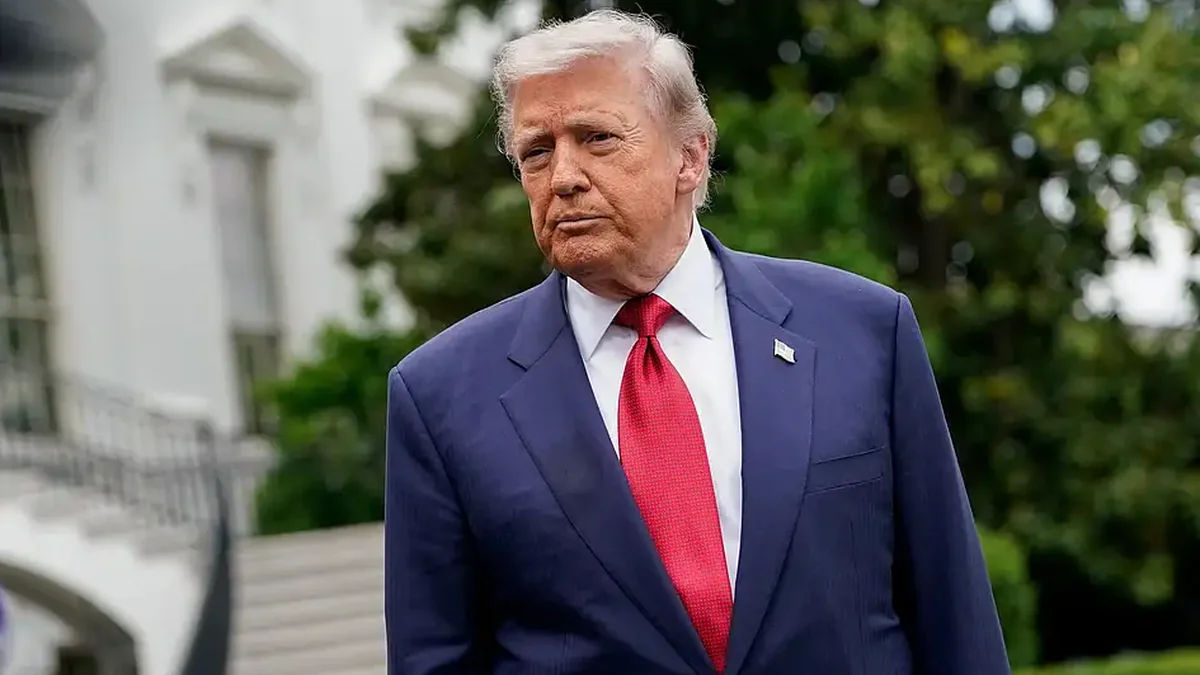
Proposed Economic Warfare:
Former U.S. President Donald Trump has unveiled an aggressive campaign to force total economic isolation on Iran, characterizing the initiative as an 'economic D-Day.' The strategy involves threatening severe financial and secondary sanctions against any nation, business, or institution that continues to provide financial lifelines or maintains trade relations with Tehran. Officials, including Treasury Secretary Scott Bessent and Vice President JD Vance, have signaled that this policy replaces previous military-focused approaches, which they assess have reached the limit of their strategic effectiveness, shifting the pressure to naval blockades in the Strait of Hormuz and absolute trade restrictions.
Escalating Regional Volatility:
This move occurs as the Middle East nears a six-month mark of intense instability. Tensions have been further inflamed by reports from the United Arab Emirates claiming that Iran launched two ballistic missiles at its territory. While Tehran has publicly dismissed Trump’s threats as domestic political theater and 'economic terrorism,' the proposed U.S. sanctions present a significant escalation. Global observers note that Iran's navy and air force remain under sustained pressure, yet Tehran maintains that its internal networks are resilient enough to bypass unilateral U.S. actions and deepen strategic economic ties with partners like China.
Global Trade and Diplomatic Fallout:
The proposed sanctions create massive compliance risks for global businesses and energy markets. Countries like India now face a delicate diplomatic balancing act, having to reconcile vital energy procurement and regional connectivity projects—such as the strategic Chabahar Port—with strict U.S. compliance requirements. Analysts warn that these trade barriers could lead to increased energy price volatility and retaliatory measures from Iran. Global corporations are currently evaluating their supply chain exposure, as Washington indicates a willingness to impose severe consequences on any entity that does not fully comply with the new isolationist measures.
Pulse Intelligence
Context & ImpactContext & Background
- The Middle East has experienced six months of intense military tension, impacting maritime security in the Strait of Hormuz.
- U.S.-Iran relations remain at a historical low, stemming from the 2018 withdrawal from the JCPOA and subsequent maximum pressure campaigns.
- India maintains a complex strategic position, balancing the use of Iran's Chabahar Port for regional connectivity against adherence to U.S. sanctions.
Key Consequences
- International shipping and financial institutions face heightened compliance risks and potential secondary sanctions for trade with Iranian entities.
- Energy markets are expected to see increased price volatility due to potential supply chain disruptions and restricted Iranian oil exports.
- Countries caught in the diplomatic crossfire may be forced to scale back or delay critical infrastructure investments in Iranian projects.
Market & Economic Impact
Energy and logistics sectors face immediate volatility as global investors price in the risk of renewed trade barriers and supply chain disruptions.
The Indus Pulse is committed to accuracy and transparency.