
August 17, 2026 at 11:39 AM 2 min readworldbreaking
Trump Orders Pentagon to Reduce South Korea Joint Military Drills
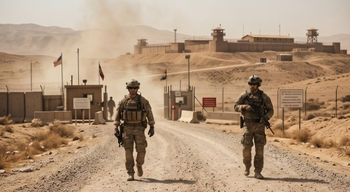
Pentagon Military Directive:
President Donald Trump has issued a formal directive to the Department of Defense to scale back joint military exercises conducted alongside South Korean forces. This strategic shift follows recent friction regarding regional alliances and international security commitments. The reduction specifically targets the intensity and frequency of traditional maneuvers that have long served as a cornerstone of the bilateral defense partnership. Defense officials are currently evaluating the operational logistics required to downsize these activities while maintaining a defensive posture in the Korean Peninsula.
Strategic Regional Friction:
The decision stems from recent diplomatic disagreements regarding international conflicts, particularly Seoul’s decision to remain outside of the ongoing tensions in the Iran theater. The administration has reportedly expressed dissatisfaction with the lack of direct support from key regional partners during recent escalations. These military drills, which typically involve thousands of ground, air, and naval personnel, were designed to ensure rapid response capabilities against northern aggression. The current recalibration reflects a broader push to re-evaluate the cost-benefit analysis of US military deployments abroad in favor of a more selective engagement strategy.
Geopolitical Security Implications:
The scaling back of these exercises raises immediate concerns among regional stakeholders about the long-term integrity of the US-South Korea security alliance. Analysts suggest that a diminished joint presence could potentially embolden regional adversaries who monitor these exercises as a measure of US commitment. For India, the development is significant as it highlights the volatile nature of established security pacts under current shifting global priorities. Maintaining regional stability remains a critical concern for New Delhi, as any power vacuum in the Indo-Pacific could influence regional trade routes and security architectures in the coming months.
Pulse Intelligence
Context & ImpactContext & Background
- The US and South Korea have historically conducted large-scale joint military exercises as a primary deterrent against North Korean nuclear and conventional threats.
- Recent diplomatic tensions have strained the bilateral relationship between Washington and Seoul, particularly regarding burden-sharing and international defense contributions.
Key Consequences
- A reduction in joint maneuvers may significantly diminish the readiness levels of combined forces stationed in the region.
- Regional adversaries are likely to interpret the scaling back of exercises as a potential weakening of US military resolve in the Indo-Pacific.
- South Korea will likely seek alternative security arrangements or increase domestic defense spending to compensate for the perceived gap in US support.
Market & Economic Impact
The move introduces geopolitical risk premiums, potentially causing fluctuations in Asian equity markets and affecting defense-related stocks.
The Indus Pulse is committed to accuracy and transparency.