
August 12, 2026 at 09:42 AM 2 min readworldbreaking
Europe Gears Up for Total Solar Eclipse
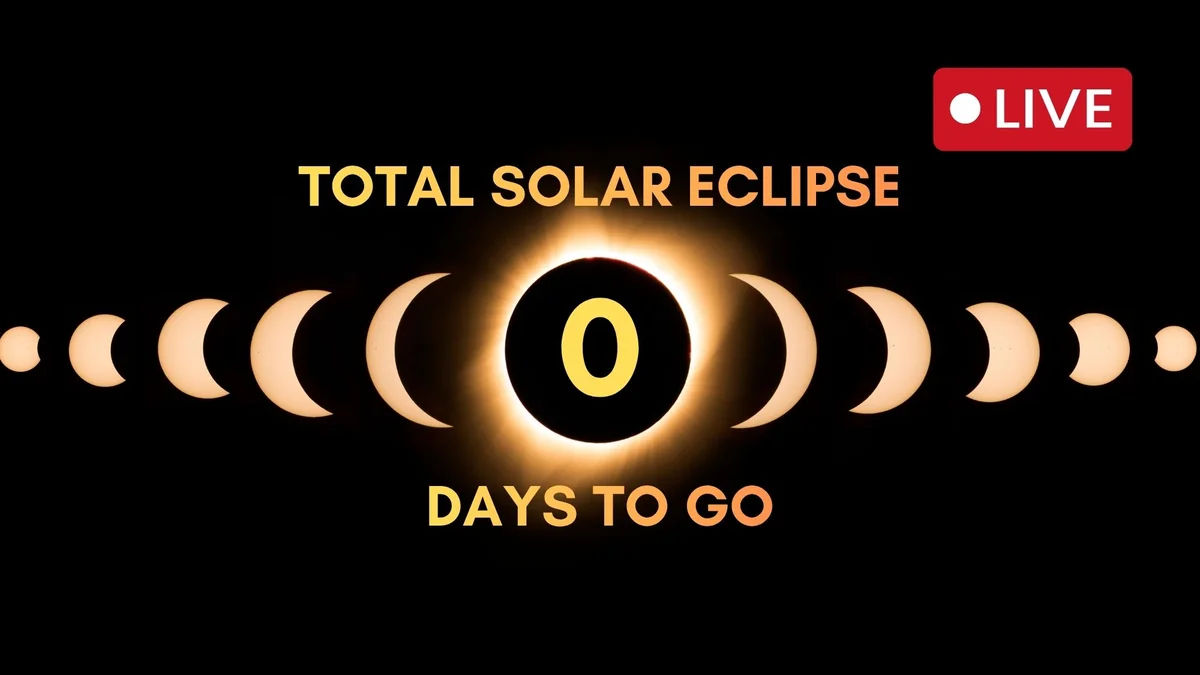
Total Solar Eclipse Coverage:
Europe is preparing for a major celestial event today, August 12, 2026, as a total solar eclipse sweeps across parts of the continent. Millions of viewers across regions including the UK and various European countries are expected to witness the moon obscuring the sun in a rare event often described as once-in-a-generation. Scientific organizations and space agencies have provided extensive live updates to ensure that the public can safely observe the event, which marks a significant highlight for both astronomy enthusiasts and the general public.
Visibility and Observation:
While the total eclipse follows a specific path of totality, partial phases are visible across a much broader region. Authorities have emphasized the importance of using certified solar viewing glasses to prevent eye damage. The European Space Agency and other astronomical bodies have coordinated live-streamed content, allowing individuals who are outside the path of totality to observe the progress of the moon across the sun’s disc in real-time. The event has drawn significant interest from international media and local communities alike.
India Perspective:
Although the total solar eclipse is a landmark event for Europe, its visibility remains limited for the Indian subcontinent. Scientific reports confirm that the path of totality does not extend over India, with local astronomical observatories noting that no direct solar darkening will be observable from the region. The event underscores the global interest in celestial mechanics and the importance of international scientific collaboration in predicting and sharing data on such rare phenomena. For observers in India, the eclipse serves primarily as a digital educational opportunity through global live-streamed coverage.
Pulse Intelligence
Context & ImpactContext & Background
- Total solar eclipses occur when the moon perfectly aligns between the Earth and the sun, casting a shadow on the planet.
- Major astronomical events are tracked years in advance, allowing for massive public outreach and safety planning by space agencies.
Key Consequences
- Millions of people across Europe are provided with a rare educational and observational experience.
- Public interest in astronomy and space science is expected to see a temporary spike following the event.
- Global media coverage of the eclipse highlights the necessity of safe viewing practices for the public.
Market & Economic Impact
No direct market impact.
The Indus Pulse is committed to accuracy and transparency.