
20 Aug 2026, 01:05 PM 2 min readindiaanalysis
Supreme Court Upholds Broad 'Industry' Definition in Landmark Ruling
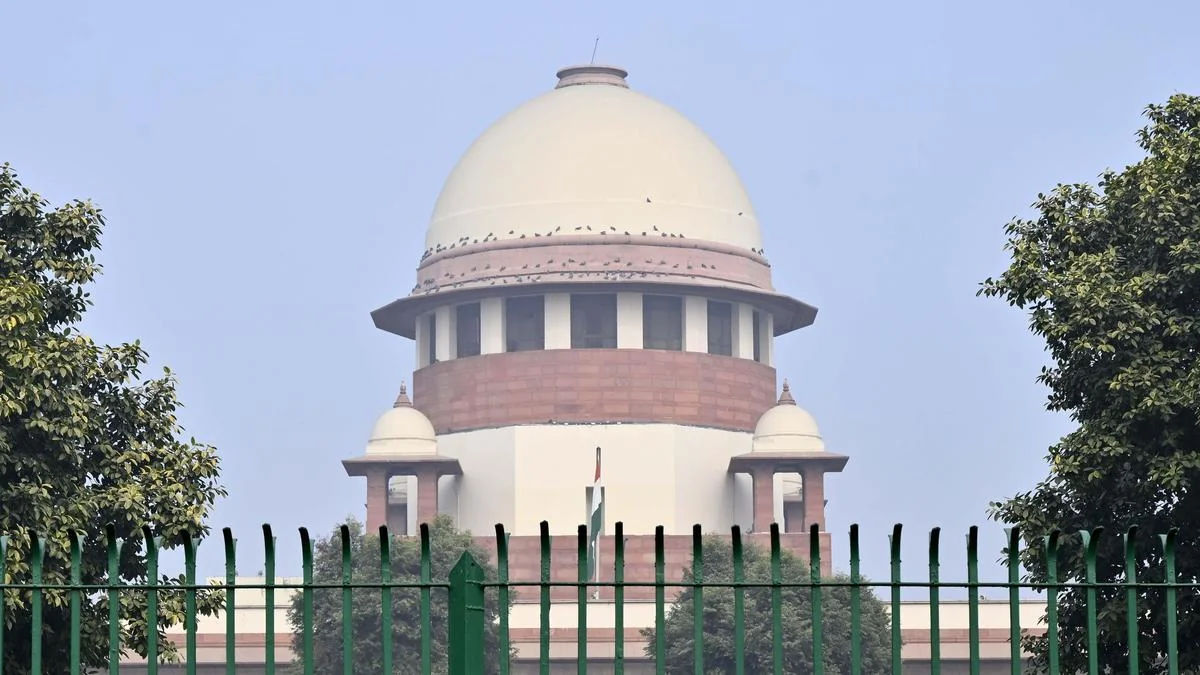
Judicial Precedent Upheld:
A nine-judge Constitution Bench of the Supreme Court has ruled that the expansive definition of "industry" established in the 1978 Bangalore Water Supply case remains valid for pending disputes. This landmark interpretation, originally authored by Justice V.R. Krishna Iyer, utilizes a "triple test" to determine if an entity qualifies as an industry, focusing on systematic activity, cooperation between employer and employee, and the production of goods or services. The court clarified that this broad interpretation will continue to govern all industrial disputes that were initiated before the implementation of the Industrial Relations Code, 2020.
Legal Evolution and Challenges:
The ruling addresses decades of legal ambiguity regarding which organizations fall under labor law protections. Over the years, various institutions, including hospitals, educational bodies, and charitable trusts, have challenged their classification as industries to avoid the stringent requirements of the Industrial Disputes Act. However, the nine-judge bench emphasized that the 1978 judgment provided a necessary and correct interpretation that protects workers' rights across diverse sectors. This decision effectively ends the uncertainty surrounding several thousand pending cases in various labor courts and High Commissions across India.
Impact on Industrial Relations:
This clarification ensures that workers in organizations previously caught in legal limbo will retain their status and protections under existing labor laws. While the Industrial Relations Code, 2020, eventually introduces a newer statutory definition, the Supreme Court's insistence on the 1978 precedent for older cases prevents a legal vacuum. For the Indian industrial landscape, this means that employers must continue to adhere to established labor standards for all ongoing litigation. The decision reinforces the judiciary's commitment to maintaining historical labor protections during the transition to newer legislative frameworks.
Pulse Intelligence
Context & ImpactContext & Background
- The 1978 Bangalore Water Supply vs. A. Rajappa case significantly expanded the scope of labor laws by defining almost all systematic activities as 'industries'.
- The Industrial Relations Code, 2020, was passed by Parliament to consolidate and simplify labor laws but has seen staggered implementation.
Key Consequences
- Thousands of pending labor court cases will now proceed under the established 1978 legal framework.
- Charitable and educational institutions currently in litigation will likely remain classified as 'industries' for those specific disputes.
Market & Economic Impact
Provides legal clarity for corporations with long-standing labor disputes, allowing for more accurate provisioning of potential legal liabilities.
The Indus Pulse is committed to accuracy and transparency.