
1 Sept 2026, 11:02 AM 4 min readindiabreaking
Supreme Court Justice Ujjal Bhuyan Questions Non-Appointment of Distinguished Jurists for 76 Years
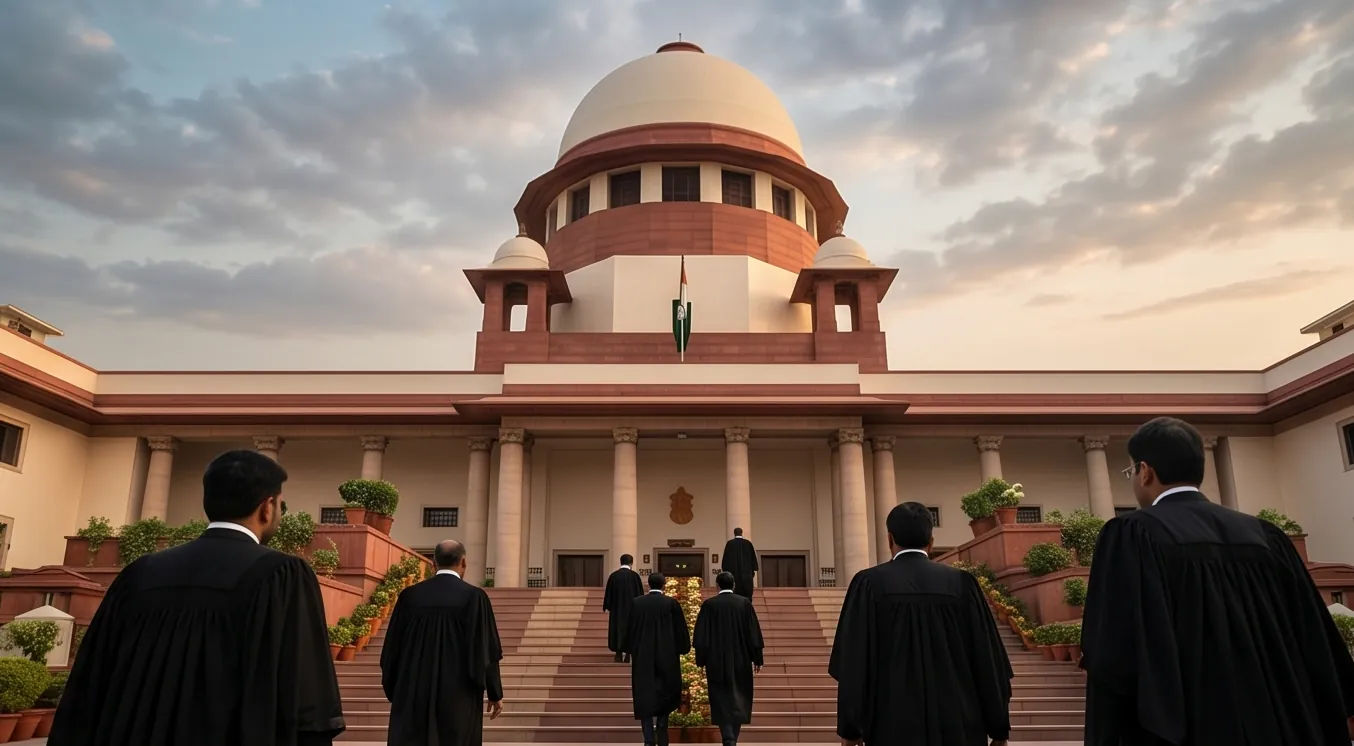
Supreme Court Justice Ujjal Bhuyan questioned why the constitutional provision allowing for the appointment of a distinguished jurist as a Supreme Court judge has remained unused for over 76 years, according to his address delivered on Sunday, August 30, 2026. Speaking during the 13th convocation address for the LL.M. programs at National Law University Delhi, Justice Bhuyan drew attention to an overlooked mandate within the founding document of the Indian republic.
## Article 124(3) and Constitutional History
Article 124(3) of the Indian Constitution permits the appointment of a person who is, in the opinion of the President, a distinguished jurist as a Supreme Court judge, per official constitutional texts. Historically, the Supreme Court has been staffed exclusively by judges elevated from High Courts or lawyers appointed directly from the Bar.
The distinguished jurist clause was added during the Constituent Assembly debates on May 24, 1949, following an amendment introduced by H.V. Kamath, aiming to broaden the pool of eligible candidates to include individuals with outstanding legal and juristic learning, according to assembly records. During those same debates, M. Ananthasayanam Ayyangar supported the inclusion, citing the appointment of a Harvard law professor to the United States Supreme Court.
## Justice Bhuyan's Remarks on Unused Mandates
In his convocation address, Justice Ujjal Bhuyan stated, 'No jurist has been appointed so far to the Supreme Court, though the Constitution has completed more than 76 years. It is regrettable that this provision has remained one of our Constitution's unused mandates.'
Justice Bhuyan suggested two primary reasons for this non-use. First, he pointed to a perception of insufficient depth in Indian academia for elevation. Second, he noted that neither the Central Government nor the Supreme Court Collegium has seriously explored this provision, according to his public lecture.
## Addressing Practical Experience Arguments
Justice Bhuyan argued that jurists could bring significant value and academic scholarship to the Bench. He dismissed the argument about a lack of practical courtroom experience among academics as very shallow, noting similar appointments in countries like the United States, United Kingdom, Canada, and Kenya, per his address.
The historical inaction by the Central Government and the Collegium, along with the argument that academics lack practical courtroom experience, represent the prevailing counter-arguments to appointing jurists, according to legal observers and historical institutional patterns. Furthermore, the constitutional provision does not define what constitutes a distinguished jurist or prescribe a minimum period of professional experience for such a person, leaving the standard open to interpretation.
## Downstream Impact on Legal Academia
For the Indian judiciary and legal academia, this debate could lead to a re-evaluation of appointment processes, potentially diversifying the Supreme Court bench with academic expertise and enriching constitutional jurisprudence, according to institutional assessments by National Law University faculty. Justice Bhuyan concluded his address by urging the legal fraternity to recognize academic contributions to the evolution of law.
The Indus Pulse is committed to accuracy and transparency.