
Tech Desk July 19, 2026 at 11:08 AM 2 min readtechbreaking
Skyroot Aerospace Launches Vikram-1, Marking India's First Private Orbital Mission
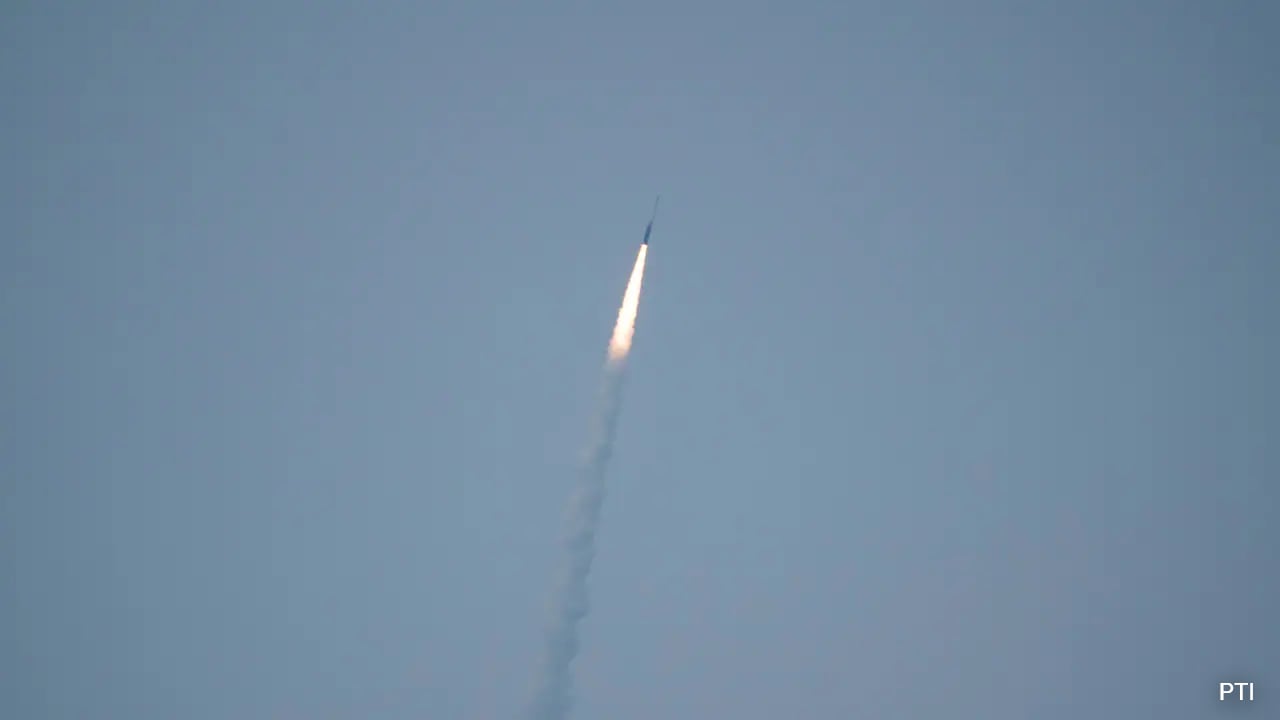
Historic Private Sector Success:
Hyderabad-based startup Skyroot Aerospace has achieved a landmark milestone with the successful orbital launch of its Vikram-1 rocket from the Satish Dhawan Space Centre in Sriharikota. Named 'Aagaman', this mission successfully deployed multiple customer payloads into a 450-kilometer low-Earth orbit. Prime Minister Narendra Modi hailed the achievement, noting that India now joins an elite group of nations—alongside the United States and China—that possess domestic, private-sector orbital launch capabilities. The mission featured a lab-grown diamond and a miniature gold sculpture, representing a fusion of traditional heritage and modern space innovation.
Advanced Engineering Milestones:
The Vikram-1 is a highly sophisticated four-stage vehicle designed for cost-efficiency and performance. It features a carbon composite body, 3D-printed engines, and a combination of 'Kalam' solid fuel motors and 'Raman' liquid propellant stages for high orbital precision. This successful flight provides vital validation for Skyroot's in-house avionics, guidance systems, and propulsion technology. The mission is the culmination of years of R&D, serving as a critical test for independent private space flight in India following the company's previous sub-orbital flight test of the Vikram-S rocket in 2022.
Future Industry Impact:
This success marks a turning point for India's space economy, which has been rapidly deregulated to encourage private innovation through the IN-SPACe framework. By lowering barriers for satellite deployment, Skyroot is positioning itself as a global competitor in the cost-effective small satellite launch market. While the launch represents a massive strategic boost, the company now faces the operational challenge of scaling its business model to meet future commercial demand. Analysts expect this milestone to trigger increased interest from global investors in the broader Indian deep-tech startup ecosystem.
Pulse Intelligence
Context & ImpactContext & Background
- The Indian government established IN-SPACe to deregulate the space sector and facilitate private enterprise innovation.
- Skyroot previously conducted a sub-orbital test flight with the Vikram-S rocket in 2022.
- India gained significant global recognition for its space program after the successful Chandrayaan-3 mission to the lunar south pole in 2023.
Key Consequences
- Skyroot is expected to announce a roadmap for more frequent, commercial small-satellite launch services for global clients.
- The success will likely draw significant interest from global investors, building on the company's existing multi-million dollar valuation.
- The achievement provides a scalable framework for future private-sector orbital missions originating from Indian soil.
Market & Economic Impact
The success boosts the valuation of Indian private space startups and signals a growing deep-tech economy.