
Markets Desk July 15, 2026 at 10:16 AM 2 min readmarkets
Sensex And Nifty Pare Early Gains As Global Volatility Weighs On Sentiment
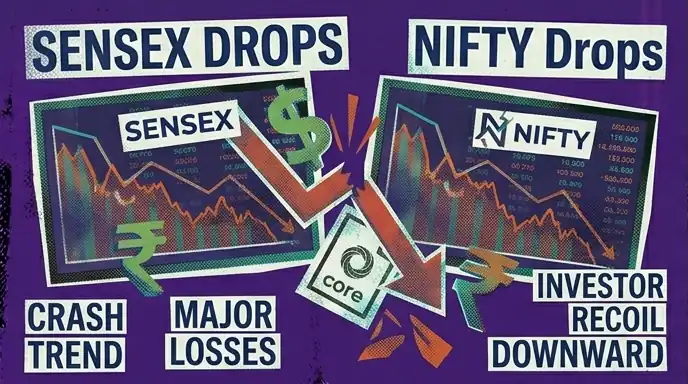
[Market Rebound Attempt]:
Indian benchmark indices attempted a recovery on Wednesday, July 15, 2026, following a sharp decline in the previous session. The market opened with optimism, buoyed by softer-than-expected US inflation data that eased concerns regarding aggressive Federal Reserve interest rate hikes. Early trade saw the Sensex and Nifty 50 advance, reflecting a positive global sentiment as Asian markets largely traded in the green.
[Mid-Day Momentum Shift]:
Despite the initial surge, gains moderated significantly as the session progressed. By midday, the Sensex was trading up by approximately 469 points, or 0.61%, at 77,524.15, while the Nifty 50 rose by approximately 128 points, or 0.53%, to 24,180.35. However, the momentum failed to sustain, with the Sensex trimming its gains to approximately 130 points and the Nifty 50 ending the day nearly flat, reflecting underlying caution among investors.
[Sectoral Divergence]:
Financial stocks, including Bajaj Finance, Axis Bank, and State Bank of India, led the early gains, supported by strength in private and PSU banks. Conversely, technology and metal sectors faced selling pressure, with major laggards including Infosys, TCS, and Hindalco. Foreign Institutional Investors remained net sellers, offloading equities worth approximately ₹739.69 crore on Tuesday, while Domestic Institutional Investors provided support by purchasing equities worth approximately ₹2,927.71 crore.
Pulse Intelligence
Context & ImpactContext & Background
- On July 14, 2026, the BSE Sensex dropped approximately 561 points, or 0.72%, to settle at 77,054.94.
- The NSE Nifty 50 fell approximately 158 points, or 0.66%, to close at 24,052.05 on the previous trading day.
- Brent crude prices have climbed above $85 per barrel due to renewed tensions in West Asia.
Key Consequences
- Persistent high crude oil prices may continue to pressure the Indian Rupee and increase import costs.
- Investors are likely to remain cautious until clarity emerges on the geopolitical situation in West Asia.
- Sectoral rotation from technology to financial services may persist if global interest rate expectations remain volatile.
Market & Economic Impact
Market sentiment remains fragile as domestic buying struggles to offset persistent FII outflows and global energy price risks.