
31 Aug 2026, 01:27 PM 6 min readindiaanalysis
Supreme Court's Stark Warning: India's Justice System and the Peril of Selective Prosecution
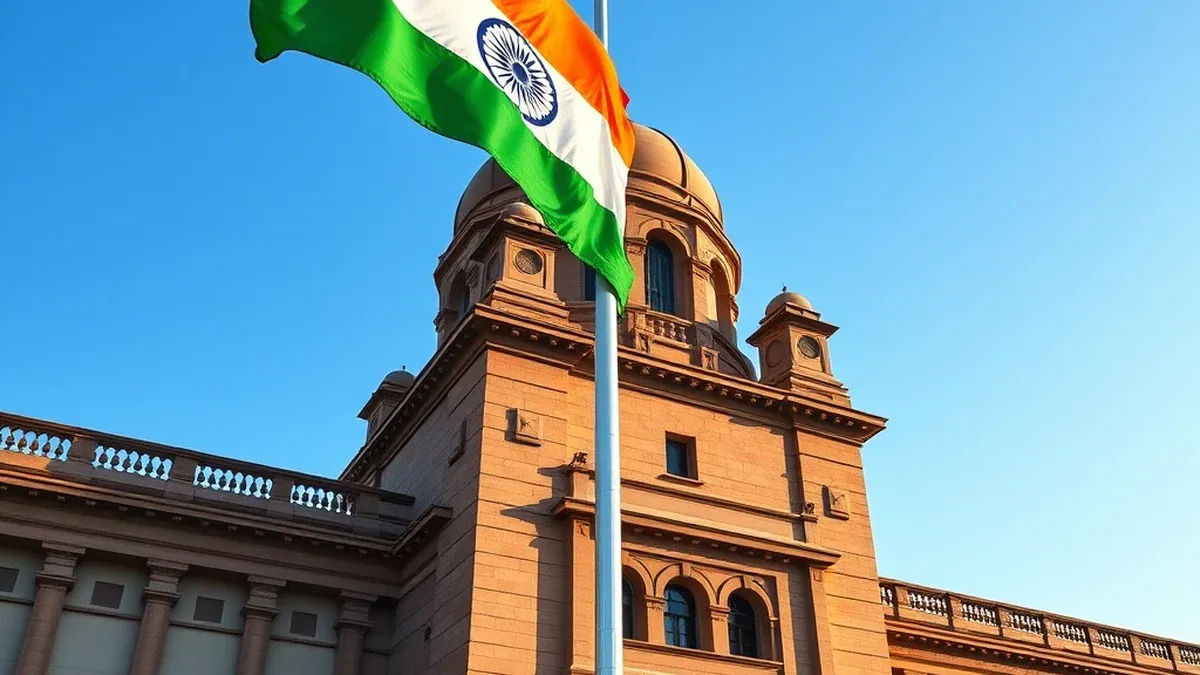
The Supreme Court of India recently delivered a pointed observation, highlighting a deeply entrenched malaise within the nation's investigative framework: a discernible tendency for probe agencies to move with glacial speed when scrutinising the powerful, yet exhibit swift, often aggressive, action against common citizens. This judicial pronouncement is not merely a passing remark; it is a stark indictment of a systemic imbalance that erodes the foundational principle of equality before the law and threatens the very bedrock of public trust in India's democratic institutions.
## The Deep Roots of Differential Justice
The Supreme Court's concern resonates with a long-standing public perception that justice in India is not uniformly applied. This perception stems from a complex interplay of systemic vulnerabilities and historical precedents. At its core, the issue is about the autonomy of premier investigative agencies like the Central Bureau of Investigation (CBI) and the Enforcement Directorate (ED). While these agencies are tasked with upholding the rule of law, their operational independence has frequently been questioned, leading to allegations of political influence and selective targeting.
The CBI, though established by a Government of India resolution in 1963 and deriving its powers from the Delhi Special Police Establishment (DSPE) Act, 1946, is not a statutory body in the strictest sense. This structural characteristic has historically rendered it susceptible to executive control, famously earning it the moniker of a 'caged parrot' from the Supreme Court itself. The ED, a statutory body under the Department of Revenue, Ministry of Finance, enforces crucial legislation like the Prevention of Money Laundering Act (PMLA), 2002, the Foreign Exchange Management Act (FEMA), 1999, and the Fugitive Economic Offenders Act (FEOA), 2018. Its extensive powers under PMLA, including search, seizure, and arrest without a prior First Information Report (FIR), have often been at the centre of debates regarding potential misuse.
One of the primary systemic drivers of this differential application of justice is the appointment and tenure of agency heads. The government's power to extend the tenures of CBI and ED directors, particularly through an ordinance in 2021 allowing for extensions up to five years, has drawn criticism. Critics argue that such extensions can foster an 'extension culture,' potentially compromising the independence of these officials and making them amenable to executive directives.
## A Contested Landscape: Autonomy, Interference, and Reform
The debate surrounding the autonomy of investigative agencies is not new. Landmark judicial pronouncements and expert committee recommendations have consistently sought to insulate these bodies from political interference. The *Vineet Narain v. Union of India* judgment (1997-98) was a watershed moment, mandating measures to ensure CBI's insulation, including oversight by the Central Vigilance Commission (CVC). The Prakash Singh judgment (2006) laid down principles for police reforms, advocating for functional autonomy and fixed tenures, which are equally relevant to federal agencies.
Further, the Second Administrative Reforms Commission (ARC) Report (2007) suggested a collegium comprising the Prime Minister, Home Minister, Leader of Opposition, and Chief Justice of India for the appointment of the CBI Director to ensure bipartisan representation. The National Commission to Review the Working of the Constitution (NCRWC) (2002) went further, proposing constitutional status for critical accountability institutions to safeguard their independence. Despite these recommendations, the structural and functional deficiencies persist, leading to a recurring 'core conflict' between agency autonomy and executive control.
Recent years have seen this conflict play out in various high-profile cases. The Supreme Court, in 2023, upheld tenure extensions for agency chiefs but flagged their potential for misuse. In 2024, it reaffirmed CBI's superintendence under the Union but stressed the need for safeguards. A 2026 ruling, in the context of an ED-West Bengal dispute, saw the apex court pausing state FIRs against ED officials, underscoring the importance of investigative integrity and cautioning against actions that could lead to 'lawlessness.' These instances highlight the judiciary's ongoing vigilance, even as it navigates the delicate balance of not usurping the executive domain.
Stakeholders often contest the very nature of 'interference.' While the executive maintains that agencies function autonomously, opposition parties and civil society groups frequently allege that investigations are weaponised against political adversaries, while cases involving ruling party members or allies languish. This selective prosecution, whether real or perceived, directly breaches the constitutional guarantee of equality before the law (Article 14) and undermines the due process enshrined in Article 21.
## Implications for Public Trust and Governance
The Supreme Court's observation carries profound implications for public trust in India's democratic institutions. When citizens perceive that the legal system is biased, that influential individuals receive preferential treatment, or that justice is not applied equally, their faith in the judiciary and law enforcement agencies diminishes significantly. This erosion of trust can lead to cynicism, disengagement, and a reluctance to seek formal justice, pushing people towards informal dispute resolution mechanisms.
For governance, selective justice creates an unequal playing field, fostering an environment where accountability is seen as negotiable for the powerful. This can embolden those in positions of authority to act with impunity, knowing that the wheels of justice might turn slowly, if at all, for them. It also impacts investor confidence, as a robust and impartial rule of law is a cornerstone for a stable business environment. A system where legal outcomes are perceived to be influenced by power or status, rather than merit, can deter investment and hinder economic growth.
## Charting a Path Forward: Essential Reforms
Ensuring the equitable application of justice requires comprehensive legal and institutional reforms. These reforms must focus on enhancing the independence, integrity, and accountability of investigative agencies:
*
Statutory Independence:
Granting statutory, or even constitutional, status to agencies like the CBI would provide a more robust legal foundation, insulating them from executive whims and making them less susceptible to changes aligned with the executive's interests.
*
Bipartisan Appointment Mechanisms:
Replicating the collegium model, which includes the Chief Justice of India, Prime Minister, and Leader of Opposition, for the appointment of directors of both CBI and ED, would foster bipartisan consensus and curb partisanship.
*
Fixed and Non-Extendable Tenures:
Implementing fixed, non-extendable tenures for agency heads would prevent the 'extension culture' and reduce the potential for executive leverage.
*
Financial Autonomy:
Providing direct parliamentary budgetary allocation, rather than making agencies dependent on ministerial funding, would enhance their financial independence.
*
Separation of Investigation and Prosecution:
As recommended by the Malimath Committee (2003), separating the investigation and prosecution wings can improve accountability and reduce conflicts of interest.
*
Enhanced Oversight:
Establishing an independent oversight body, potentially with retired judges or citizens, to monitor high-profile cases and ensure transparency without interference, is crucial.
The Supreme Court's observation serves as a critical reminder that the principle of 'justice for all' must remain sacrosanct. The path to restoring public faith and strengthening the rule of law lies in implementing structural reforms that ensure investigative agencies operate impartially, free from external pressures, and with unwavering commitment to the constitutional promise of equality. Only then can India truly uphold the integrity of its democratic institutions and ensure that justice is not just done, but is seen to be done, for every citizen, regardless of their station.
The Indus Pulse is committed to accuracy and transparency.