
August 16, 2026 at 01:35 PM 2 min readindiadeveloping
Supreme Court to Examine Facial Recognition Use on Protesters at Jantar Mantar
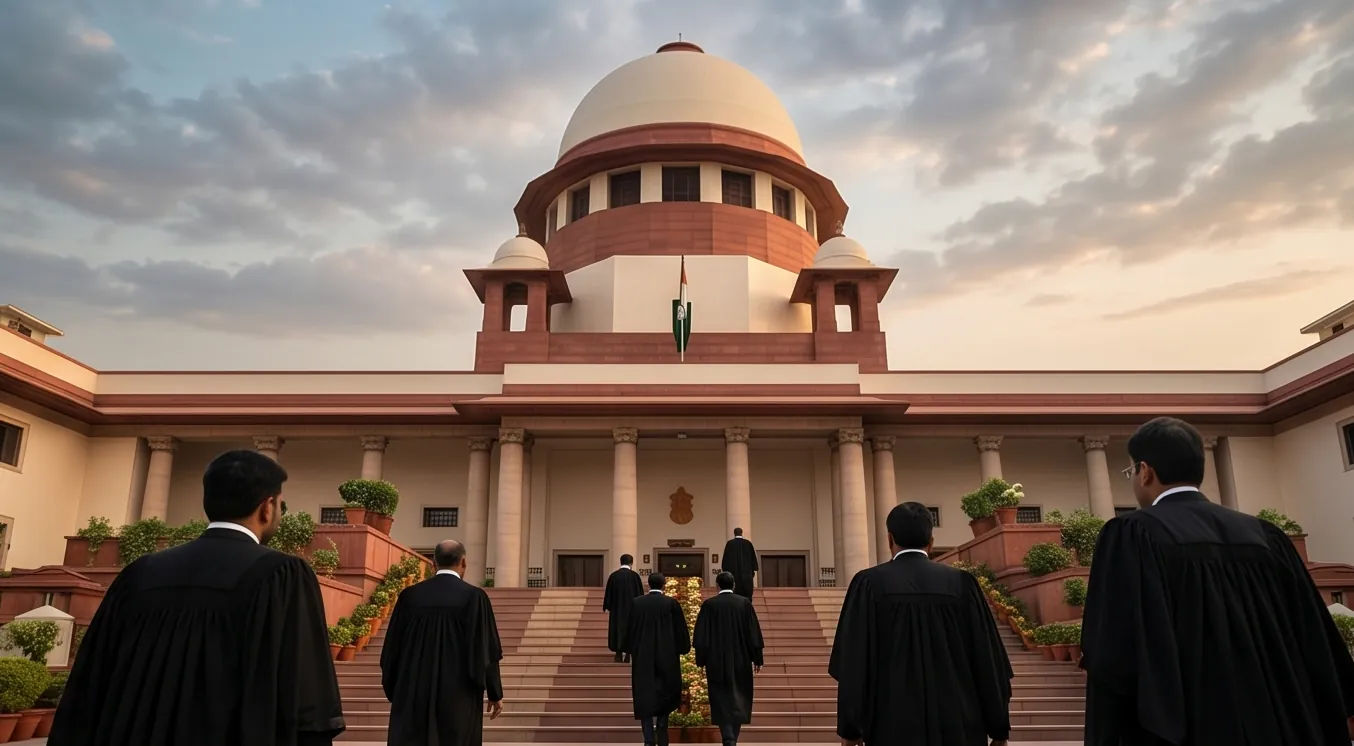
Supreme Court Surveillance Review:
The Supreme Court of India is set to examine a Public Interest Litigation (PIL) challenging the legality of facial recognition technology (FRT) used by law enforcement during protests. The plea, filed in the wake of demonstrations at Jantar Mantar, argues that the use of such biometric surveillance lacks a clear statutory framework. The court’s decision to hear this case marks a significant moment in the evolving legal discourse around privacy and digital rights in the country. This challenge specifically highlights concerns regarding the targeting of NEET-UG protesters by the Delhi Police.
Constitutional Void in Biometrics:
Legal experts and activists have raised alarms over the 'surveillance without statute' currently practiced in several Indian cities. The PIL contends that the Delhi Police’s reliance on facial recognition to identify and track protesters violates the fundamental right to privacy established by the landmark Puttaswamy judgment. Unlike many other democratic nations, India does not have a comprehensive law governing the collection and storage of biometric data by police forces. This legal vacuum has allowed for the rapid deployment of advanced tracking tools without adequate democratic oversight or accountability.
Future of Digital Privacy:
The outcome of this Supreme Court examination will likely set a major precedent for how technology is integrated into Indian policing. If the court mandates stricter regulations, it could force a significant overhaul of current surveillance practices and require the government to pass specific legislation for biometric tools. For the average citizen, this case represents a critical fight for the right to protest without fear of perpetual digital tracking. Observers are closely watching for the court's stance on whether administrative efficiency can justify the erosion of personal anonymity in public spaces.
Pulse Intelligence
Context & ImpactContext & Background
- The Delhi Police has increasingly deployed facial recognition systems to manage crowds and identify potential agitators during high-profile protests.
- The Right to Privacy was declared a fundamental right by the Supreme Court in 2017, but specific regulations for new-age surveillance tools remain pending.
Key Consequences
- A ruling against the government could halt the expansion of facial recognition projects across major Indian metropolitan areas.
- The Ministry of Home Affairs may be compelled to draft a national framework for the use of biometrics in law enforcement.
Market & Economic Impact
Uncertainty regarding the legal status of surveillance tech could impact contracts for domestic and international tech firms providing biometric solutions to the Indian government.
The Indus Pulse is committed to accuracy and transparency.