
21 Aug 2026, 07:10 PM 2 min readworlddeveloping
Pakistan Army Chief Munir Blames 'Foreign Proxies' For Balochistan Unrest
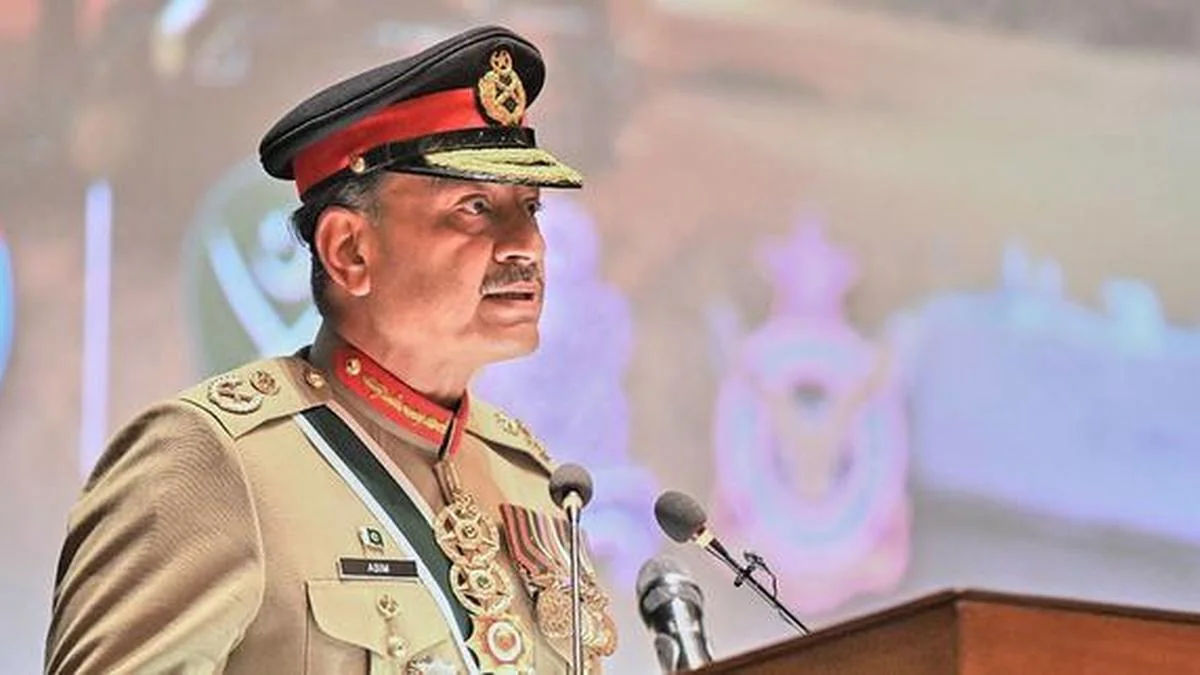
Official Stance on Balochistan Insurgency:
Pakistan Army Chief Field Marshal Syed Asim Munir addressed the ongoing instability in Balochistan on August 21, 2026, describing separatist militants as foreign-sponsored proxies. During a high-level interaction with regional leaders, Munir asserted that these groups are working to undermine the province's development and fracture the relationship between the local populace and the state. He emphasized that the destiny of the Baloch people is fundamentally linked to the future of Pakistan, rejecting the separatist agenda promoted by insurgent organizations.
Escalating Violence and Security Challenges:
The province has endured a series of lethal attacks, largely attributed to the outlawed Balochistan Liberation Army (BLA). The insurgency has targeted various government installations, security personnel, and infrastructure projects related to the China-Pakistan Economic Corridor (CPEC). Significant violence occurred throughout 2026, including a suicide bombing on a Quetta train in May that claimed 47 lives and a large-scale attack on a Ziarat checkpoint in July that resulted in 27 deaths. These events reflect a broader pattern of coordinated operations that have destabilized the region since early 2025.
Regional Implications and India Context:
Islamabad frequently accuses India of providing logistical and political support to Baloch separatist groups, a claim that New Delhi consistently denies. For India, the unrest in neighboring Balochistan is a significant security concern due to the strategic proximity to trade routes and the involvement of Chinese economic interests. As security forces intensify their operations, the focus remains on whether these tactical responses can restore stability or if the insurgency will continue to jeopardize regional infrastructure and bilateral diplomatic ties between Pakistan and its neighbors.
Pulse Intelligence
Context & ImpactContext & Background
- The Balochistan Liberation Army has been the primary group responsible for multiple large-scale attacks on security personnel and Chinese nationals since 2025.
- The province is a central hub for the China-Pakistan Economic Corridor, which has become a primary target for insurgent sabotage.
Key Consequences
- Security operations in Balochistan are expected to intensify in the coming weeks to neutralize suspected militant safe havens.
- Increased friction in diplomatic rhetoric between Pakistan and India is likely as both sides continue to trade accusations regarding regional interference.
- Foreign investment in infrastructure projects may face further delays due to heightened security risks and the volatile operating environment.
Market & Economic Impact
Continued security volatility in Balochistan may impact regional logistics and energy transit project timelines.
The Indus Pulse is committed to accuracy and transparency.