
August 15, 2026 at 05:19 AM 2 min readindiadeveloping
Omar Abdullah Criticizes Indus Water Treaty After Pakistan's Threats
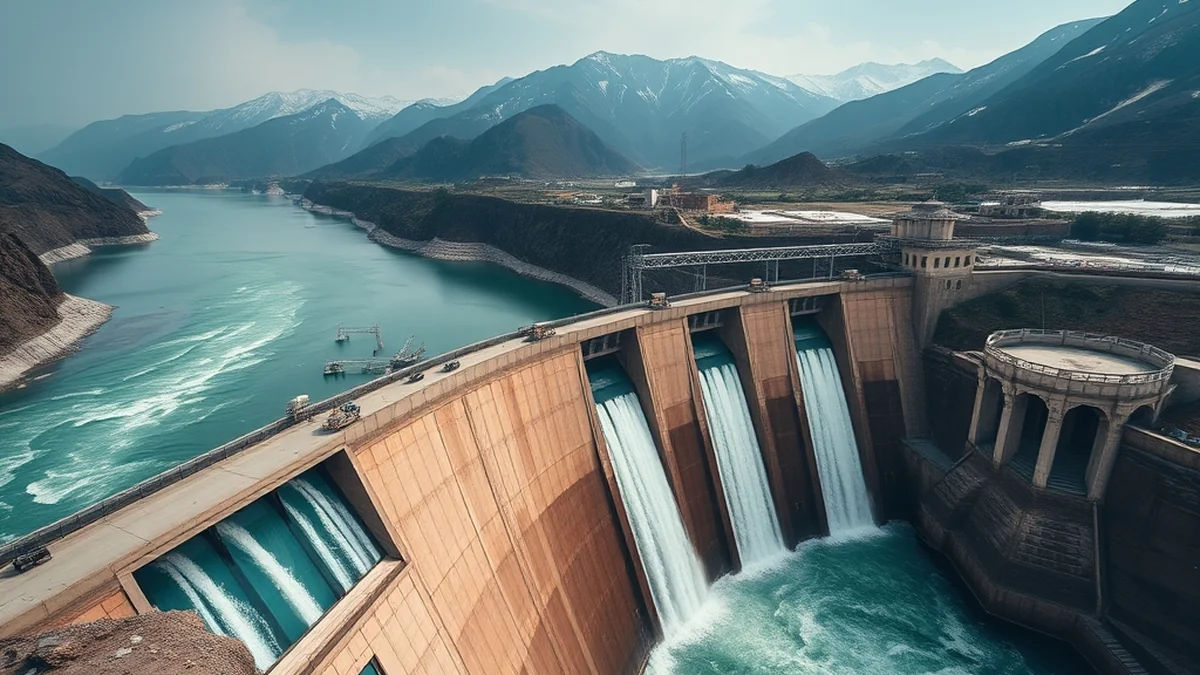
Geopolitical Water Dispute:
Jammu and Kashmir's Chief Minister has issued a scathing critique of the 1960 Indus Water Treaty (IWT), asserting that the agreement has sucked the blood of the region's economy. These comments were a direct rebuttal to Pakistani Prime Minister Shehbaz Sharif, who recently labeled water resources as a red line for his nation. The Chief Minister argued that the treaty severely restricts Jammu and Kashmir from utilizing its own rivers for critical hydroelectric power and irrigation projects, leading to billions of rupees in lost revenue for the Union Territory over the last six decades.
Historical Context and Restrictions:
Brokered by the World Bank, the IWT allocates the waters of the three eastern rivers—Ravi, Beas, and Sutlej—to India, while the three western rivers—Indus, Jhelum, and Chenab—are primarily for Pakistan's use. Although India maintains the right to non-consumptive usage of the western rivers, regional leaders in J&K have long contended that these specific limitations prevent the construction of large-scale storage reservoirs needed for energy security. Tensions have recently flared as the Indian government formally requested a review of the treaty, citing significant changes in regional demographics and climate patterns.
Regional Security Implications:
This sharp exchange signifies a hardening of India's diplomatic stance toward transboundary water sharing with its neighbor. The Chief Minister's call for the suspension or complete overhaul of the treaty reflects a growing domestic political consensus that J&K's development needs must take precedence over historical diplomatic compromises. Pakistan’s aggressive rhetoric suggests that water will remain a primary flashpoint in bilateral relations for years to come. For the average Indian, these developments signal a potential shift toward prioritizing domestic infrastructure on the western rivers to secure a stable energy future for Northern India.
Pulse Intelligence
Context & ImpactContext & Background
- The Indus Water Treaty has survived multiple wars between India and Pakistan but has faced increasing scrutiny from India.
- India recently issued a notice to Pakistan seeking to modify the treaty to reflect modern environmental and technical realities.
Key Consequences
- India may accelerate the construction of run-of-the-river hydroelectric projects on the Chenab and Jhelum rivers.
- Bilateral relations could deteriorate further if India unilaterally proceeds with water storage projects that Pakistan disputes.
Market & Economic Impact
Successful renegotiation or suspension of the treaty could unlock massive investment opportunities in the Indian power sector, particularly for PSU giants like NHPC.
The Indus Pulse is committed to accuracy and transparency.