
August 7, 2026 at 06:08 AM 2 min readautodeveloping
Ola Electric Pivots to Dealer Model as Market Share Slips
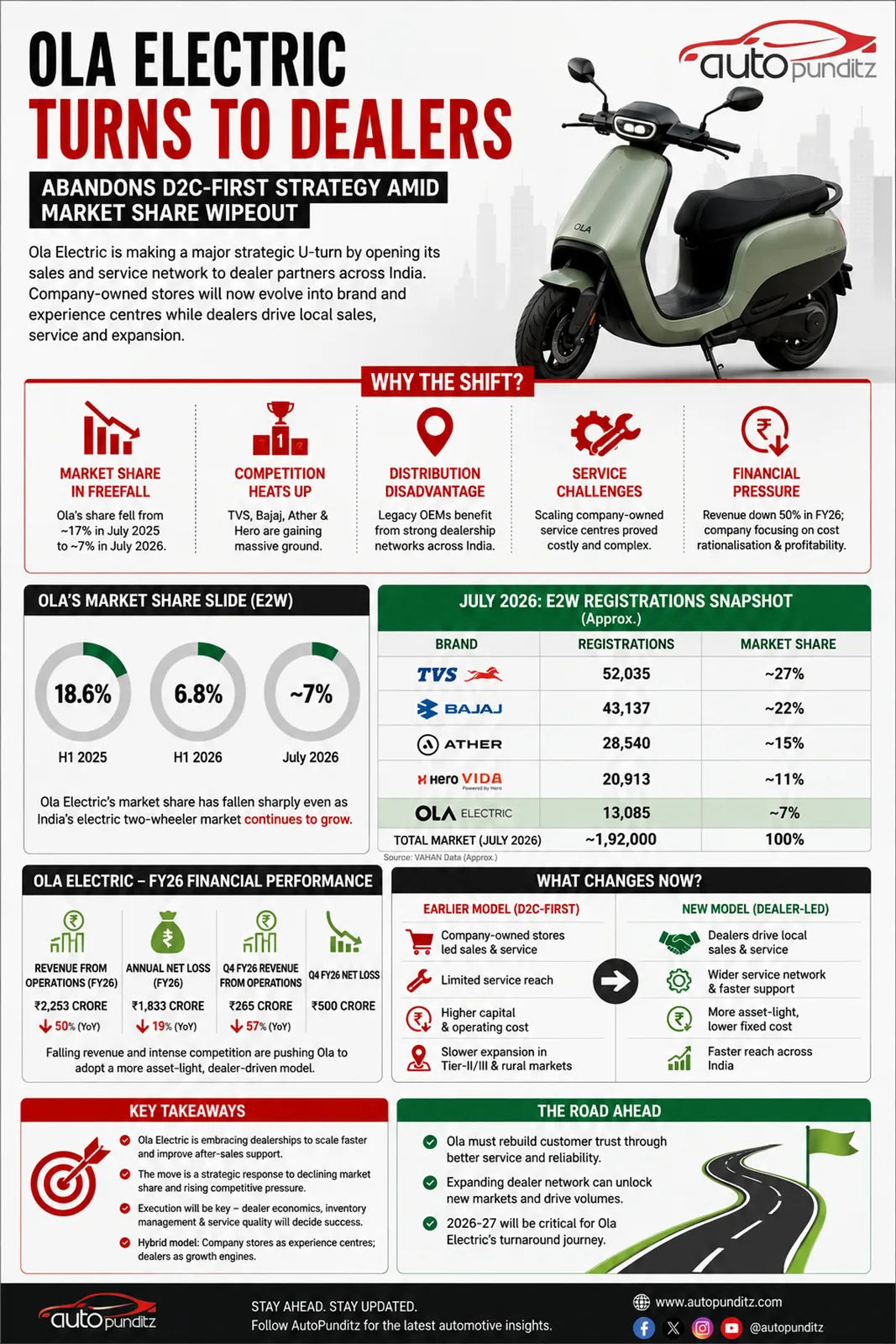
Shift to Dealership Network:
Ola Electric is undergoing a major structural shift by abandoning its direct-to-consumer (D2C) sales model in favour of traditional physical dealerships. This strategic pivot follows a decline in the company's electric scooter market share, which has reportedly slipped to approximately 7 percent. The transition aims to address consumer concerns regarding after-sales service accessibility and provide potential buyers with physical touchpoints for vehicle inspections and test rides, which were previously limited in the D2C framework.
Factors Behind the Pivot:
The D2C model, which initially drove rapid growth by bypassing traditional infrastructure, faced scalability challenges as the market matured. High volumes of customer grievances regarding service delays and the inability to physically inspect service quality contributed to stagnating sales. With competitors strengthening their offline presence across tier-2 and tier-3 cities, the reliance on digital-only sales became a bottleneck for the firm’s continued expansion and market penetration.
Future Market Implications:
Expanding into a brick-and-mortar dealer model represents a significant capital expenditure shift for Ola Electric. This change is critical for regaining lost consumer confidence and maintaining long-term competitiveness. Investors are closely monitoring the operational efficiency of this move, as maintaining a physical footprint differs significantly from the previous asset-light digital strategy. The success of this transition will likely determine whether the company can recover its dominant market position in the Indian electric vehicle space.
Pulse Intelligence
Context & ImpactContext & Background
- Ola Electric previously maintained a strictly digital-first sales model, relying on direct deliveries to customers.
- The company has faced mounting public scrutiny over service delays and maintenance quality for its electric scooter lineup.
Key Consequences
- Broad expansion of physical service centers and showrooms across India to improve accessibility.
- Potential margin pressure due to higher operational costs associated with maintaining a dealership network.
- Increased competition from established automotive players who already possess extensive dealer footprints.
Market & Economic Impact
The market share dip and transition to a dealer-led model may lead to increased volatility in Ola Electric share price.
The Indus Pulse is committed to accuracy and transparency.