
August 17, 2026 at 05:25 AM 2 min readaibreaking
Global AI Investment Projected to Reach $1 Trillion by 2026
Surging Global Investment:
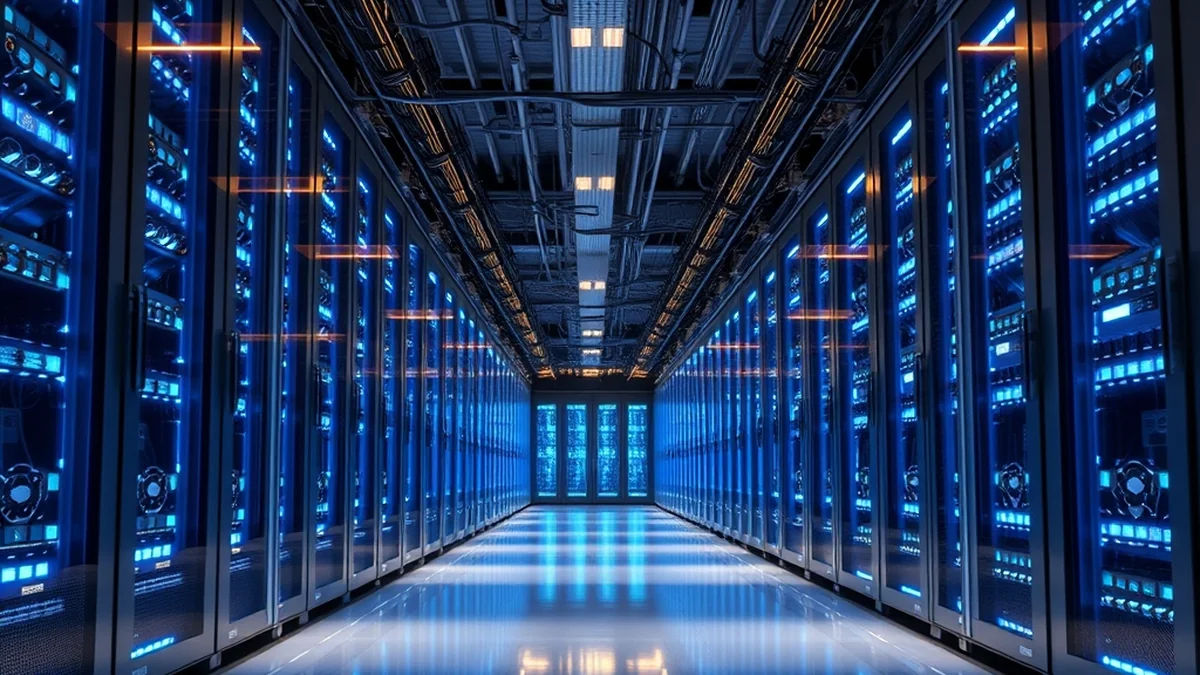
Goldman Sachs Research projects that global investment in artificial intelligence will reach $1 trillion by the end of 2026. This massive capital injection, which represents roughly 1.4% of global GDP by 2028, highlights the transition of AI from experimental technology to a primary driver of corporate expenditure. Nvidia is leading this financial charge by securing $500 billion in third-party funding for its neocloud infrastructure, supported by strategic partnerships with major financial firms like Apollo and BlackRock. This funding strategy helps provide long-term predictability for the upcoming Vera Rubin product cycle.
Market Dynamics and Enterprise Adoption:
The optimism surrounding AI infrastructure has fueled significant rallies across the semiconductor sector, including AMD, Intel, and Nvidia. Beyond hardware, China’s Alibaba has achieved a milestone with its open-source models surpassing 3 billion downloads, challenging Western dominance in the AI ecosystem. Simultaneously, enterprise adoption is accelerating globally. ServiceNow reports that agentic AI adoption in Singapore doubled in 2026, with one in ten enterprises now redesigning workflows to integrate autonomous systems. Additionally, S&P Global is embedding its proprietary data into Microsoft 365 Copilot to enhance institutional-grade insights for business users.
Impact on the Indian Tech Ecosystem:
These massive global investments have profound implications for India, a critical hub for AI talent and data center management. Indian IT giants like TCS, Infosys, and HCLTech are seeing sustained demand for implementation services as global firms scale their infrastructure. The trillion-dollar investment wave provides a vital catalyst for India’s own sovereign AI initiatives. As global enterprises seek efficient ways to manage workloads, India’s position as a digital hub strengthens, promising long-term growth in the IT services sector and expanded opportunities for domestic AI integration.
Pulse Intelligence
Context & ImpactContext & Background
- Goldman Sachs has compared the potential productivity boom from AI to that of the industrial revolution.
- The 2024-2025 period saw intense competition driven by massive capital allocation toward H100 and Blackwell GPU clusters.
- Microsoft and OpenAI established a dominant partnership in 2023, triggering a global arms race in generative AI capabilities.
Key Consequences
- A surge in neocloud providers will likely lower barriers for smaller startups needing high-performance compute resources.
- Global energy demand is expected to rise sharply as data centers expand to meet the needs of trillion-dollar AI workloads.
- Enterprise workflows in major tech hubs, including Bengaluru and Singapore, will see increased automation as agentic AI becomes the corporate standard.
Market & Economic Impact
The record-breaking funding for Nvidia and broader AI infrastructure is expected to sustain positive momentum for the Nifty IT index.
The Indus Pulse is committed to accuracy and transparency.