
August 11, 2026 at 03:02 AM 2 min readhealthAI Insights
New National Security Guidelines Restrict Renewable Projects Near Borders
Projects within 1 km of international borders are banned, while those within 50 km require security clearance.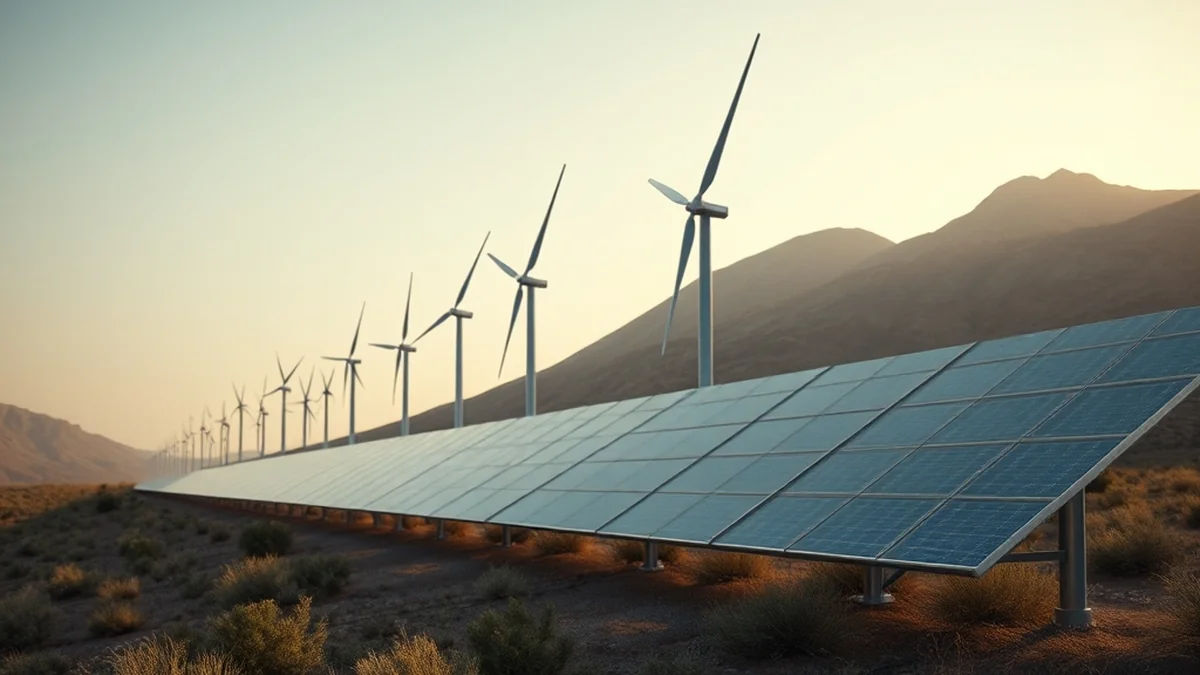
Image: AI Illustration.
[Security Guidelines]:
The Ministry of Home Affairs issued new national security guidelines on August 8, 2026, impacting the renewable energy sector. These regulations explicitly ban the development of new solar, wind, and hybrid renewable energy projects within a 1 km radius of India's international borders. Furthermore, any projects located within a 50 km radius of these borders will now require mandatory security clearance, reflecting a heightened focus on national security in border regions.
[Industry Impact]:
This policy shift is expected to influence the planning and execution of future renewable energy projects. While the guidelines prioritize security, they also introduce a new layer of regulatory compliance for developers. The Solar Energy Corporation of India (SECI) has recently been active in the market, discovering a lowest tariff of approximately INR 5.25/kWh in a tender to procure 1 GW of firm and dispatchable renewable energy, indicating that the sector remains robust despite new regulatory hurdles.
[Strategic Outlook]:
The government's move to balance energy expansion with national security is a significant development for the infrastructure sector. Developers will need to adjust their project pipelines to align with these new geographical restrictions. As India continues to push for renewable energy capacity, the focus will likely shift toward identifying suitable land parcels that comply with these security guidelines, ensuring that the country's energy transition remains both secure and sustainable in the coming years.
Pulse Intelligence
Context & ImpactContext & Background
- The Ministry of Home Affairs issued new guidelines on August 8, 2026.
- Renewable projects within 1 km of borders are now banned.
- SECI recently discovered a tariff of INR 5.25/kWh for a 1 GW renewable tender.
Key Consequences
- Renewable energy developers will face stricter land acquisition and project planning requirements.
- Project timelines for developments near border regions may be extended due to security clearances.
- The renewable energy sector may see a shift in project locations toward non-border areas.
Market & Economic Impact
Renewable energy companies may face increased compliance costs, potentially impacting project margins.
The Indus Pulse is committed to accuracy and transparency.