
31 Aug 2026, 09:56 AM 2 min readindiaanalysis
Nagaland Unveils Comprehensive Industrial Policy for Economic Growth
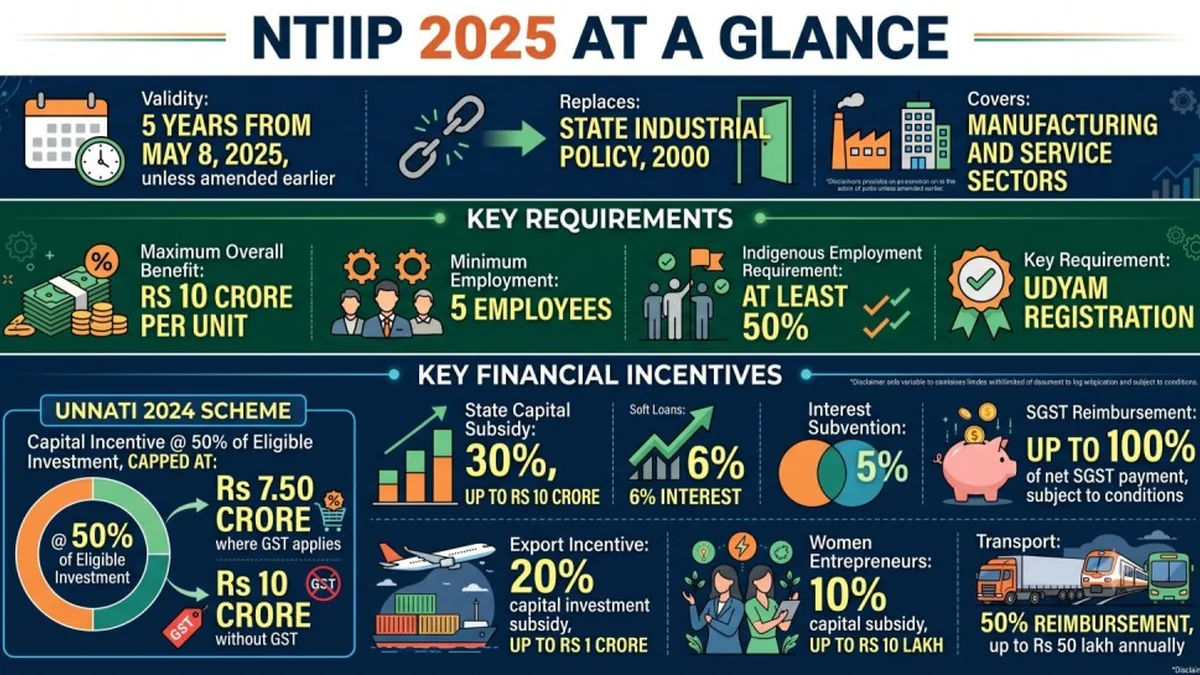
Economic Policy Reset:
The Nagaland Trade, Investment and Industrial Policy (NTIIP) 2025, which was notified on May 8, 2025, marks a decisive departure from the state's previous industrial framework established in 2000. Designed to cultivate a business-friendly environment, the policy aims to stimulate entrepreneurial innovation and diversify the state's economic base. Key provisions include capital investment incentives, soft loans for technology upgrades, and infrastructure development specifically tailored for identified thrust sectors like agro-processing, textiles, and renewable energy.
Financial and Structural Incentives:
The NTIIP 2025 provides an extensive array of financial tools to attract investment, including a 30% State Capital Investment Incentive (SCII) capped at ₹10 crore for eligible units and a 5% interest subvention. The policy also includes specialized support for women and individuals with disabilities, reserving 25% of the total loan provision for the former. By implementing single-window clearances and developing industrial land banks, the government aims to reduce the procedural friction that has historically hampered industrial growth in the region.
Strategic Implementation and Monitoring:
To ensure effectiveness, the policy establishes a tiered approval process involving district and state-level industrial facilitation committees. The framework also emphasizes sustainable practices by prioritizing units that achieve Zero Defect Zero Effect (ZED) compliance. As the state moves toward implementation, the primary challenge remains translating these written incentives into tangible industrial clusters and increased employment. Future success will hinge on the effectiveness of the industrial investment promotion cell in linking government support with private investors and facilitating actual project groundings over the five-year operational horizon.
Pulse Intelligence
Context & ImpactContext & Background
- The previous Industrial Policy of 2000 remained in effect for over two decades before being replaced by the current 2025 framework.
- Nagaland has been seeking to improve its ease-of-doing-business ranking and attract private sector investment into its resource-rich economy.
Key Consequences
- Increased focus on manufacturing and agro-processing could lead to greater local employment and value addition within the state.
- Standardized incentive structures may encourage more local start-ups to formalize their operations and apply for government subsidies.
- The state government will need to successfully manage and streamline the new multi-tier application process to avoid implementation bottlenecks.
Market & Economic Impact
The policy provides significant potential for regional development and investment in the Northeast, though immediate impact on national markets is minimal.
The Indus Pulse is committed to accuracy and transparency.