
August 13, 2026 at 12:40 AM 2 min readindiabreaking
Deadly Mumbai Landslide Kills Seven in Kurla and Ghatkopar
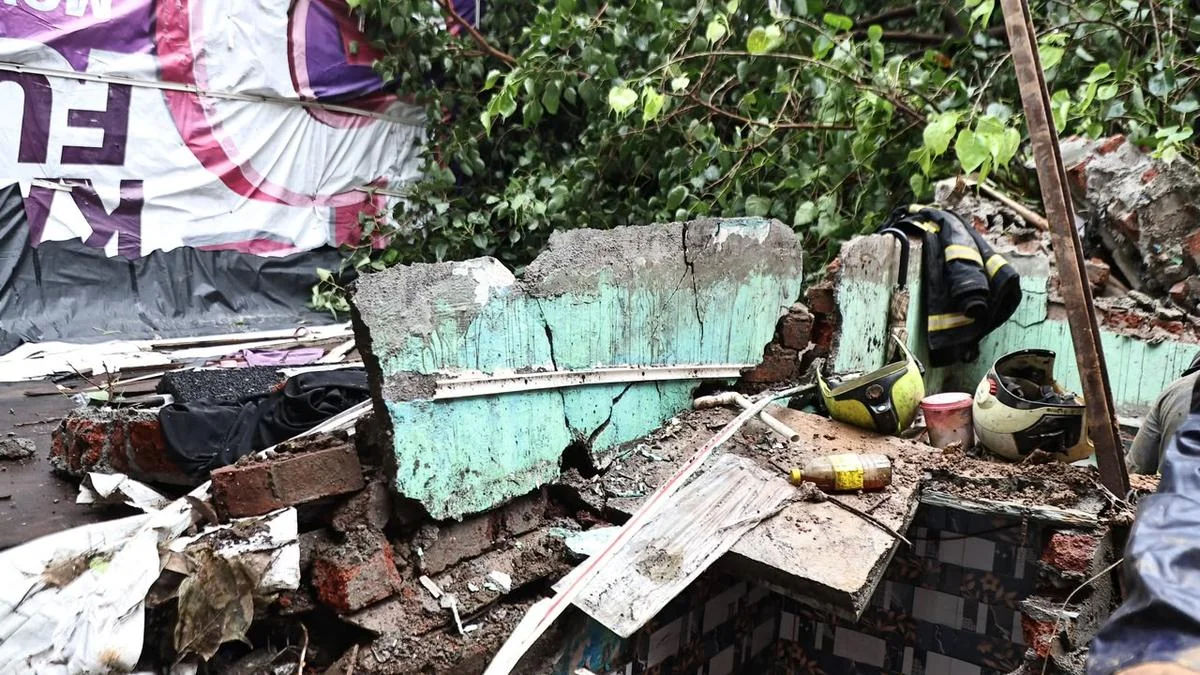
Tragedy in Mumbai's Monsoon:
A massive landslide has devastated residential areas in the Kurla and Ghatkopar regions of Mumbai, resulting in seven confirmed deaths and four to seven serious injuries. The disaster occurred on Wednesday morning when heavy monsoon rains triggered a sudden slope failure, sending mud and rocks crashing into several residential chawls and completely burying between two and three small houses. Emergency response efforts are being led by the National Disaster Response Force (NDRF) and local fire brigades alongside the Brihanmumbai Municipal Corporation disaster management cell, working through congested lanes to locate trapped survivors. The deceased victims include a family of four in Ghatkopar, and their bodies were moved to Rajawadi Hospital for identification while municipal hospitals treat the survivors for crush injuries.
Infrastructure and Negligence Claims:
The incident has drawn sharp criticism regarding urban safety and infrastructure management. Opposition leaders and a Congress MP have accused the BMC and local administration of gross negligence, alleging that pre-monsoon structural reinforcements and protective walls for vulnerable hillside settlements were ignored despite local warnings following recent heavy showers. The affected chawls were situated in known high-risk zones, making them particularly susceptible to soil saturation caused by continuous, heavy downpours over the previous 48 hours. BMC Mayor Ritu Tawde visited the site and announced financial aid for victims' families, confirming that the collapse was sudden while opposition leaders insist better mapping could have prevented the loss of life.
Response and Future Audits:
In response to the crisis, the BMC is preparing to conduct safety audits of all chawls situated on hilly terrains across the eastern and western suburbs and fast-track retaining wall construction. The state government announced a preliminary survey of other vulnerable hillsides in the Kurla-Ghatkopar belt, while displaced families are being moved to temporary municipal shelters. The BMC has issued a high-alert notice advising voluntary evacuation during heavy downpours, intensifying demands for urgent relocation and slum rehabilitation projects to prevent future disasters.
Pulse Intelligence
Context & ImpactContext & Background
- Mumbai frequently experiences landslides during the July and August monsoon months, especially in areas where dwellings are built on unstable slopes without retaining walls.
- The BMC had identified over 200 high-risk landslide locations across the city ahead of the monsoon season, yet relocation efforts have often stalled due to a lack of space.
- Past tragedies, such as the 2021 landslides in Mahul and Chembur, have repeatedly underscored the dangers of unplanned urban development on hillside terrain.
Key Consequences
- The BMC will likely face a formal audit of its pre-monsoon expenditure and administrative policies following the negligence allegations.
- Safety audits, structural assessments, and the construction of retaining walls in the Kurla-Ghatkopar region are expected to be fast-tracked.
- Authorities are issuing stricter eviction or relocation notices for residents living in high-risk zones, potentially leading to social and administrative friction.
Market & Economic Impact
No direct market impact, though real estate sentiment in suburban hillsides may temporarily decline.
The Indus Pulse is committed to accuracy and transparency.