
18 Aug 2026, 07:21 AM 2 min readtechanalysis
Microsoft Shifts Strategy In China Amid Global AI Surge
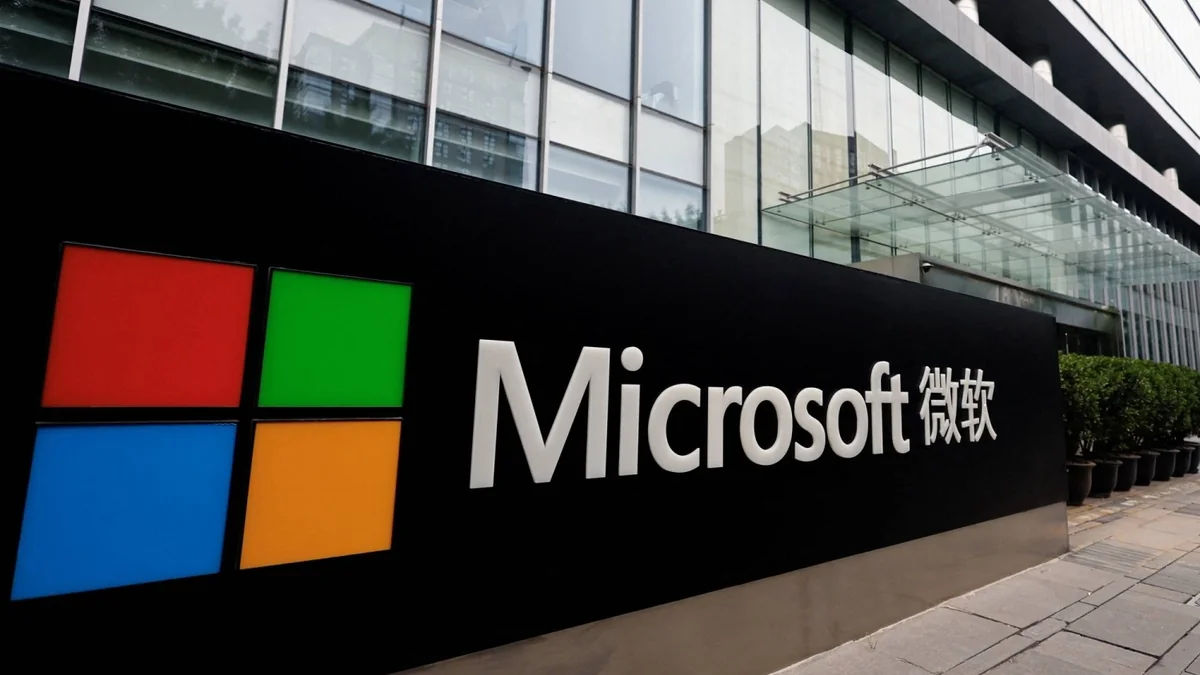
Microsoft's Strategic Pivot:
Microsoft is progressively scaling back its physical operations in China, reflecting a broader shift in its global geopolitical and economic strategy. Over the past five years, the tech giant has closed at least 15 branch offices and various joint ventures. While some internal discussions reportedly surfaced regarding a total exit as early as 2023, the company continues to maintain a limited but targeted presence to leverage China’s growing AI research and development landscape.
Geopolitical and Economic Drivers:
The retreat is primarily driven by heightened tensions between Washington and Beijing, which have created significant uncertainty for multinational corporations. For Microsoft, the Chinese market currently accounts for a mere 1.5% of its total global revenue, making the risk-reward ratio increasingly unattractive compared to other emerging markets. The erosion of institutional trust and complex regulatory hurdles have forced the firm to prioritize markets that offer more stable operational environments and better long-term growth prospects for its cloud and enterprise software services.
Future Outlook and AI Integration:
Despite the reduction in local physical infrastructure, Microsoft maintains its commitment to the global AI boom, viewing it as a vital avenue for engagement. The company intends to keep a window open into Chinese AI advancements while decoupling its core operations from the region. This dual-track approach allows Microsoft to remain connected to regional innovation without compromising its global supply chains or regulatory compliance in the United States. Future developments will depend heavily on the evolution of AI-specific trade policies and the state of bilateral relations between the two global powers.
Pulse Intelligence
Context & ImpactContext & Background
- Microsoft has shuttered 15 branch offices and joint ventures in China over the last five years.
- Geopolitical friction between the US and China has led several Western tech firms to reconsider their local footprint.
Key Consequences
- Microsoft will likely focus its capital expenditure on more stable markets like India and Europe.
- The company's presence in China will become increasingly virtual to mitigate physical geopolitical risks.
Market & Economic Impact
Microsoft's reduced footprint in China is unlikely to trigger significant volatility, given the market accounts for only 1.5% of its global revenue.
The Indus Pulse is committed to accuracy and transparency.