
August 4, 2026 at 03:02 AM 2 min readindiadeveloping
AAP Mobilizes Against E20 Fuel Mandate Amid Protests and Economic Concerns
[Policy Controversy]:
The Aam Aadmi Party (AAP), led by Arvind Kejriwal, has launched a intense campaign against the Union Government’s mandatory E20 ethanol-blended fuel policy. Kejriwal argues that the shift to 20 percent ethanol blending serves hidden interests and external pressures rather than the Indian consumer. On August 3, 2026, party supporters used symbolic protests, such as chewing sugarcane, to highlight the agricultural and economic impact of the mandate on farmers and motorists.
[Consumer Impact]:
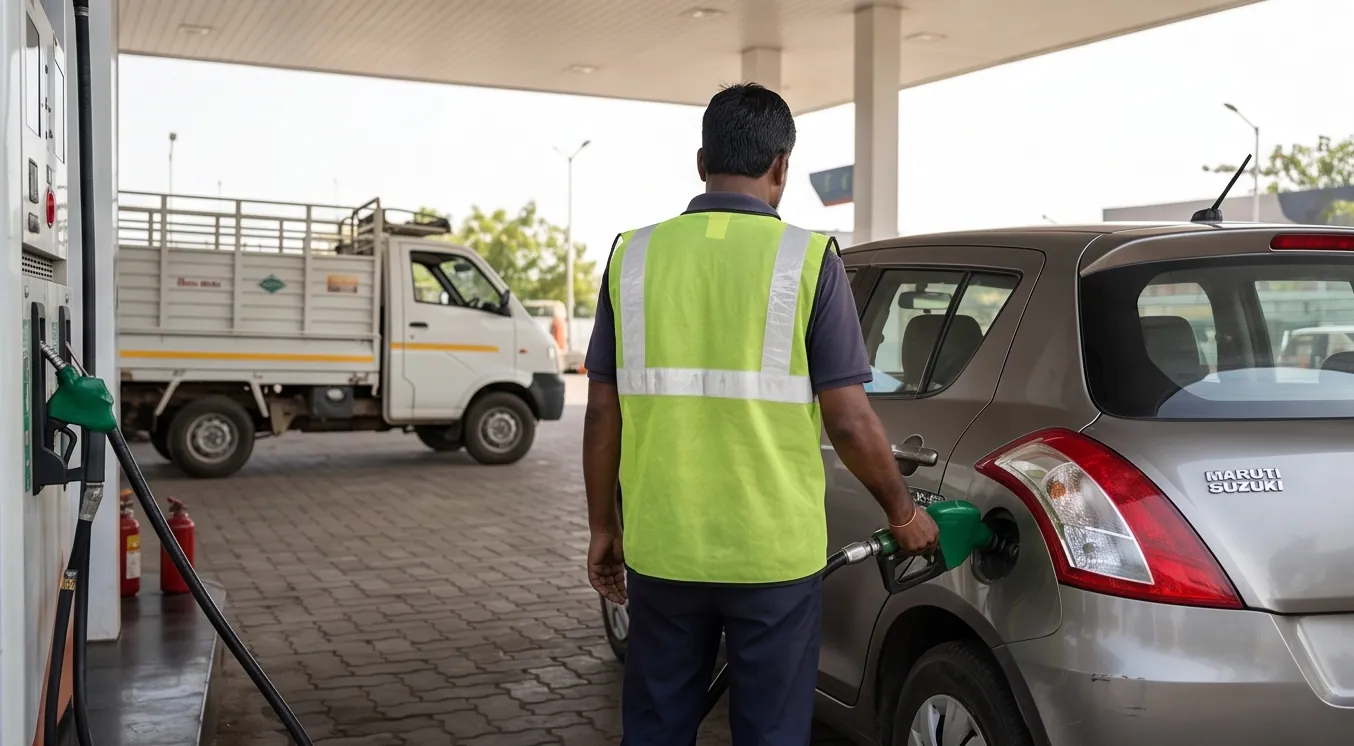
The protest is driven by widespread reports from vehicle owners regarding a 5-7% reduction in fuel efficiency and increased engine maintenance costs. Critics suggest that higher ethanol concentrations are incompatible with older engine models, effectively straining household budgets. AAP is demanding that the Centre ensure the availability of standard, unblended petrol at all retail stations, providing consumers with the freedom to choose fuel based on their specific vehicle compatibility and economic needs.
[Political Escalation]:
As the debate intensifies, AAP has announced a large-scale protest march toward the Prime Minister’s residence in New Delhi for August 4, 2026. The movement expects participation from auto-rickshaw unions and delivery partners, framing the technical policy as a major political flashpoint. While the central government maintains that E20 fuel is a necessary step for energy security and carbon reduction, AAP has successfully linked the issue to broader concerns about sovereignty, inflation, and government transparency.
Pulse Intelligence
Context & ImpactContext & Background
- The Indian government has aggressively pushed for E20 fuel to reduce crude oil imports, meet carbon emission targets, and support the domestic sugar industry.
- While newer vehicles are transitioning to become E20-compliant, owners of older vehicle fleets report increased mechanical issues and lower fuel mileage.
- Arvind Kejriwal frequently uses fuel pricing and energy policy as key political mobilization tools against central administration policies.
Key Consequences
- Increased security presence is expected around the Prime Minister's residence and central New Delhi to manage the planned AAP protest march.
- Public pressure may force the Ministry of Petroleum and Natural Gas to release detailed technical data on the long-term impact of ethanol on engine longevity.
- The ongoing debate may prompt other opposition parties to join the demand for a dual-fuel retail option for consumers.
Market & Economic Impact
No direct market impact, but fuel policy remains a key variable for the automotive and sugar sectors.
The Indus Pulse is committed to accuracy and transparency.