
August 4, 2026 at 03:02 AM 2 min readautoNews Insights
India's Public EV Charging Network Quadruples in 15 Months
The network has grown to over 52,700 stations, with Bengaluru leading the country in charging density.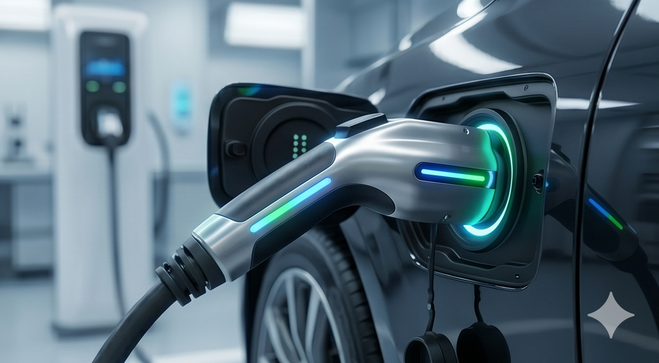
[The Event]:
India’s public electric vehicle charging infrastructure has expanded rapidly, reaching over 52,700 operational stations as of July 30, 2026. This represents a massive increase from the roughly 5,000 stations available in 2022, with the network size quadrupling in just the last 15 months to achieve a density of one charger per 175 electric vehicles.
[The Why]:
The surge is driven by a national mandate to reach 30% EV penetration by 2030, a goal that requires an estimated 1.3 million public charging points. To support this, the Technology Development Board has provided ₹13 crore in financial assistance to RoadGrid India Pvt. Ltd., enabling the company to scale the manufacturing of universal EV chargers and reduce the hardware bottlenecks currently hindering network expansion.
[What Next]:
While Bengaluru and Delhi currently lead in charging density, the focus is shifting toward nationwide coverage to support long-distance travel. As manufacturing capacity for universal chargers increases, the government is expected to incentivize further private sector participation to bridge the gap between the current 52,700 stations and the 1.3 million target required to sustain the projected growth in EV adoption over the next four years.
Pulse Intelligence
Context & ImpactContext & Background
- India aims to achieve 30% EV penetration across all vehicle segments by 2030.
- The charging network has grown from 5,000 stations in 2022 to over 52,700 by mid-2026.
- Bengaluru currently holds the highest number of public charging stations in the country.
Key Consequences
- Increased charging availability will likely boost consumer confidence in purchasing long-range electric vehicles.
- RoadGrid India's scaled manufacturing will lower the cost of deploying new charging infrastructure.
- Regional disparities in charging access will begin to narrow as infrastructure projects expand beyond major metros.
Market & Economic Impact
Not applicable.
The Indus Pulse is committed to accuracy and transparency.