
August 7, 2026 at 10:18 AM 2 min readautoAI Insights
India EV Charging Infrastructure Lags Behind Rapid Adoption
Data indicates only 52,718 public charging stations exist nationwide, falling significantly short of global benchmarks.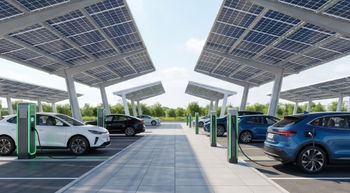
Growing Infrastructure Deficit:
Despite India crossing the significant milestone of over 10 million registered electric vehicles by late July 2026, the country's public charging infrastructure is significantly lagging behind the pace of adoption. Data from the Road Transport and Highways Ministry indicates that there were only 52,718 public charging stations by March 2026, translating to roughly one charger for every 190 electric vehicles across the country.
Global Benchmarks and Maintenance Hurdles:
The current ratio falls considerably short of the global benchmark, which ranges from one charger for every 6 to 20 vehicles, creating substantial friction for everyday drivers. Adding to the challenge, approximately 18 percent of the installed chargers are frequently non-operational, contributing to widespread user frustration and hindering seamless long-distance electric mobility.
Future Targets and Policy Interventions:
Industry estimates suggest that India will require over 1.3 million public charging points by 2030 to achieve its ambitious target of 30 percent penetration for private cars, necessitating a massive forty-fold increase. While schemes like PM E-DRIVE have approved thousands of chargers, regional policies such as Delhi's Electric Vehicle Policy 2026 aim to install approximately 32,000 charging points with an outlay of 8,000 crore rupees.
Pulse Intelligence
Context & ImpactContext & Background
- The FAME-II scheme successfully installed 9,583 public electric vehicle charging stations by July 1, 2026.
- Registered electric vehicles crossed the 10 million mark by late July 2026.
Key Consequences
- Automotive manufacturers may face consumer hesitancy regarding electric vehicle adoption due to charging bottlenecks.
- Public and private investments in charging infrastructure will accelerate to meet the 2030 targets.
Market & Economic Impact
Inadequate charging infrastructure poses a near-term sentiment risk for automotive stocks heavily invested in electric vehicle transitions, impacting consumer conversion rates.
The Indus Pulse is committed to accuracy and transparency.