
August 15, 2026 at 06:18 PM 2 min readworldbreaking
European Wildfires Force Mass Evacuations in Germany and Belgium
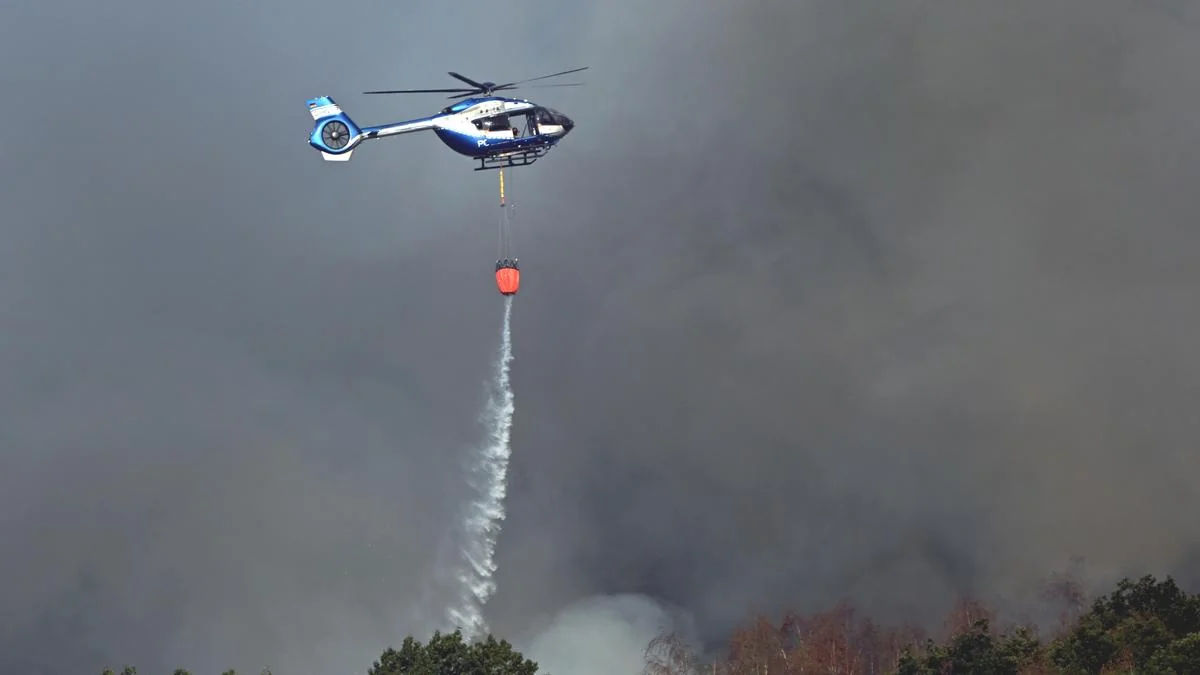
Escalating Forest Fires:
A massive wildfire has destabilized the border region between Germany and Belgium as of August 15, 2026, following extreme heatwave conditions. In Germany's Huertgenwald region, over 2,000 residents were evacuated from the village of Gey due to the encroaching fire, which grew to 300 hectares. The situation remains volatile as unexploded World War Two ammunition embedded in the soil has caused sporadic detonations, complicating access for emergency response teams. The German military has deployed tanks to carve out firebreaks in the dense terrain.
Belgium's Record Crisis:
Across the border, Belgium is managing its largest wildfire on record within the High Fens nature reserve, with 1,600 hectares scorched since the fire ignited on August 14. This disaster has prompted an urgent call for international assistance, with the European Union mobilizing helicopters and water bombers from the Czech Republic, Sweden, and the Netherlands. Evacuations in the Liege province have become necessary as shifting wind patterns threaten residential areas, children's summer camps, and critical infrastructure.
Cross-Border Response:
Local authorities and national leaders, including German Chancellor Friedrich Merz, have coordinated federal resources to mitigate the risk to civilian populations. The reliance on military assets and international aid underscores the severity of the threat in this geography, where historical conflict remnants exacerbate current climate-driven challenges. With further high-wind warnings expected, regional administrations are maintaining mandatory evacuation orders, focusing on containment and the protection of vulnerable communities until the meteorological conditions stabilize across the border region.
Pulse Intelligence
Context & ImpactContext & Background
- Europe is currently experiencing its fifth major heatwave of the 2026 summer, which has severely dried out local vegetation.
- Historical remnants of World War Two ammunition often pose significant safety hazards to emergency responders in forested areas of Western Europe.
Key Consequences
- Long-term ecological damage to the High Fens nature reserve will require extensive restoration efforts.
- Increased pressure on the European Union to centralize fire-fighting capabilities to handle escalating climate disasters.
Market & Economic Impact
No direct market impact.
The Indus Pulse is committed to accuracy and transparency.