
World Desk July 16, 2026 at 04:35 PM 2 min readworldanalysis
Global Opinion Polls Show Shifting Favor Towards China Over US
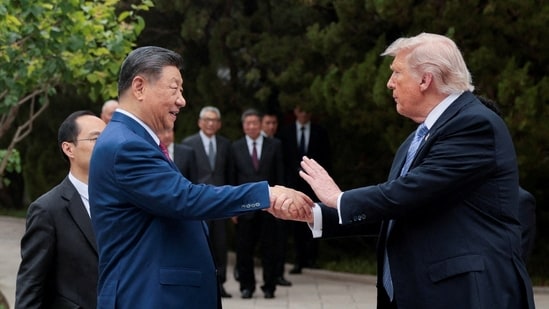
Global Perception Trends:
Public opinion across 36 countries indicates a shift toward a more favorable view of China compared to the United States. A recent study by the Pew Research Centre reveals that while global confidence in Chinese President Xi Jinping remains muted, his favorability ratings have overtaken those of U.S. President Donald Trump in most surveyed nations. The shift is particularly pronounced in Asia-Pacific and Middle Eastern countries, including Turkey, Thailand, and Indonesia, where China is now viewed with higher positive sentiment than its American counterpart.
Divergent Views in India:
India stands out as a clear exception to this global trend, remaining among the few nations that hold more positive views of the United States than China. Joining Japan, the Philippines, South Korea, Israel, and Poland, the Indian public continues to prefer the American government over the Chinese leadership. The report highlights that while the United States still maintains a comparative lead in the perceived safeguarding of personal freedoms, that gap has narrowed as global perceptions of American governmental respect for individual rights have declined since 2025.
Policy Implications:
Concerns regarding foreign policy have also shifted the regional landscape, with many middle-income nations now expressing more apprehension toward American interventionism than Chinese activities. In 17 of the surveyed middle-income countries, the U.S. is increasingly characterized as an interferer in domestic affairs. Despite these findings, Trump continues to command higher confidence ratings than Xi within Japan and the Philippines, indicating that regional geopolitical history remains a potent factor in how these global powers are evaluated by local populations.
Pulse Intelligence
Context & ImpactContext & Background
- The U.S. faced a decline in global reputation during the early months of the second Trump administration starting in 2025.
- The Pew Research Centre has consistently tracked the diverging global perceptions of the U.S. and China for over a decade.
Key Consequences
- Diplomatic relations in the Asia-Pacific region may face renewed strain as the U.S. seeks to bolster its influence amid shifting public sentiment.
- International policy analysts anticipate a more complex challenge for U.S. soft power initiatives in countries where China's favorability is rising.
Market & Economic Impact
Shifting global favorability scores toward China may signal increased long-term economic alignment risks for U.S. companies operating in Asia-Pacific markets.