
India Desk July 15, 2026 at 06:02 AM 2 min readindiabreaking
Bombay High Court Orders ₹30 Lakh Payoff for Manual Scavenger Deaths
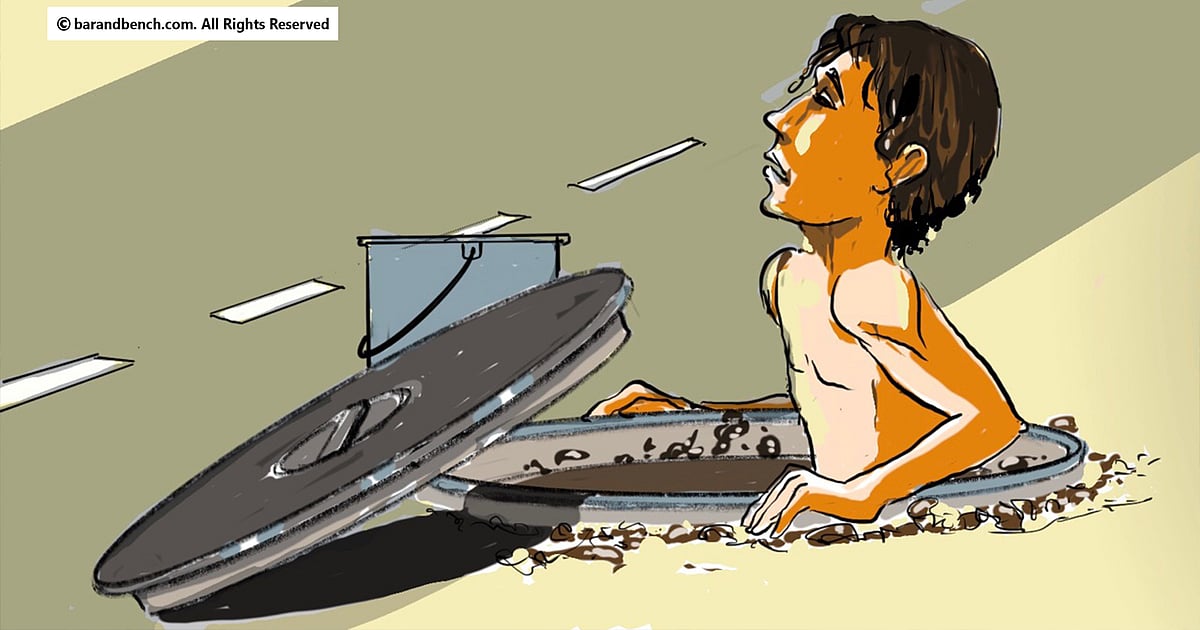
Bombay High Court Ruling:
The Bombay High Court has mandated that the Maharashtra government provide ₹30 lakh as compensation to the families of victims who died during manual scavenging, even in cases involving private employment. The court emphasized that the state bears a fundamental responsibility to protect vulnerable workers from hazardous sanitary tasks that are legally prohibited. This legal precedent seeks to enforce stricter accountability for the deaths occurring during septic tank cleaning or manual sewage disposal across the state.
Systemic Sanitation Hazards:
Manual scavenging remains a pervasive issue despite national legislation criminalizing the practice. Septic tank deaths occur frequently due to a lack of safety equipment and modern disposal infrastructure. Local municipal bodies often shift liability to private contractors, leaving victim families without legal recourse or financial support. The ruling by the Bombay High Court establishes that the state cannot abdicate its liability by citing the private status of the employers involved. This underscores the systemic failure to provide protective gear or regulated sanitary systems.
Significance of the Order:
The judgment serves as a major intervention for social justice and worker welfare in Maharashtra. By standardizing the compensation at ₹30 lakh, the court aims to deter the practice and ensure that bereaved families receive immediate financial rehabilitation. The state government must now devise a systematic approach to identify victims and ensure the disbursement of funds. Observers expect this to force municipalities to prioritize mechanized sewage cleaning systems to avoid future state-level litigation. This legal outcome signifies a tightening of administrative oversight regarding occupational safety standards for sanitation workers.
Pulse Intelligence
Context & ImpactContext & Background
- Manual scavenging is strictly prohibited under the Prohibition of Employment as Manual Scavengers and their Rehabilitation Act, 2013.
- The Supreme Court of India has previously issued directives to states to ensure complete eradication of hazardous sewer cleaning practices.
Key Consequences
- Maharashtra state agencies will likely accelerate the transition to mechanized cleaning technologies to mitigate legal and financial liability.
- Families of victims of past manual scavenging incidents will likely initiate fresh legal claims for compensation based on this new precedent.
- Municipal corporations across India may face increased scrutiny regarding their contractor oversight and safety training requirements.
Market & Economic Impact
No direct market impact.