
Ai Desk July 18, 2026 at 06:33 PM 2 min readaianalysis
AMD Redefines AI Strategy as Indispensable Second Platform
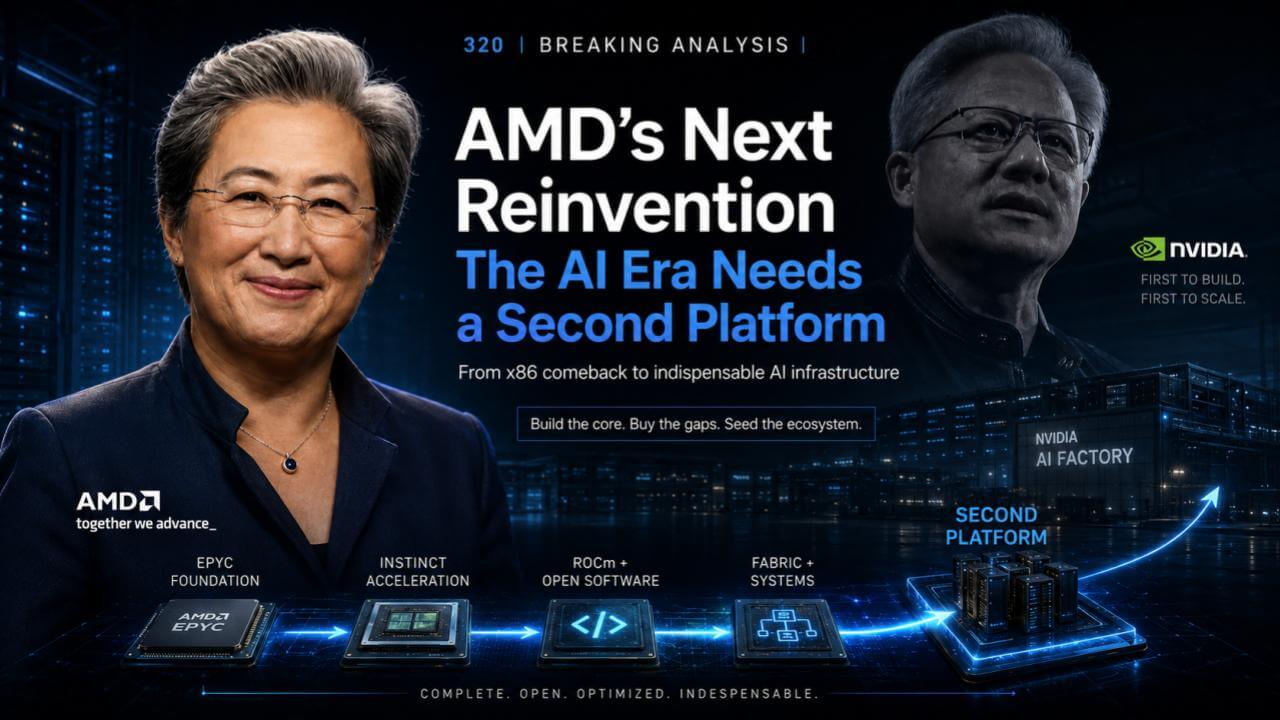
Strategic Positioning in AI:
Advanced Micro Devices (AMD) is positioning itself as the critical secondary platform for global AI infrastructure rather than pursuing direct, head-to-head dominance with Nvidia. The company’s strategy centers on providing customers with essential optionality, addressing industry-wide concerns regarding single-supplier dependence in the rapidly growing artificial intelligence market. By focusing on a diverse range of hardware and software solutions, AMD aims to become an indispensable ecosystem partner for enterprises building out AI platforms.
Ecosystem Development:
AMD’s current approach involves the integration of its EPYC CPUs, Instinct accelerators, and the ROCm software stack into comprehensive, rack-scale systems. This multi-layered strategy combines organic development with strategic acquisitions to build a robust foundation that supports a variety of enterprise requirements. By ensuring that its hardware is highly modular and compatible with existing software frameworks, the company seeks to offer customers a reliable alternative to the proprietary architectures that currently dominate the market.
Market Significance:
The emphasis on optionality serves as a key value proposition for organizations looking to mitigate supply chain risks and architectural lock-in. As demand for AI hardware continues to surge, customers are seeking reliable, performant, and available solutions to scale their infrastructure without relying on a single provider. AMD’s focus on ecosystem development and system-level performance is intended to make it a primary choice for architects building complex AI clusters, ensuring long-term competitiveness in the high-stakes battle for AI compute dominance.
Pulse Intelligence
Context & ImpactContext & Background
- Nvidia has historically held a near-monopoly on high-performance AI accelerators, creating significant supply chain pressures for cloud providers.
- AMD has been steadily refining its ROCm software platform to improve interoperability with popular AI development frameworks.
Key Consequences
- Increased adoption of AMD AI hardware could lead to a more diversified and stable supply chain for global data-center operators.
- Competition between AMD and Nvidia is expected to drive faster innovation cycles in accelerator hardware and power efficiency for data centers.
Market & Economic Impact
The success of AMD’s secondary platform strategy could lead to a significant realignment of data-center infrastructure spending across the tech industry.