
30 Aug 2026, 05:39 PM 2 min readaianalysis
Balancing AI Innovation With Clinical Oversight In Modern Indian Healthcare
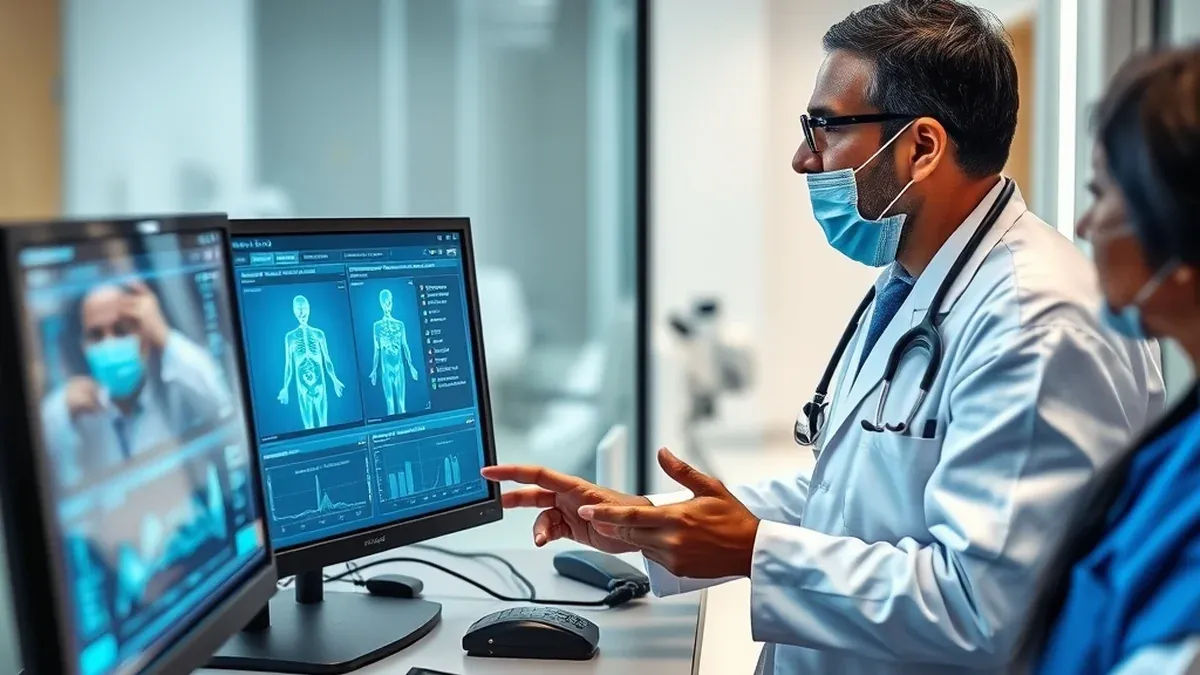
AI Integration in Medicine:
Artificial intelligence is rapidly becoming a vital component of the modern Indian healthcare landscape, significantly improving diagnostic accuracy, medical education, and hospital workflow efficiency. Experts like Dr. Jayanthi note that institutions must embrace these advanced tools to remain competitive with global technological benchmarks. Systems powered by machine learning are currently utilized to analyze complex medical imaging, predict patient outcomes, and automate administrative tasks, which ultimately saves precious clinical time and resources for medical professionals across the country.
The Human-in-the-Loop Principle:
Despite these technical gains, the medical community maintains that AI remains a supportive mechanism rather than a replacement for professional clinical judgment. Algorithms often lack the nuanced understanding of a patient's individual history, socioeconomic background, and complex physical presentation that a human doctor provides. The final diagnosis and critical treatment decisions must remain the exclusive responsibility of physicians. This oversight is essential for maintaining safety, meeting ethical standards, and ensuring clear accountability in patient treatment protocols, effectively preventing algorithmic bias or data interpretation errors.
Future Outlook and Training:
The future of medicine involves a collaboration between computational intelligence and human expertise. Medical curricula in top-tier Indian institutions are already shifting to include mandatory AI literacy modules to prepare the next generation of physicians. Effective implementation will require rigorous validation of software systems to ensure reliability across diverse patient populations. Protecting the patient-doctor relationship while harnessing modern technology remains the primary challenge for health systems this decade, as the focus shifts toward standardizing the ethical use of AI in daily clinical practice.
Pulse Intelligence
Context & ImpactContext & Background
- India's health sector is increasingly adopting digital transformation strategies to manage growing patient volumes through AI-driven radiology and large-scale diagnostics.
- Top-tier medical institutions have begun incorporating mandatory data interpretation and AI literacy modules into their formal training curricula.
- Machine learning is currently being deployed for medical imaging analysis, predictive diagnostics, and administrative automation within high-volume Indian clinics.
Key Consequences
- The implementation of strict clinical governance policies and regulatory frameworks will be necessary to define liability in diagnostic errors involving automated recommendations.
- Medical curricula will evolve to ensure all physicians are proficient in AI literacy and ethical decision-making regarding digital tools.
- Diagnostic speed and efficiency are expected to increase significantly in high-volume clinics through the automated triaging of patient health data.
Market & Economic Impact
Growth in the Indian health-tech sector is expected to rise as hospital infrastructure updates to meet new AI standards.
The Indus Pulse is committed to accuracy and transparency.