
July 29, 2026 at 03:08 PM 2 min readaianalysis
AI Architectures Increasingly Mimic Biological Neural Patterns
Biologically Inspired AI Architectures:
Modern artificial intelligence models are evolving to reflect the complex design of the human brain. The introduction of mixture-of-experts architectures, notably used in systems like GPT-4, represents a shift toward specialized efficiency. These digital networks activate only specific, relevant portions of their total capacity to complete a given task. This method closely resembles how the human brain selectively recruits different specialized regions depending on the activity being performed, rather than engaging the entire organ at once.
AI in Natural Environments:
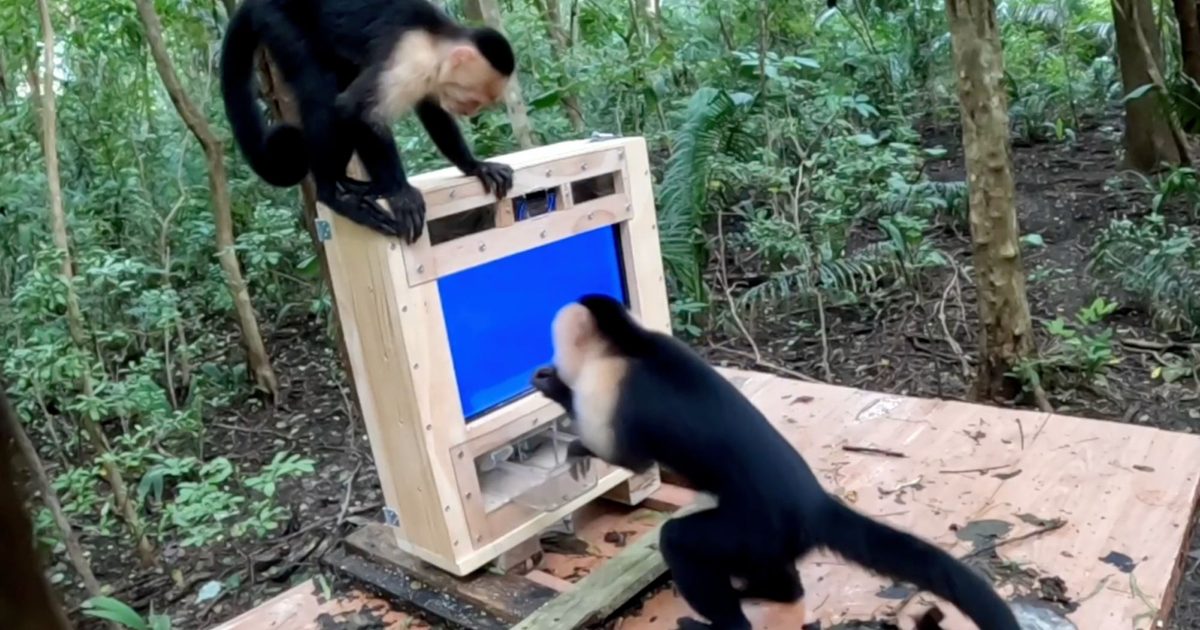
Beyond theoretical design, AI is being deployed in unconventional settings to study cognitive behavior in the wild. In recent scientific trials, wild capuchin monkeys in rainforests have been introduced to AI-powered touchscreens. These primates interact with the digital interfaces to earn food rewards, providing researchers with unprecedented data on animal cognition and learning patterns. Such studies bridge the gap between advanced technology and natural biological evolution, offering new insights into how intelligence, both artificial and natural, adapts to environmental stimuli.
Implications for Future AI Development:
For the Indian scientific and tech community, these developments signal a move toward more energy-efficient and specialized AI models. As global research pivots toward mimicking biological selective recruitment, future AI systems could require significantly less power while delivering higher accuracy. This is particularly relevant for India's efforts in sustainable technology and edge computing. Understanding the scale and design differences between AI and the brain will remain a critical frontier for researchers aiming to build more intuitive and efficient machine-learning systems.
Pulse Intelligence
Context & ImpactContext & Background
- Earlier versions of large language models relied on dense architectures where every parameter was used for every request, leading to massive energy consumption.
- The human brain operates on approximately 20 watts of power, a benchmark that AI researchers have long sought to emulate for digital systems.
Key Consequences
- Future AI models will likely move further away from monolithic designs toward highly modular mixture-of-experts frameworks.
- Ethical debates regarding the use of AI interfaces on wildlife for scientific research are expected to increase in academic circles.
Market & Economic Impact
Advancements in energy-efficient AI architectures could reduce operational costs for Indian data centers and cloud providers by minimizing hardware load.
The Indus Pulse is committed to accuracy and transparency.