
Ai Desk July 20, 2026 at 01:18 PM 2 min readaibreaking
ACE Robotics Launches Kairos 3.1 AI Stack at WAIC 2026
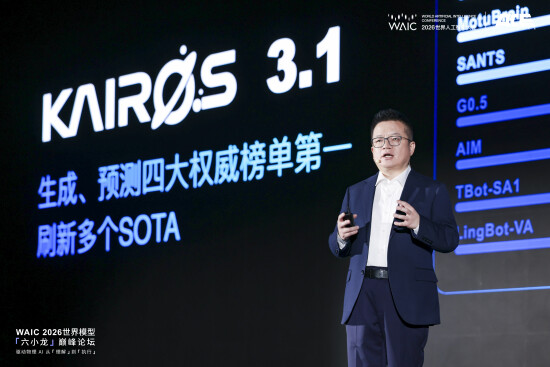
Kairos 3.1 Unveiling:
ACE Robotics introduced its latest embodied AI stack, Kairos 3.1, at the World Artificial Intelligence Conference 2026. The new solution is designed to bridge the gap between initial data processing and final deployment in industrial settings. The launch includes a unified, action-oriented world model integrated with the updated Ambient Capture Engine 2.0, providing a comprehensive toolkit for developers building autonomous physical systems.
Integrated AI Solutions:
The platform roll-out features three distinct commercial solutions alongside a new industry benchmark, which the company claims will optimize robotic movement and decision-making. By consolidating data-to-deployment workflows, ACE Robotics aims to streamline the development cycle for companies utilizing embodied AI. This modular architecture is intended to help firms scale robotic tasks that were previously restricted by technical silos or disjointed development environments.
Future Industrial Adoption:
The release at the WAIC conference signals the company's intent to capture a larger share of the emerging industrial robotics market. Industry analysts note that as embodied AI moves from simulation to physical operation, platforms that offer unified deployment stacks are becoming essential for enterprise scalability. ACE Robotics is positioning Kairos 3.1 as the foundational layer for developers seeking to implement complex, action-oriented intelligence in their fleet deployments, with an emphasis on performance benchmarks to prove system efficacy.
Pulse Intelligence
Context & ImpactContext & Background
- The World Artificial Intelligence Conference (WAIC) serves as a primary venue for Chinese robotics and AI firms to demonstrate their latest hardware and software innovations.
- Embodied AI has become a focal point for researchers and tech firms looking to apply large language model capabilities to physical, moving robots.
Key Consequences
- The availability of a unified stack could lower the technical barrier for enterprises looking to automate physical workflows.
- Improved industrial benchmarks from ACE Robotics might set new efficiency standards for the competitive robotics sector.
Market & Economic Impact
Development of standardized embodied AI stacks could reduce operational costs for industries employing warehouse and manufacturing automation.