
OpenAI Models Deliver 14% Chip Design Gains With AMD and Jalapeno
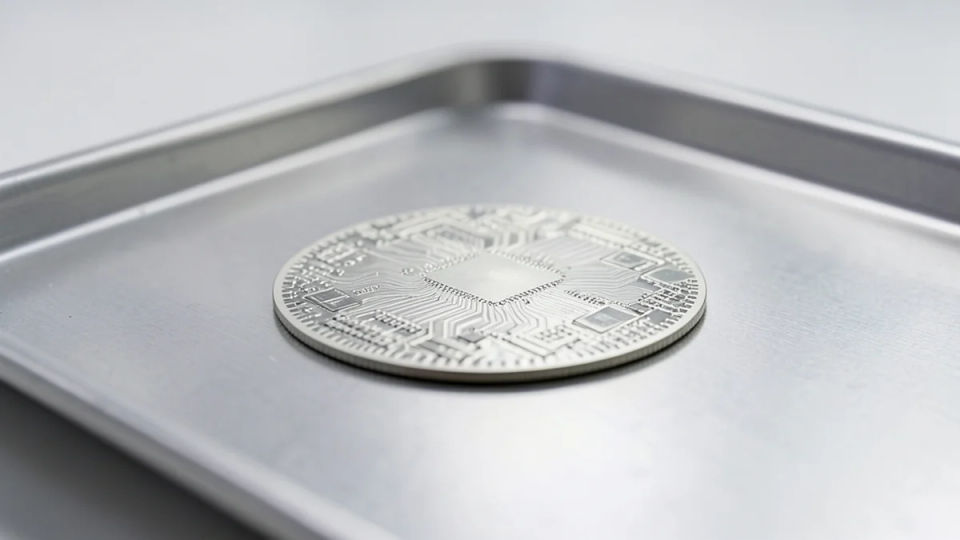
OpenAI said on November 18, 2026, that its AI models delivered up to 14% power, performance, and area (PPA) gains on AMD's flagship GPU intellectual property by rewriting SystemVerilog RTL circuit code, compressing roughly a year of progress into less than five months. According to OpenAI, AMD has already included some of those model-generated changes in a design sent for manufacturing and added others to production design files for future versions, while also verifying single-digit percentage PPA gains across key blocks of its upcoming flagship CPU. OpenAI co-founder Greg Brockman's five-month acceleration figure rests on OpenAI's account without a public stage-by-stage breakdown or independent confirmation from AMD, Crypto Briefing noted.
Jalapeño Optimizations, RISC-V Benchmarks, and Synopsys
For OpenAI's Jalapeño custom inference chip project started in early 2025 using GPT-4o, engineers estimated AI-suggested edits trimmed standard-cell area by roughly 13% inside the warp engine and 10% inside the matrix unit, with those gains verified during silicon bring-up. Within Jalapeño's matrix unit, one multiplier redesign cut cell area by about 15% in synthesis while lowering latency from two clock cycles to one, and an adder redesign cut cell area by about 15% at two-cycle latency. To evaluate model generations, OpenAI ran 9,881 scored runs across two open-source 32-bit RISC-V cores, PicoRV32 and OpenTitan's Ibex, measuring throughput via simulation and Yosys clock-frequency estimates while scoring designs zero if they failed checks or exceeded 16 times original area. At a budget near 112,000 tokens per run, GPT-6.2 Astra achieved the highest mean score on both existing cores, roughly doubling GPT-6 Astra on PicoRV32, while all five tested models scored higher when designing from written specifications than when optimizing existing RTL. OpenAI is also partnering with Synopsys to train a new model called GPT-Synopsys to operate Synopsys electronic design automation tools for design and verification. OpenAI is investing hundreds of millions of dollars to post-train GPT-Synopsys, according to futurumgroup.com. Synopsys and OpenAI stated that customer design data in GPT-Synopsys is encrypted at rest and in transit, not used to train the model, and Synopsys tool knowledge stays contained inside GPT-Synopsys rather than OpenAI's base models, according to news.synopsys.com. Compared with human baseline designs on Jalapeño, OpenAI reported AI-assisted improvements of 56% for a BF16 multiplier, 21% for an FP4 dot-product block, 10% for an FP32 accumulator, and an 8% area reduction for the SIMD unit.
AMD Compute Partnership and AI Chip Demand
Crypto Briefing reported that the AMD design work sits inside an October 6, 2025 strategic partnership committing OpenAI to 6 gigawatts of AMD compute, starting with 1 gigawatt of MI450 GPUs in the second half of 2026, alongside warrants for up to 160 million AMD shares. A November 16, 2026 follow-up agreement adds 457 megawatts of TensorWave capacity on AMD MI455X GPUs expected in the first half of 2027, Crypto Briefing reported. Separately, The Verge reported that AI chip demand remained strong despite OpenAI's brief August training pause, with Nvidia posting $107.6 billion in quarterly data center revenue and AMD reporting a record $13.4 billion quarter. Counterpoint Research VP Neil Shah told The Verge that growing inference demand requires more total compute infrastructure, while Counterpoint expects custom AI server processor shipments to surpass data center GPUs by 2028. Following Jalapeño, OpenAI's second-generation custom AI accelerator is heading toward tape-out and its third-generation accelerator is already in development, according to tomshardware.com.