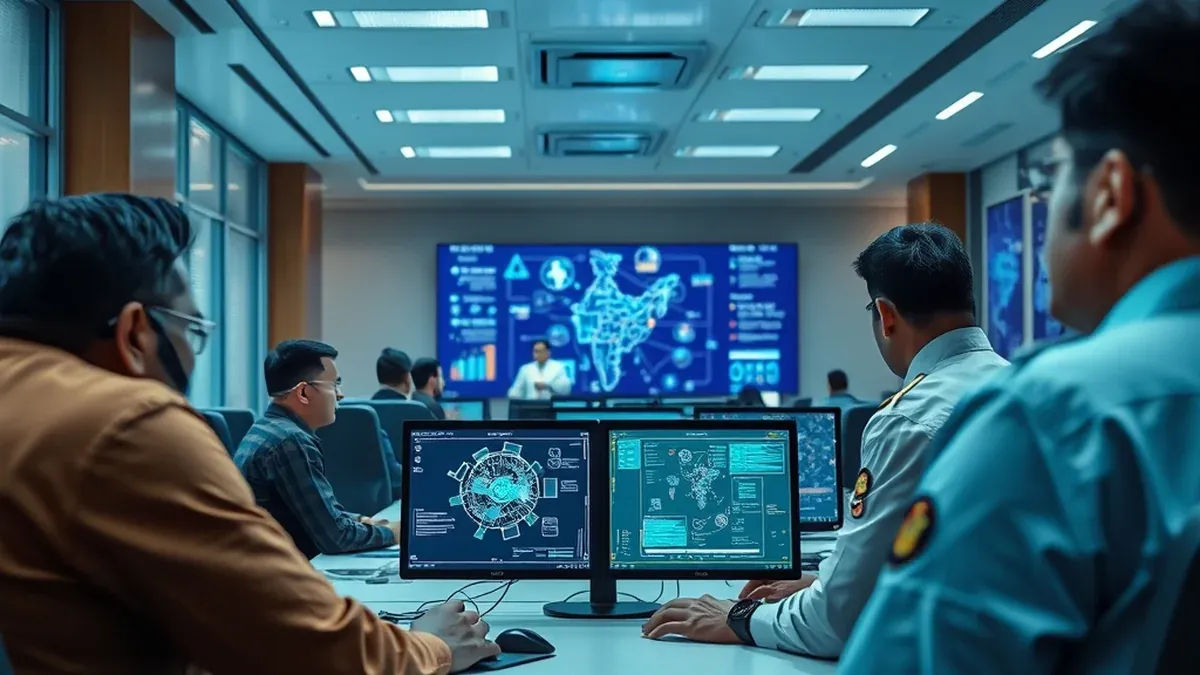
The traditional paradigm of software development is undergoing a fundamental shift as artificial intelligence agents increasingly handle the mechanical aspects of building, testing, and deploying code. David Fowler, a Microsoft Distinguished Engineer and co-creator of SignalR, ignited a widespread industry debate this week by declaring on social media that "typing code is absolutely over." While the statement was provocative, it reflects a strategic pivot within Microsoft to integrate autonomous AI agents into the core of its development toolchains, including .NET Aspire and GitHub Copilot.
This transition does not signal the obsolescence of software engineers, but rather a significant evolution in their daily responsibilities. As AI models become capable of generating, executing, and debugging code, the role of the human developer is shifting toward system architecture, security verification, and high-level orchestration. Microsoft leadership has confirmed that approximately 20% to 30% of the company's internal codebase is now generated by AI, marking a departure from the manual, line-by-line programming methods that have defined the industry for decades.
The Rise of Agentic Development Workflows
GitHub Copilot has evolved beyond simple code completion to become a functional coding agent capable of managing complex repository tasks. These agents can now autonomously set up development environments, execute test suites, and open pull requests for human review. By integrating these capabilities into the Windows Subsystem for Linux and native Windows development environments, Microsoft is enabling developers to build and test cross-platform applications with minimal manual intervention. This shift allows the AI to handle the "boilerplate" work that previously consumed significant developer time.
Microsoft’s .NET Aspire toolchain further exemplifies this architectural change. By providing AI agents with a comprehensive model of application components—including services, containers, and databases—Aspire allows agents to inspect logs, identify telemetry errors, and restart components without requiring a developer to manually copy and paste error outputs. This context-aware approach is designed to bridge the gap between merely generating code and successfully delivering a functional, production-ready application.
Security at Scale Through Automated Hunting
Beyond general application development, Microsoft is deploying AI agents to secure its most critical infrastructure. The company’s MDASH (Microsoft Security multi-model agentic scanning harness) system utilizes over 100 specialized agents to perform vulnerability hunting across massive, security-sensitive codebases such as the Windows kernel, Hyper-V, and the Azure networking stack. This automated approach allows security teams to achieve a depth of analysis that was previously impossible at the scale of the Windows operating system.
This reliance on automated security tools highlights the dual nature of AI-driven development. While agents can identify and patch vulnerabilities with unprecedented speed, they also introduce new risks. Industry reports, including data from Veracode, have indicated that a significant portion of AI-generated code can contain known errors. Consequently, Microsoft’s strategy treats AI-generated output as an untrusted black box, necessitating rigorous human supervision and the implementation of robust unit testing suites to ensure system integrity.
Hardware Requirements for Local AI Execution
To support this agent-heavy future, Microsoft is aligning its hardware ecosystem with the demands of local AI processing. The recently announced Project Zenith initiative introduces a specialized Windows 11 configuration for developers, requiring a baseline of 64GB of unified memory and high-bandwidth memory architecture. By focusing on hardware like AMD’s Ryzen AI Halo chips, Microsoft aims to enable the local execution of models with more than 30 billion parameters.
Running these models locally offers several strategic advantages, including reduced cloud inference costs and enhanced control over proprietary code and sensitive data. This hardware-centric approach ensures that developers have the necessary compute power to run sophisticated agents directly on their workstations. As the keyboard becomes less of a primary input device and more of a steering wheel for guiding AI agents, the industry is moving toward a model where hardware performance is as critical as software proficiency.
The Human Role in the Agentic Era
Despite the enthusiasm for AI-driven automation, the industry remains divided on the extent to which manual coding will disappear. While some developers have embraced the efficiency of AI agents, others maintain that manual coding remains an essential practice for understanding system logic and maintaining control. Microsoft’s leadership, including CEO Satya Nadella, has cautioned against over-trusting AI, emphasizing that machines are prone to errors and require human oversight to make final architectural decisions.
Ultimately, the transformation described by Fowler is one of abstraction. Developers are moving up the stack, focusing on system design, requirements, and the complex orchestration of distributed systems. The "conductor" analogy—where the developer guides an orchestra of AI agents—appears to be the prevailing vision for the future of software engineering. As these tools continue to mature, the success of a project will increasingly depend on the developer’s ability to supervise, verify, and integrate the outputs of autonomous systems rather than their speed at typing individual lines of code.