
Google Runs First Orbital AI Prompt on Suncatcher Space Satellite
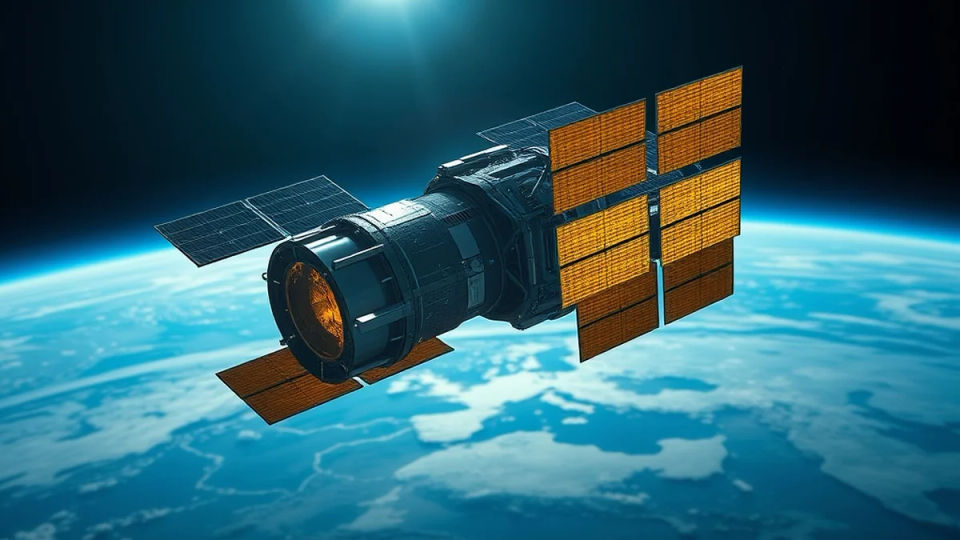
Technology company Google has executed its first artificial intelligence prompt in orbital space aboard its prototype satellite Project Suncatcher, The Times of India reported. During an operational ground-station communication pass, engineers uplinked a command to an onboard Gemma 4 open model, prompting the software to compose poetry regarding orbital flight, Analytics India Magazine reported. Google CEO Sundar Pichai characterized the transmission as a hello world milestone, comparing the achievement to the fundamental baseline test software engineers run on nascent architectures, The Times of India noted. The experimental satellite represents Google's exploratory initiative examining whether orbital constellations could eventually host scalable machine learning processing facilities.
Launch Architecture and Power Constraints
The demonstration satellite was manufactured in technical collaboration with Planet and launched aboard a SpaceX Falcon 9 rocket on the Transporter-18 mission alongside more than 100 other spacecraft, The Times of India reported. To survive ascent into orbit, the onboard processor payload had to withstand extreme acceleration forces of 50 Gs during launch operations. The orbiting platform integrates four Google Tensor Processing Units, though onboard solar arrays produce up to 1 kW of electrical power, AI Insider reported. Because of power constraints, the satellite can energize only one TPU at a time for operational runs lasting approximately 20 minutes.
Testing the satellite's systems took about three weeks, and a Google spokesperson confirmed the spacecraft is working normally, according to The Next Web.
In low Earth orbit, satellites enjoy near‑constant sunlight, allowing them to generate up to eight times more solar power than on Earth, according to Google.
Environmental Radiation and Thermal Stress Testing
Beyond initial literary generation, technical teams are evaluating how standard commercial accelerator silicon tolerates environmental radiation and extreme thermal cycling in low Earth orbit, AI Insider reported. Cosmic rays and solar particle events present continuous hazards in orbit by triggering bit flips, where electrical charges in memory cells spontaneously invert and corrupt numerical weights. Google subsequently broadened operational testing by evaluating orbital telemetry prompts and space-themed limericks to monitor processing consistency, Analytics India Magazine reported. Ground controllers will continuously analyze thermal dissipation logs and radiation telemetry transmitted by the satellite over forthcoming operational months.
Laser Interconnect Roadmap and Commercial Viability
If the initial orbital testbed validates silicon durability, Google plans to launch two additional Suncatcher satellites equipped with inter-satellite laser communication links in 2027, The Times of India reported. The planned multi-satellite network seeks to fly units in tight orbital formations, sharing compute workloads across high-speed optical links to establish a coordinated space data center, AI Insider noted. Competitors including SpaceX and commercial ventures Starcloud and Axiom are similarly exploring space-based compute facilities to harness unconstrained solar energy. However, aerospace analysts estimate that approximately 1,800 rocket launches would be required to lower payload delivery expenses sufficiently to make commercial orbital data centers economically viable in the 2030s.