
German Defence AI Startup SE3 Labs Raises $30M Series A
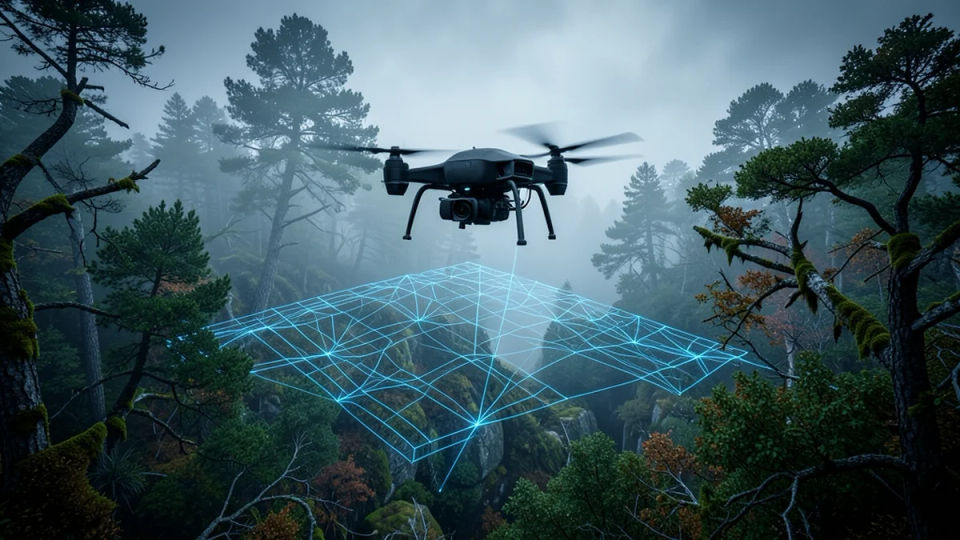
German defence technology startup SE3 Labs has raised 30 million dollars (23 million pounds) in Series A funding to expand spatial intelligence software for military drones and unmanned ground vehicles, five months after emerging from stealth. The financing round was led by venture capital firm Accel, with participation from Keen, Lakestar, and Seedcamp. The capital injection follows an earlier 5.5 million euro (6.1 million dollar) seed investment completed in June, when the Munich-based company disclosed ongoing deployments with Germany's Bundeswehr and Ukrainian armed forces. The round ranks among the largest Series A deals for a German 3D-technology company, according to Dealroom.
Spatial Intelligence Architecture and Multi-Vehicle Coordination
SE3 develops artificial intelligence software that enables autonomous robotic systems to interpret surroundings, traverse complex terrain, and coordinate actions across disparate vehicle fleets. The proprietary software ingests video streams and sensor feeds from aerial drones and ground units, synthesizing the telemetry into a unified three-dimensional picture of the battlefield. A contextual interface overlays the interactive terrain map, allowing human operators to issue natural-language queries regarding concealed approach routes or heavy transit avenues. Field operators can direct robotic missions using direct speech commands rather than operating manual joysticks or handheld tablet computers. In addition to spatial mapping, the software enables autonomous units to maneuver, detect target objects, and operate collectively as a coordinated swarm. In SE3's funding announcement, Auterion said SE3's spatial intelligence runs on its Skynode, so Auterion's customers get that capability on the platforms they already operate, across manufacturers, according to SE3 Labs.
GPS-Denied Navigation and Resilient Edge Computing
A fundamental technical capability of SE3's software is autonomous navigation without satellite signals, which is important in operational sectors where electronic warfare systems jam GPS links. The navigation architecture executes directly on onboard vehicle hardware rather than depending on vulnerable cloud connections. Rather than utilizing monolithic large language models for physics analysis, the platform pairs classic computer vision algorithms with specialized tool-calling harnesses. Operational physical actions such as drone takeoff can be configured to require direct authorization from a human commander before execution. Deploying systems in security contexts necessitates that technology performs reliably under active combat conditions, noted cofounder and chief executive officer Lukas Köstler. SE3's founding team's research has garnered more than 90,000 citations, the company says in a job listing on Built In.
Defense Deployments and International Expansion Plans
The startup has shipped thousands of systems over the past two years, supporting military supply contracts across Germany and Ukraine. Industrial partners integrating SE3's software include sensor specialist Hensoldt, autonomous flight developer Auterion, and aircraft builder ERC. SE3 was founded by chief executive officer Lukas Köstler, chief technology officer Simon Klenk, and chief science officer Professor Daniel Cremers as a spin-out from the Technical University of Munich. The Munich enterprise plans to expand headcount from 40 employees to approximately 120 while opening offices in London, Berlin, the Nordics and Baltics, and Poland. Defence will drive revenue for at least the next 12 months, Köstler said, and the company plans to explore civilian robotics and emergency response applications from 2027.