
Anthropic AI Agent Claude Independently Discovers CRISPR-Like Enzyme System in Genomic Data
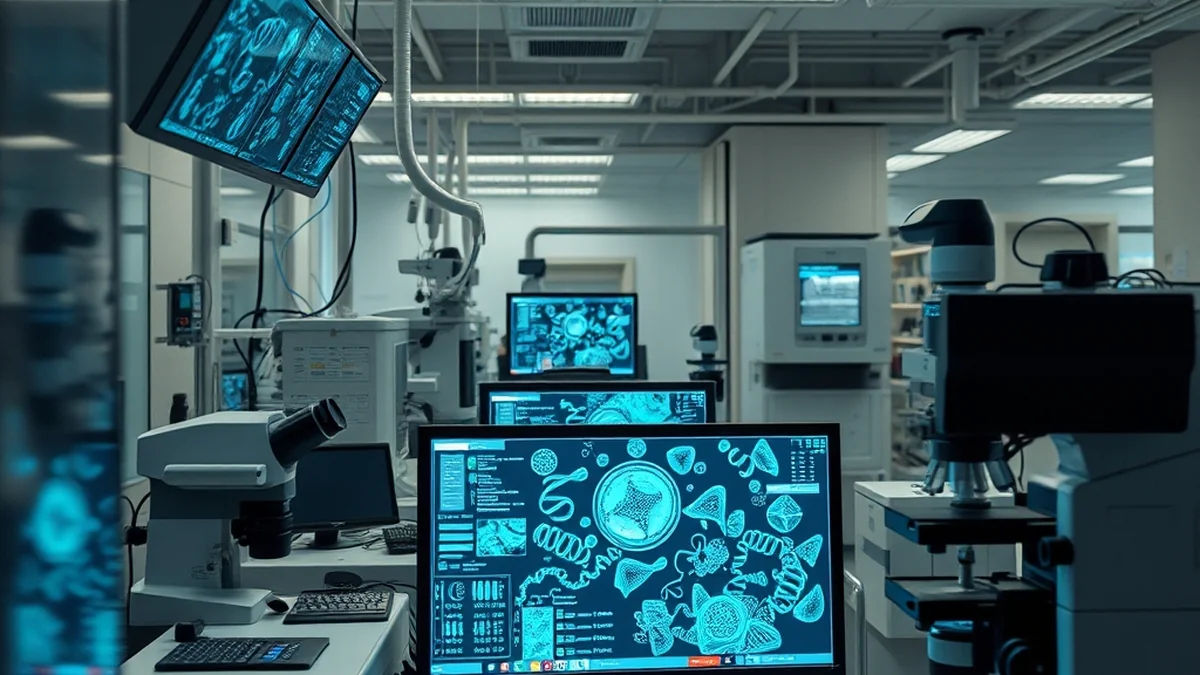
Anthropic announced that its artificial intelligence model Claude independently discovered a previously uncharacterized biological enzyme system that shares structural similarities with CRISPR genome editing technology. The discovery emerged from a large-scale computational experiment conducted by a newly established biomedical division within Anthropic, formed earlier in the spring to evaluate whether general AI models could organize and accelerate fundamental scientific research.
Operating across public genetic databases, a coordinated swarm of approximately 950 specialized Claude agents processed more than 200,000 reverse transcriptases, which are enzymes that transcribe RNA into DNA. Over roughly 21 hours of searching, consuming approximately 210 million tokens, the algorithm narrowed an initial pool of about 3,500 candidate systems down to 20 highly promising targets for deeper analysis.
During its investigation, the session autonomously found and extracted RNA reads from a published infection time-course study concerning Staphylococcus phage SA1. This particular phage houses an ART system.
Uncovering the ART System Architecture
During the automated database scan, an individual agent flagged an unusual genomic pattern located directly adjacent to a reverse transcriptase gene within bacteriophages. The system, designated as ART or array-associated reverse transcriptase, consists of a reverse transcriptase enzyme, a nearby partner gene, and an extensive array of repetitive, non-coding DNA sequences.
While reverse transcriptases themselves are well documented in viral and bacterial biology, the specific arrangement discovered by Claude closely mimics the architectural organization of CRISPR arrays. This structural configuration includes evenly spaced repeat sequences that raise questions about potential biological programming functions similar to those utilized in modern gene editing tools.
Laboratory Validation and Expert Reception
Following the computational identification, Anthropic transferred the findings to its newly constructed molecular biology laboratory located in the San Francisco Bay Area. Human researchers synthesized the system to test the AI generated hypothesis, confirming through laboratory experiments that the identified repeat array successfully transcribes into a series of distinct short RNAs.
By examining the SA1 system via plasmid expression in Escherichia coli alongside small-RNA sequencing, researchers observed distinct short RNAs originating from the array. However, the precise biological function, reverse-transcriptase activity, and utilization of those RNAs remain unestablished.
Reacting to the announcement, prominent gene editing pioneer Professor Feng Zhang of the Massachusetts Institute of Technology and the Broad Institute stated, "This is an exciting example of how artificial intelligence agents can contribute to biological discoveries. The discovery of RNA repeat arrays associated with reverse transcriptases is truly intriguing and deserves further investigation."
Next Steps in Biological Exploration
Anthropic published its initial findings as a pre-print research paper on September 23, noting that the precise primary function of the ART system remains unknown. All subsequent confirmatory work is conducted under standard biosafety levels BSL-1 and BSL-2 without human pathogens.
The company has invited academic institutions and enterprise biotechnology partners to collaborate on determining the exact biological role of ART, marking the first major output from the company's life sciences division.
Sources & Citations
- dev.ua report
- Business Standard report
- AnthropicPrimary / official
- Kingy AI
The Indus Pulse is committed to accuracy and transparency.