
June 17, 2026 at 10:06 AM 2 min readaianalysis
Webb Telescope Discovery: Terzan 5 Revealed as Galaxy 'Bulge Fossil Fragment'
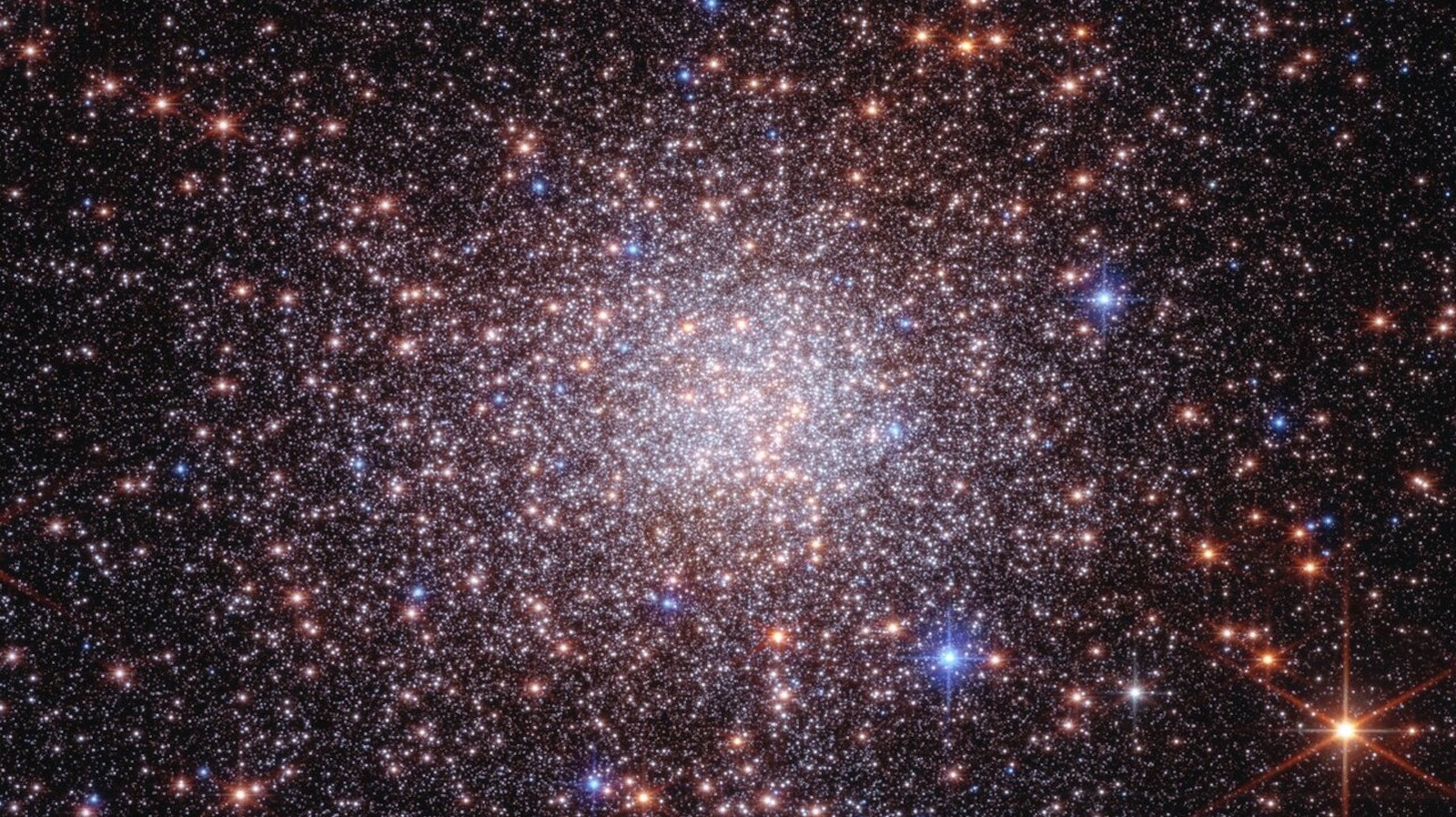
Galactic Fossil Identified:
Researchers using the James Webb Space Telescope, in conjunction with archival Hubble Space Telescope data, have reclassified the stellar region Terzan 5 as a 'bulge fossil fragment.' Located in the center of the Milky Way, this region was previously categorized as a simple globular star cluster. However, new survey results published in Astronomy & Astrophysics confirm that Terzan 5 contains at least four distinct star populations formed over a span of 10 billion years, ranging from 12.5 billion years ago to 2.5 billion years ago.
Formation Insights:
The discovery suggests that Terzan 5 represents a remnant of the primordial clumps that collided and merged to form the central bulge of the Milky Way. According to the research team at the University of Bologna, these findings support existing models of galaxy formation where massive discs of gas fragmented into clumps during the early Universe. These clumps then migrated toward the galaxy's center and merged; unlike most, Terzan 5 survived this process without being destroyed, providing a unique 'fossil' record of the galaxy's infancy.
Scientific Significance:
This finding provides critical insights into the chaotic early stages of galactic evolution that remain challenging to study due to interstellar dust and high stellar density. By confirming that Terzan 5 formed separately from the rest of the bulge, astronomers have secured a vital link in understanding the structural history of the Milky Way. This research underscores the power of the James Webb Space Telescope’s infrared capabilities to peer through dense galactic environments and clarify the formation history of our own galaxy.
Pulse Intelligence
AI AnalysisContext & Background
- Terzan 5 was historically misclassified as a standard globular star cluster, which typically consists of a single population of ancient stars.
- Astronomers have long struggled to study the Milky Way's 'bulge' due to the massive amounts of dust and high star density obstructing conventional telescope observations.
Key Consequences
- The classification as a 'bulge fossil fragment' will likely prompt a re-evaluation of other dense star clusters in the Milky Way.
- Data from Terzan 5 will be used to refine current simulations of early galactic disc fragmentation and star formation processes.
- Future observational studies may focus on identifying similar 'fossil' regions to build a more complete timeline of the Milky Way's development.
Market & Economic Impact
No direct market impact.