
June 6, 2026 at 03:17 AM 2 min readaiAI Insights
Supreme Court Committee Proposes AI Regulations for Indian Courts
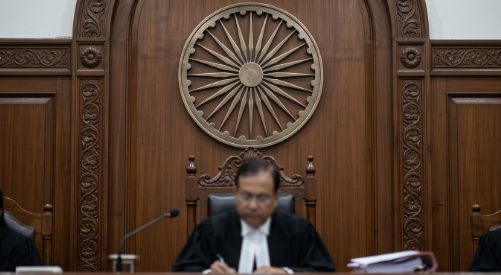
[AI Use Restricted in Judicial Outcomes]:
The Supreme Court AI Committee has released draft "Regulations for Use of Artificial Intelligence (AI) in Courts, 2026," aiming to govern AI deployment across India's courts and tribunals. These regulations, made public on June 3, 2026, explicitly prohibit AI from determining judicial outcomes and mandate strict human oversight for any AI-assisted sentencing. Furthermore, the draft bars AI systems from profiling parties or witnesses and disallows the use of "opaque" or "unexplainable" AI systems in any court process, ensuring transparency and accountability.
[Transparency and Administrative Applications]:
A key provision requires lawyers and litigants to disclose the use of AI tools when preparing any court documents, including pleadings, submissions, or evidence. This ensures transparency in the legal process and allows for scrutiny of AI's role. While restricted in core judicial decision-making, AI is permitted for a range of administrative functions. These include case management, preparation of cause lists, scheduling hearings, transcription of court proceedings, and translation of judgments, aiming to enhance efficiency without compromising judicial integrity.
[Stakeholder Input and Future Implications]:
The Supreme Court AI Committee has invited comments and suggestions from all stakeholders until June 20, 2026, indicating a collaborative approach to finalizing these crucial regulations. This move signifies India's proactive stance in integrating advanced technology into its justice system while establishing clear ethical boundaries. The regulations are poised to modernize court operations, reduce backlogs through administrative efficiencies, and set a precedent for responsible AI adoption in sensitive public sectors, ensuring fairness and due process.
Pulse Intelligence
AI AnalysisContext & Background
- Globally, legal systems are grappling with the ethical and practical implications of integrating AI into judicial processes.
- India's judiciary has been exploring technological solutions to improve efficiency and reduce the significant backlog of cases.
- Concerns about algorithmic bias and the lack of explainability in some AI systems have prompted calls for strict regulation in sensitive domains like justice.
Key Consequences
- The Indian justice system will gain efficiencies in administrative tasks like case management and transcription, potentially speeding up court processes.
- Lawyers and litigants will need to adapt to new disclosure requirements regarding AI tool usage in their submissions.
- The regulations will establish a clear framework for ethical AI use in courts, preventing misuse and ensuring human accountability in judicial decisions.
Market & Economic Impact
No direct market impact.