
July 9, 2026 at 10:02 AM 2 min readaibreaking
SpaceX Launches World’s First Commercial Nuclear-Powered Satellite
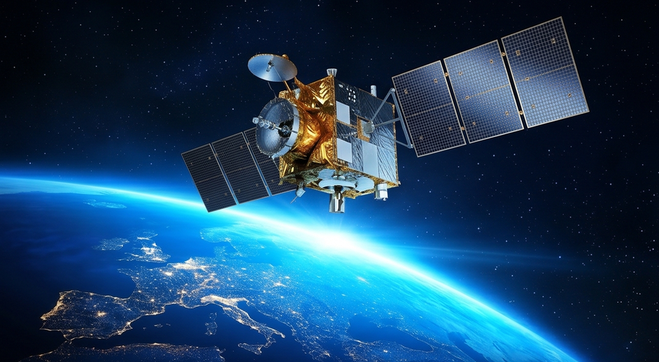
SpaceX BOHR Mission:
SpaceX successfully launched the BOHR (Betavoltaic Orbital High-Reliability) satellite aboard a Falcon 9 rocket from Vandenberg Space Force Base. This mission, developed by the Florida-based company City Labs, marks a historic advancement in space-based energy by testing the first commercially built nuclear-powered satellite. The satellite features a NanoTritium betavoltaic power source, which converts energy from radioactive tritium decay into electricity through semiconductors, serving as a demonstration for sustainable power in low-light environments.
Nuclear Technology Innovation:
Unlike traditional radioisotope thermoelectric generators that rely on heat from radioactive isotopes, betavoltaic cells provide a direct conversion of beta particles into electrical energy. City Labs designed this system to supplement traditional solar power, specifically targeting applications in environments where sunlight is limited. The technology is considered low-radiation and suitable for integration into standard commercial launch environments. This mission follows the establishment of a formal nuclear launch framework by the Federal Aviation Administration in 2019, signalling a shift toward incorporating compact nuclear systems in commercial and national-security spacecraft.
Future Lunar Implications:
The successful deployment of the BOHR satellite represents a significant step for potential missions to the Moon's permanently shadowed regions, including craters near the lunar south pole. This area is a critical focus for the NASA Artemis programme due to the presence of water ice, which could facilitate long-term human habitation. While the current BOHR system has limited power output, City Labs expects the technology to scale for larger applications. The mission’s success potentially validates compact nuclear power as a viable alternative or complement to solar energy for future deep-space and planetary surface operations.
Pulse Intelligence
AI AnalysisContext & Background
- The Federal Aviation Administration established a formal regulatory framework for nuclear-powered launches in 2019 to accommodate emerging space technologies.
- NASA’s Artemis programme has prioritized the lunar south pole as a site for human habitation due to identified water ice deposits.
Key Consequences
- City Labs will evaluate the power source’s durability in harsh space conditions, potentially paving the way for larger-scale nuclear-powered lunar infrastructure.
- The mission success may encourage more commercial entities to explore alternative, non-solar power sources for extended deep-space exploration.
- Enhanced interest in the lunar south pole is expected as energy constraints for permanently shadowed regions begin to decrease.
Market & Economic Impact
No direct market impact.