
June 28, 2026 at 10:16 AM 2 min readmarkets
SEBI Overhauls Buy-back Rules and AIF Launch Timelines
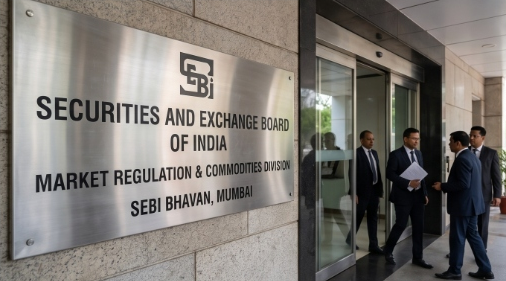
[Regulatory Overhaul]:
The Securities and Exchange Board of India (SEBI) has introduced sweeping reforms following its 214th Board Meeting to enhance market efficiency and investor protection. A standout change is the reintroduction of the open market buy-back route through stock exchanges, effective August 1, 2026. Companies utilizing this route must complete the process within 66 working days, with a mandatory 40% fund utilization requirement in the first half of the period.
[Operational Efficiency]:
To streamline capital deployment, SEBI has launched the GARUDA mechanism for Alternative Investment Funds (AIFs). This green-channel process allows for the rollout of schemes upon document acknowledgment, significantly reducing launch timelines for non-accredited investor schemes to just 10 working days. Additionally, mutual funds are now permitted to access intraday borrowings to manage liquidity mismatches arising from settlement timings and mark-to-market obligations, providing a crucial buffer for fund managers.
[Investor Protection]:
The regulator has also simplified the transmission of securities for legal heirs, doubling the documentation limits to Rs 10 lakh for physical holdings and Rs 30 lakh for dematerialized holdings. These measures collectively aim to reduce administrative friction for retail investors and institutional players alike. As these rules take effect, market participants should prepare for a more agile environment for corporate capital management and fund operations, reflecting SEBI's commitment to deepening India's securities market infrastructure.
Pulse Intelligence
AI AnalysisContext & Background
- SEBI held its 214th Board Meeting on June 19, 2026, to discuss market reforms.
- The regulator has been actively seeking to simplify the ease of doing business for listed entities.
- Recent block deals in companies like Vedanta and Lodha Developers highlight active capital movement in the market.
Key Consequences
- Companies will likely increase buy-back activity starting August 2026 due to the reintroduced exchange-based route.
- AIF managers will benefit from faster scheme launches, potentially increasing the velocity of private capital.
- Mutual funds will face reduced liquidity risk during high-volatility settlement periods.
Market & Economic Impact
The regulatory easing is expected to improve corporate capital allocation efficiency and reduce operational costs for mutual funds.