
June 23, 2026 at 06:36 PM 2 min readaideveloping
Samsung Unveils UFS 5.0 Memory for On-Device AI
Next-Gen Storage Performance:
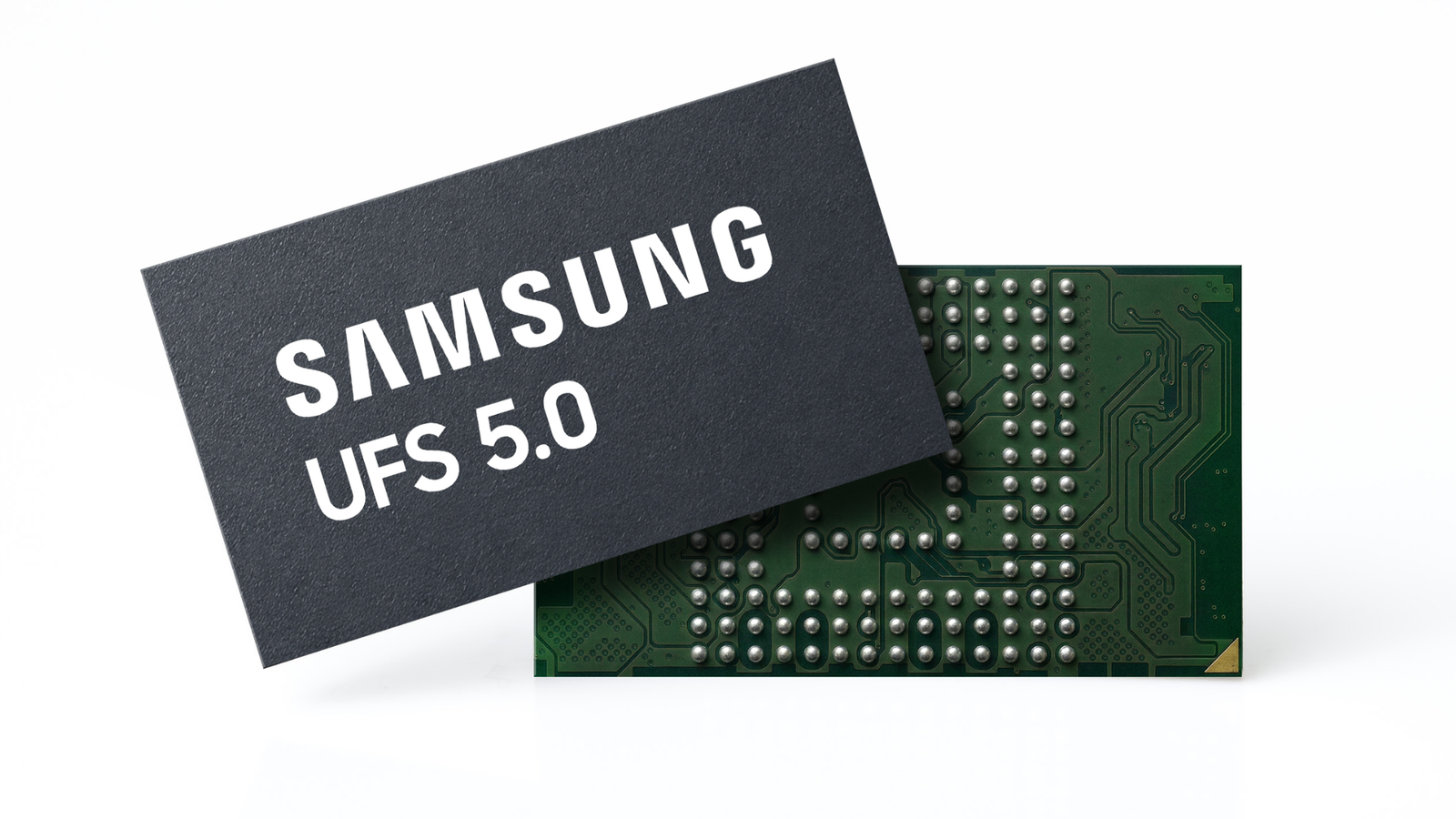
Samsung Electronics has officially unveiled its new Universal Flash Storage (UFS) 5.0 solution, designed to significantly accelerate on-device artificial intelligence processing. The technology achieves a world-leading sequential read speed of 10.8 gigabytes per second (GB/s), doubling the performance of the current UFS 4.1 standard. This bandwidth improvement is critical for reducing latency when mobile devices execute large language models (LLMs) and other complex generative AI tasks locally.
Power Efficiency and Compact Design:
Alongside performance gains, Samsung improved power efficiency by over 40% compared to previous solutions. By implementing advanced technologies like clock gating and multi-voltage scaling, the chip reduces the power required for data transfer, directly contributing to extended battery life for next-generation mobile hardware. The storage solution is also housed in a highly compact 7.5 mm x 13 mm x 0.9 mm package, 16.7% smaller than its predecessor, providing engineers with greater flexibility in internal device design.
Commercial Availability:
Samsung plans to begin mass production of the UFS 5.0 solution in the fourth quarter of 2026, with storage capacities reaching up to 1TB. The technology is primarily targeted at flagship smartphones, wearable AI devices, and extended reality (XR) headsets. This innovation is expected to debut in future premium handsets, potentially including the next-generation Galaxy S series, effectively cementing on-device AI as a primary performance driver in the Indian and global consumer technology landscape.
Pulse Intelligence
AI AnalysisContext & Background
- Generative AI capabilities have increasingly shifted from cloud-based processing to local, on-device execution to improve privacy and responsiveness.
- Samsung has been aggressively expanding its 'Galaxy AI' ecosystem, integrating features like real-time translation and intelligent content editing across its smartphone lineup.
- The semiconductor industry has faced continuous pressure to increase storage bandwidth to keep pace with the massive data requirements of LLMs.
Key Consequences
- Flagship devices released in early 2027 will likely feature significantly faster AI response times, improving real-time user experiences.
- Battery life for high-performance AI tasks will improve, addressing a common pain point for power-intensive applications.
- Samsung's smaller form factor will allow for thinner device profiles or larger internal cooling and battery components in future flagships.
Market & Economic Impact
This breakthrough strengthens Samsung's supply chain position in the AI semiconductor market, likely bolstering its competitive standing against other flagship phone manufacturers.