
July 11, 2026 at 11:07 AM 2 min readtechanalysis
Quantum Error Correction Enhances Processor Reliability via Reinforcement Learning
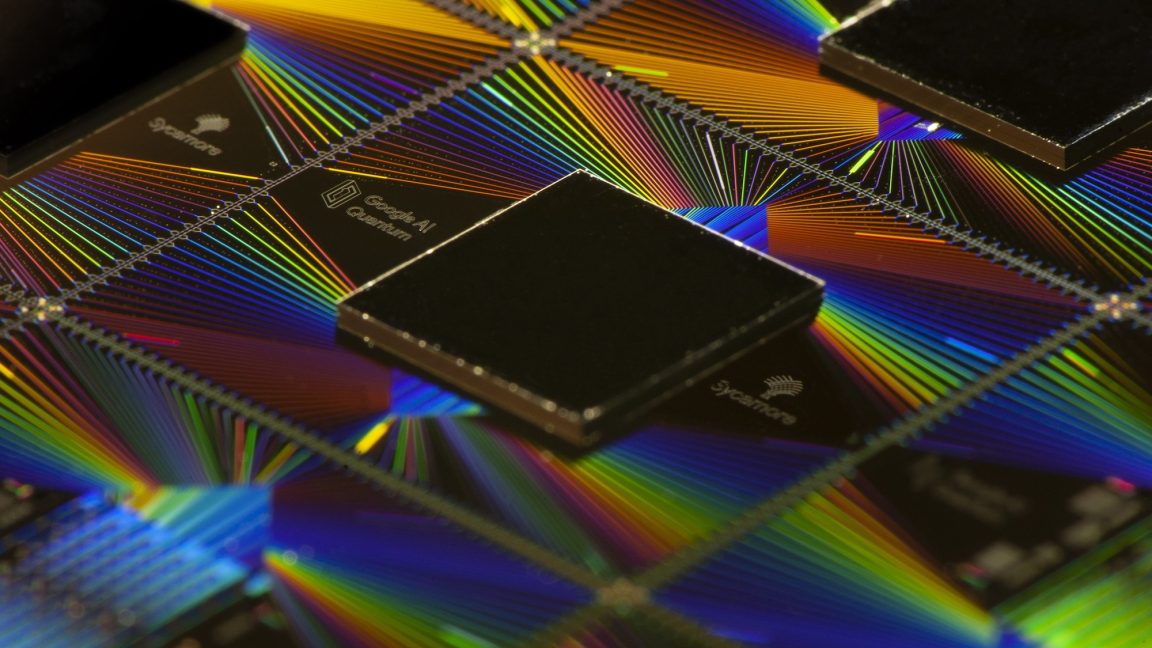
Quantum Processor Recalibration:
Recent advancements in quantum computing demonstrate that error correction can now be maintained through constant processor recalibration. By utilizing reinforcement learning, researchers can process error information in real-time to adjust control algorithms effectively. This development addresses the inherent instability of quantum hardware, which has long hindered the progress of large-scale, fault-tolerant quantum computing systems.
Technical Breakthrough Mechanisms:
The primary challenge in quantum computing has been maintaining the state of qubits against environmental noise. Traditional error correction methods often required significant overhead, which consumed too many resources and limited computational power. Integrating reinforcement learning into the control architecture allows the system to learn from its own mistakes, making continuous, automatic micro-adjustments to the gate operations. This approach essentially creates a self-healing loop that keeps the processor optimized without requiring manual recalibration cycles.
Quantum Implications for India:
While the technology remains in the experimental phase, these improvements are vital for India's National Quantum Mission. As India invests in developing indigenous quantum hardware, reliable error correction techniques will be essential for achieving practical computational advantage. Robust error correction will eventually enable the development of more complex quantum applications in drug discovery, financial modeling, and cryptographic security. The ability to autonomously correct errors represents a massive step toward the viability of commercial-grade quantum processors in the coming decade.
Pulse Intelligence
AI AnalysisContext & Background
- Quantum processors are notoriously sensitive to environmental interference, leading to high error rates.
- Previous error correction methods were computationally expensive and required manual recalibration.
Key Consequences
- Expect faster timelines for the realization of stable, small-scale quantum computing hardware.
- Increased academic and industrial research into reinforcement learning for quantum systems is likely to follow.
Market & Economic Impact
No direct market impact.