
June 24, 2026 at 02:35 AM 2 min readtechdeveloping
Global Workforce Faces AI-Driven Displacement Risks As Major Firms Realign Talent Strategies
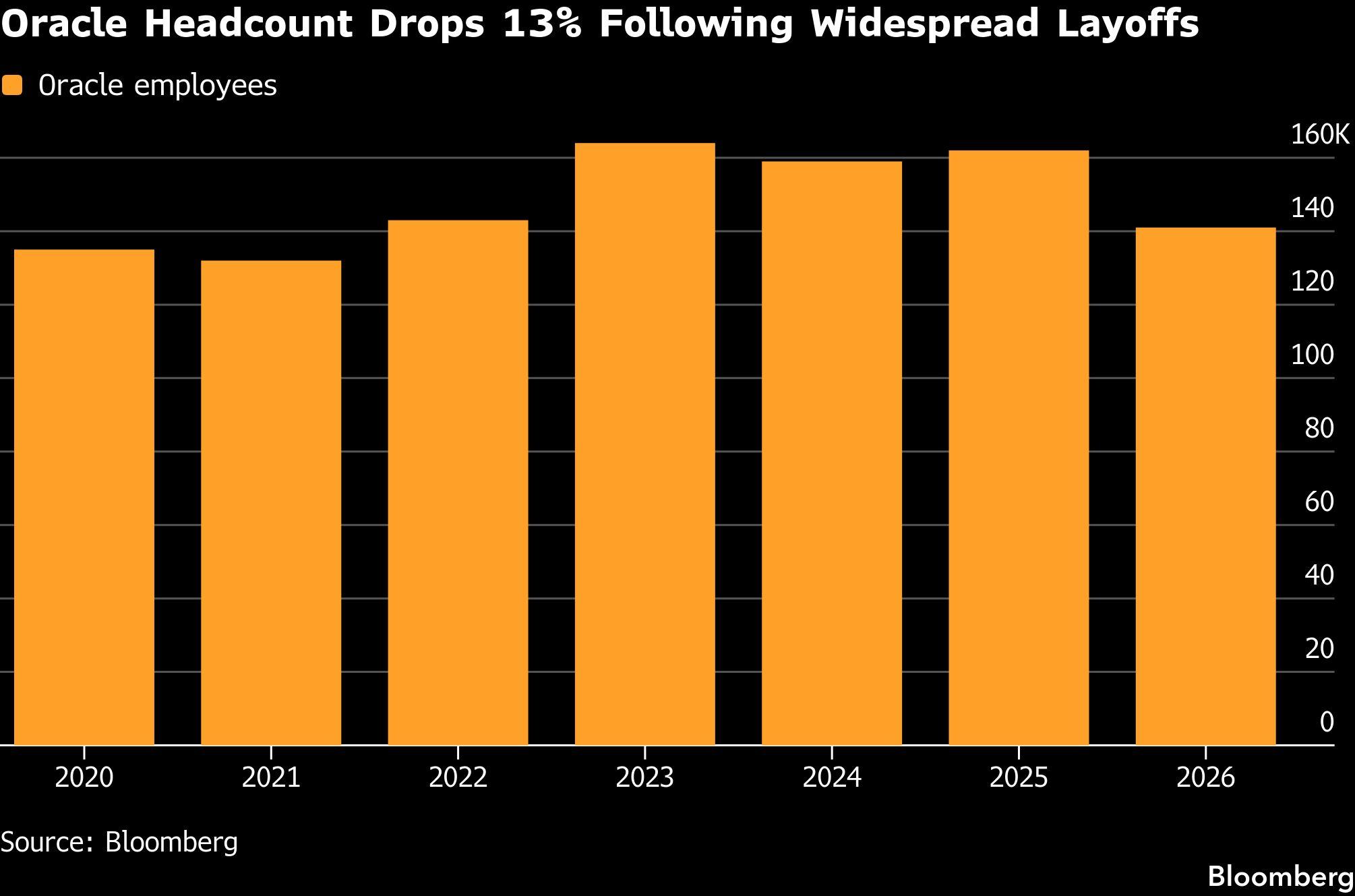
Workforce Shifts and AI Adoption:
Significant global labor shifts are underway as companies increasingly leverage artificial intelligence to automate tasks, contributing to widespread headcount adjustments. Oracle recently reported its global workforce decreased to 141,000 full-time employees, down from 162,000 just a year prior. Concurrently, broader industry surveys indicate that entry-level positions remain particularly vulnerable, with the percentage of companies planning to reduce junior-level roles rising to 43% in the last year, placing professionals aged 22 to 27 at high risk of displacement as routine tasks transition to automated systems.
The Strategic AI Imperative:
Executives argue that AI integration is essential for operational efficiency, with many leaders viewing internal talent and human behavior as vital training data for emerging systems. While firms like Meta have faced internal backlash for tracking employee activity to train AI models, others maintain a more optimistic outlook. Infosys Chairman Nandan Nilekani recently emphasized that AI is intended to amplify human productivity rather than replace organizations, positioning the technology as a critical instrument for capturing future market opportunities.
Future Outlook and Skill Reconfiguration:
The pressure on employers to adapt is escalating as HR leaders estimate that 11-20% of their existing workforces will require significant reskilling or redeployment to remain relevant. Employees are increasingly expressing anxiety over job security, with projections suggesting that fear of displacement could affect 40% of the workforce by 2026. As companies balance AI ambitions with workforce morale, the focus is shifting toward integrated training programs that attempt to align human expertise with new technical capabilities.
Pulse Intelligence
AI AnalysisContext & Background
- Recent industry reports from Mercer indicate that nearly 99% of global executives expect AI to drive significant headcount changes within the next two years.
- Major technology firms have increasingly turned to their own employees as a primary source of high-quality data to train AI models, often leading to internal privacy disputes.
Key Consequences
- Young professionals entering the job market will face increased competition for entry-level roles as companies favor automation over manual junior tasks.
- Corporate AI policies will likely face stricter internal and regulatory scrutiny following recent privacy and data security lapses in employee tracking initiatives.
- Demand for large-scale reskilling initiatives will intensify as organizations move to redeploy talent into roles that require human-AI collaboration.
Market & Economic Impact
Continued layoffs in major tech firms may impact investor sentiment regarding operational efficiency versus workforce sustainability in the IT sector.