
July 1, 2026 at 07:35 AM 2 min readtechbreaking
NASA Partners With Katalyst Space to Save Swift Telescope
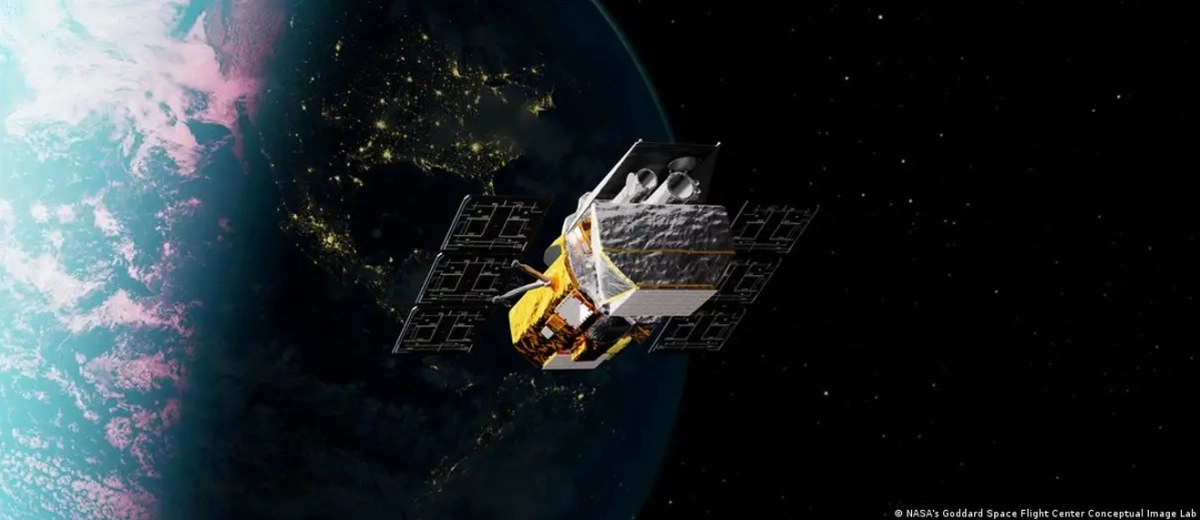
Robotic Rescue Mission for Swift:
NASA is collaborating with the private company Katalyst Space to perform a critical rescue mission for the Neil Gehrels Swift observatory. Launched in 2004 to study gamma-ray bursts, the satellite has lacked propulsion for years and is currently losing altitude due to atmospheric drag. It has descended from an original orbit of 600 kilometers to approximately 400 kilometers. The mission aims to prevent an uncontrolled re-entry of the $500 million facility into Earth's atmosphere later this year.
Technical Execution and Satellite Docking:
The rescue plan involves deploying a robotic service satellite called LINK, which will be launched on a Northrop Grumman Pegasus XL rocket from Kwajalein Atoll. This mission represents a historic milestone as it would be the first instance of a commercial robotic vehicle docking with a government satellite that was not originally designed for in-space servicing. The LINK craft is tasked with autonomously capturing the Swift telescope and gradually boosting it to a higher, stable orbit to extend its operational lifespan for further astronomical observation.
Implications for Space Sustainability:
Beyond the immediate objective of saving the Swift observatory, this mission serves as a key demonstration of rapid-response satellite maintenance and life extension services. Success in this operation would prove that commercial entities can identify and resolve orbital problems in less than a year, providing a blueprint for both civil and national security applications. By preventing the telescope's loss, NASA and its partners hope to secure the continuation of essential transient cosmic studies while advancing the capabilities of the growing space robotics industry.
Pulse Intelligence
AI AnalysisContext & Background
- The Neil Gehrels Swift observatory has operated since 2004 without an onboard propulsion system to maintain its altitude.
- In-orbit satellite servicing has historically been difficult due to the complexity of docking with legacy spacecraft.
Key Consequences
- A successful mission would establish a new commercial standard for satellite life extension and maintenance.
- If successful, the mission will prevent the loss of a major NASA research asset, saving taxpayers the cost of a replacement telescope.
- This project may lead to increased investment in autonomous docking technologies for future satellite constellations.
Market & Economic Impact
No direct market impact.