
July 3, 2026 at 05:00 PM 2 min readtechbreaking
NASA Launches Rescue Mission for Aging Space Telescope
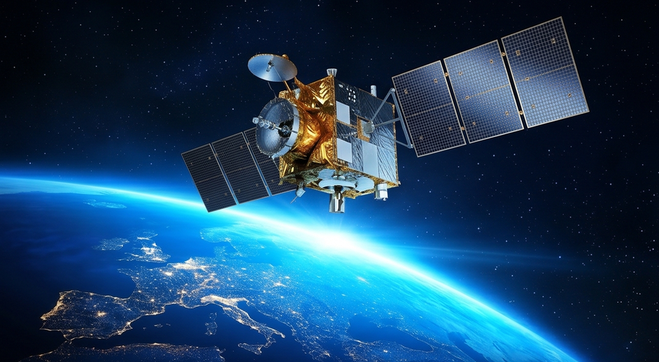
Space Telescope Recovery:
A specialized $30 million rescue mission is currently underway to save the NASA-funded Swift Observatory from re-entering Earth’s atmosphere. A dedicated spacecraft, named Link, successfully launched from the Pacific to rendezvous with the aging telescope, which has been losing altitude rapidly due to increased solar activity. The primary objective of this mission is to boost the telescope's orbit, thereby preventing its destruction by heat during a fiery atmospheric descent. This operation represents a significant effort to preserve valuable scientific assets currently operating in near-Earth orbit.
Mission Urgency:
The Swift Observatory, an aging instrument tasked with observing high-energy events in the universe, began facing critical orbital decay as space weather intensified. As the atmosphere expands due to heightened solar activity, drag on the telescope increased, causing it to fall closer to the planet. NASA engineers determined that without external intervention to adjust its trajectory and altitude, the satellite would inevitably burn up upon entry. The deployment of the Link spacecraft is the culmination of rapid planning designed to intercept the telescope before the situation reached an irreversible stage.
Scientific Impact:
This mission underscores the growing importance of orbital maintenance for critical scientific infrastructure. By successfully extending the lifespan of the Swift Observatory, researchers will continue to receive vital data that would otherwise be lost. The mission also serves as a proof-of-concept for future autonomous docking and maintenance operations in orbit. Experts anticipate that the success of the Link rendezvous will provide a roadmap for managing the sustainability of other important satellites facing similar environmental threats in the coming decade.
Pulse Intelligence
AI AnalysisContext & Background
- The Swift Observatory has been a vital instrument for NASA in detecting high-energy cosmic events for many years.
- Increased solar activity in 2026 has resulted in atmospheric expansion, causing increased drag for low-Earth orbit satellites.
- The mission to save the telescope, named Link, was developed as a rapid response to prevent the loss of the observatory.
Key Consequences
- Successful orbital adjustment will extend the scientific research life of the Swift Observatory.
- The mission will demonstrate the viability of autonomous orbital rendezvous and maintenance technology.
- Data flow from the telescope is expected to stabilize once the Link spacecraft completes the altitude adjustment.
Market & Economic Impact
No direct market impact.