
July 7, 2026 at 08:41 AM 2 min readworldbreaking
LNG Tanker Struck by Projectile Near Strait of Hormuz
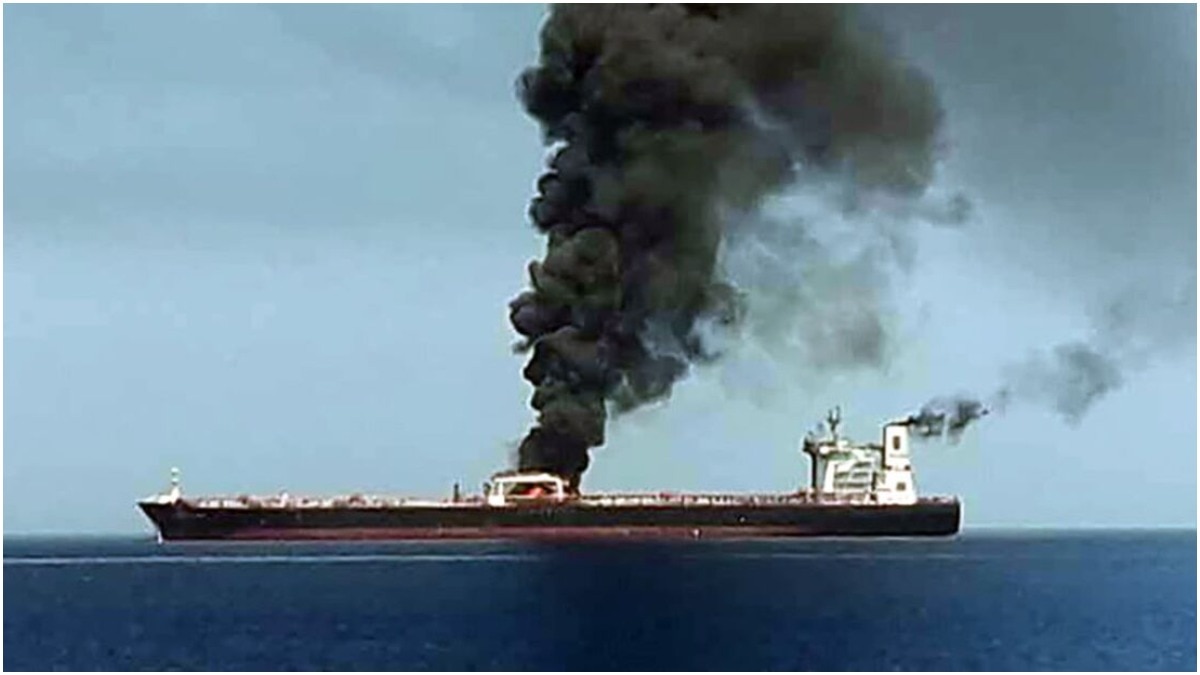
Maritime Security Incident:
A liquefied natural gas (LNG) tanker caught fire off the coast of Oman near the town of Limah after being struck by an unidentified projectile. The United Kingdom Maritime Trade Operations (UKMTO) confirmed the vessel was hit on its port side while transiting the critical waterway leading to the Strait of Hormuz. Iranian state media claimed the tanker ignored maritime warnings, but no group or state has claimed responsibility. Emergency response teams are currently battling the blaze, and the status of the crew remains uncertain.
Escalating Regional Tensions:
This attack occurs during a period of heightened instability in the Gulf following the recent death of Iran's Supreme Leader, Ayatollah Khamenei. As funeral ceremonies continue, military activity in the region has surged, leading to concerns that energy infrastructure is being targeted to exert political pressure. The Strait of Hormuz remains the world's most congested oil transit chokepoint, with about 20% of global petroleum consumption passing through it. Independent tanker operators are already facing high war-risk insurance premiums, with many vessels now disabling AIS transponders to evade detection.
Energy Security Implications:
The incident poses a direct risk to India's energy security, as the country heavily relies on LNG imports from Qatar and the UAE that transit this corridor. Increased shipping insurance costs will likely translate to higher landed costs for fuel, potentially pressuring domestic inflation and the fiscal account. New Delhi is expected to monitor the situation closely, potentially deploying additional naval assets under 'Operation Sankalp' to protect shipping. With Saudi Arabia and the UAE increasingly relying on alternative pipelines, this event underscores the volatility threatening global energy supply chains.
Pulse Intelligence
AI AnalysisContext & Background
- The Strait of Hormuz is the world's most important oil transit chokepoint, with approximately 20% of global oil consumption passing through it.
- Regional tensions have been at an all-time high since the transition of power in Iran began earlier this month.
- US-Israel conflicts in early 2026 previously led to significant trade disruptions and political volatility in the Gulf.
Key Consequences
- Shipping insurance premiums for commercial tankers in the Gulf of Oman are expected to surge by 15-20% immediately.
- India may deploy additional naval assets to the region to provide security cover for Indian-flagged vessels.
- Regional producers may accelerate the utilization of bypass pipelines, such as the East-West Pipeline, to ensure stable exports.
Market & Economic Impact
Heightened risks in the Strait of Hormuz typically lead to spikes in global Brent crude prices and increased fuel import costs for India.