
July 6, 2026 at 03:10 PM 2 min readaianalysis
Industrial Manufacturing Shifts Toward 3D Printing Over Tooling
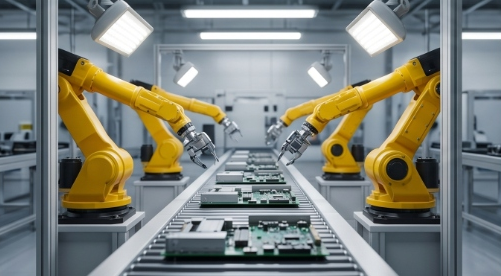
Manufacturing Evolution:
Global manufacturing data suggests a structural shift in how original equipment manufacturers (OEMs) approach production as consumer preferences change and product lifecycles shorten. There is a growing technical preference for industrial 3D printing services over traditional tooling methods. This transition allows firms to remain agile in a volatile market where the speed of design iteration has become a critical competitive advantage.
Technical Comparison:
Traditional tooling often requires significant upfront time and capital investment, making it less ideal for products with shorter shelf lives or those needing frequent updates. Industrial 3D printing, by contrast, eliminates the need for expensive physical molds, enabling rapid customization and smaller batch production runs. This capability is helping manufacturers reduce time-to-market and manage inventory more effectively, as production can occur closer to the time of actual demand.
Economic Impact:
As industries continue to face pressure to optimize supply chains, the adoption of additive manufacturing is accelerating. For OEMs, this represents a fundamental change in financial modeling, shifting costs from high initial capital expenditures associated with tooling to lower-cost, scalable print-on-demand models. This ongoing shift reflects a broader trend toward digital manufacturing processes that prioritize flexibility, efficiency, and material waste reduction across the global industrial sector.
Pulse Intelligence
AI AnalysisContext & Background
- Global manufacturing trends have favored 'just-in-time' production models to minimize storage and overhead costs.
- Advancements in 3D printing materials have made industrial-grade additive manufacturing a viable alternative to traditional mass-production molds.
Key Consequences
- Traditional tool-and-die manufacturers may face declining revenue if they do not adopt or integrate additive manufacturing technologies.
- OEMs will likely achieve shorter development cycles, allowing for more frequent product refreshes and feature updates.
Market & Economic Impact
Industrial automation and 3D printing software companies are expected to capture a larger share of the manufacturing investment budget.