
July 12, 2026 at 10:19 AM 2 min readtech
India's Semiconductor Manufacturing Ecosystem Expands With Five Plants Operational By Year-End
[The Event]:
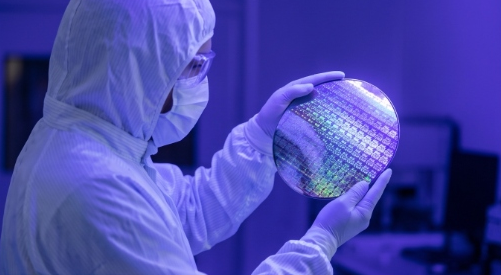
India's ambition to establish a robust semiconductor manufacturing ecosystem is rapidly materializing, with five plants expected to be operational by the end of 2026. Union Minister Ashwini Vaishnaw confirmed that out of 12 approved projects, three facilities are already in commercial production. The most recent addition, the CG Semi Outsourced Semiconductor Assembly and Test (OSAT) plant in Sanand, Gujarat, commenced commercial production on July 4, 2026, marking a significant milestone for the domestic industry.
[The Why]:
The Sanand facility is designed to produce 5 billion chips annually, with an initial target of 200 million chips per year. These chips are intended to serve domestic industries, including automobiles, scooters, and industrial equipment, while also catering to export markets in Japan, the United States, and Europe. This strategic focus on both domestic consumption and international exports is central to India's goal of becoming a global semiconductor hub, reducing reliance on foreign supply chains for critical electronic components.
[What Next]:
Construction is also advancing at the Tata wafer fabrication facility in Dholera, Gujarat, developed in partnership with PSMC. This facility is expected to produce its first silicon in 2026-2027, focusing on 28nm nodes for automotive ICs, power management, and IoT devices. As these facilities come online, India is poised to significantly enhance its manufacturing capabilities, creating a more resilient supply chain for the electronics and automotive sectors throughout the coming years.
Pulse Intelligence
AI AnalysisContext & Background
- The government has launched several initiatives to attract semiconductor manufacturing to India.
- Global supply chain disruptions have highlighted the need for domestic semiconductor production.
- Gujarat has emerged as a key state for semiconductor manufacturing investments.
Key Consequences
- Operational plants will reduce India's dependence on imported chips for the automotive sector.
- Increased domestic production will likely attract further investment in the electronics manufacturing ecosystem.
- Export capabilities will position India as a key player in the global semiconductor supply chain.
Market & Economic Impact
Not applicable.