
June 8, 2026 at 10:30 AM 2 min readindiabreaking
Hardeep Singh Puri: India Holds Strategic Oil Reserves Amid Gulf Tensions
India's Energy Resilience:
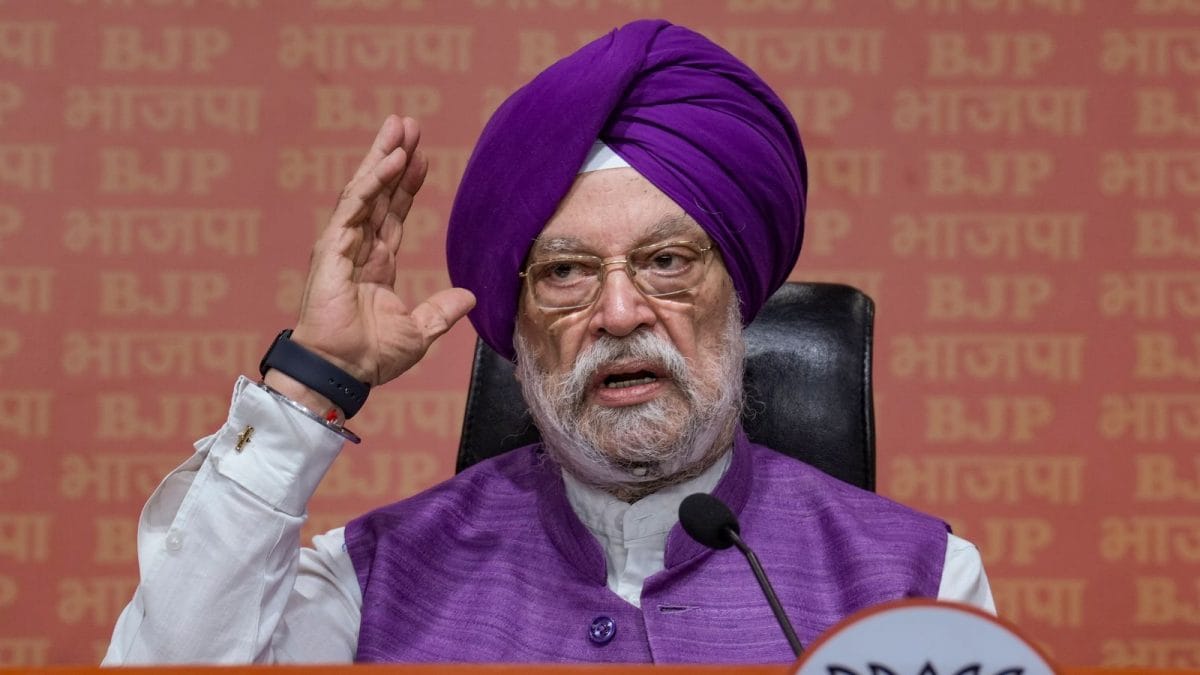
Union Minister Hardeep Singh Puri has confirmed that India remains well-prepared to handle potential energy supply disruptions arising from tensions in the Gulf region. Addressing concerns regarding the Strait of Hormuz, the Minister stated that India currently maintains a stockpile of crude oil sufficient for 76 to 80 days of national consumption, providing a significant buffer against potential maritime logistical challenges.
Strategic Risk Assessment:
The government's assessment follows international concerns over the potential closure of the Strait of Hormuz, a critical global shipping choke point for oil transit. While acknowledging that a wider Gulf crisis would be a matter of concern for the global economy, the Minister indicated that India has established contingency plans to manage energy flow for a duration of 30 to 60 days even in a worst-case scenario, underscoring the effectiveness of current strategic petroleum reserve management.
Future Energy Strategy:
Beyond immediate supply security, the administration is prioritizing a structural transition toward sustainable energy to reduce dependence on volatile global fossil fuel markets. Minister Puri emphasized that green hydrogen represents the fuel of the future, marking a key pillar of India's long-term energy policy designed to insulate the economy from external geopolitical shocks.
Pulse Intelligence
AI AnalysisContext & Background
- The Strait of Hormuz serves as one of the world's most critical maritime chokepoints, through which a significant portion of global crude oil passes daily.
- India has steadily expanded its strategic petroleum reserves (SPR) over the past decade to mitigate risks associated with reliance on imported energy.
Key Consequences
- Increased government investment in renewable energy infrastructure and green hydrogen technology is expected to accelerate.
- Oil marketing companies may recalibrate procurement strategies to further diversify import sources outside of the immediate Gulf region.
- Domestic energy policy will likely maintain a heavy focus on accelerating the transition to alternative fuels to ensure long-term energy security.
Market & Economic Impact
No direct market impact, though sustained energy security rhetoric serves to stabilize domestic energy-related equity valuations.