
July 14, 2026 at 10:17 AM 2 min readaianalysis
AI Industry Leaders Clash Over Safety Branding and Data Privacy Concerns
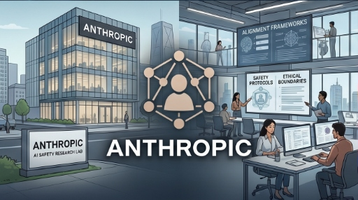
Rivalry Over AI Safety:
OpenAI CEO Sam Altman recently criticized a safety-focused advertisement by rival Anthropic, labeling it as satire. This public exchange marks a sharp divergence in views regarding how AI labs should communicate safety risks to the general public. While Anthropic emphasizes a safety-first branding strategy, critics perceive OpenAI as operating under different priorities, often favoring rapid deployment. This friction reflects deep-seated tensions in how companies position their ethical and security standards to consumers and investors.
The Reverse Information Paradox:
Compounding these industry tensions, Microsoft CEO Satya Nadella has warned of the 'Reverse Information Paradox.' Nadella argues that businesses are effectively paying twice for intelligence: first as capital to AI service providers, and second by inadvertently training these models on their own proprietary intellectual property. This risks turning unique internal data into general knowledge available to competitors. As a result, the industry is seeing an urgent shift toward private, secure, enterprise-only AI silos to protect sensitive corporate assets.
Legal and Strategic Implications:
Meanwhile, OpenAI faces institutional instability, including a trade secrets lawsuit from Apple, while Elon Musk continues to openly challenge Altman's leadership and business strategy. For the Indian technology and healthcare sectors, these developments highlight the necessity for robust data governance. Firms are increasingly prioritizing on-premise AI deployments to automate tasks without compromising privacy. As legal frameworks for AI training data tighten globally, companies must balance the race for productivity with the critical need for intellectual property integrity and secure infrastructure.
Pulse Intelligence
AI AnalysisContext & Background
- OpenAI and Anthropic are currently the primary competitors in developing frontier AI models, each with distinct safety-first or product-focused branding.
- Microsoft has integrated OpenAI models into its Azure and Office ecosystems, positioning itself as a central enterprise AI provider.
- Global regulatory scrutiny is mounting regarding the legality of data scraping and the protection of internal corporate data from being ingested by foundational models.
Key Consequences
- Enterprises will increasingly shift IT spending toward private cloud and local, on-premise AI infrastructure to isolate proprietary data.
- Legal outcomes from ongoing trade secret lawsuits may force AI labs to revise their research protocols and hardware development roadmaps.
- The Indian IT services sector will likely experience increased demand for security consulting and AI-proofing to safeguard sensitive enterprise data.
Market & Economic Impact
Legal disputes and security concerns are leading to a shift in enterprise IT spending toward private cloud and local AI infrastructure.