
July 6, 2026 at 02:08 PM 2 min readindiadeveloping
Allahabad HC Seeks Official Government Stance on Taj Mahal Survey Petition
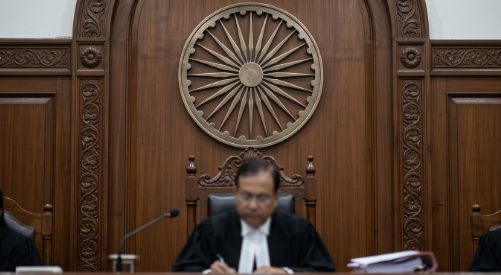
Judicial Directive Issued:
The Allahabad High Court has formally ordered the Union Government and the Archaeological Survey of India (ASI) to file a counter-affidavit regarding a legal petition for a court-monitored survey of the Taj Mahal. This legal plea argues that several rooms in the UNESCO World Heritage site have remained sealed from public access for decades, claiming they may hide undisclosed historical evidence or Hindu religious symbols. Petitioners assert the monument was originally a Shiva temple known as 'Tejo Mahalaya,' a theory that has been repeatedly contested by heritage experts and government agencies.
Historical Dispute Background:
The petition highlights a long-standing debate concerning the provenance of the 17th-century Mughal mausoleum. While proponents argue that an official ASI investigation is necessary to reveal what lies behind sealed chambers, historians and official state bodies maintain the monument's identity as a landmark built by Emperor Shah Jahan. The litigation reflects a broader trend of legal challenges targeting historical Mughal-era structures across India, raising complex questions about transparency, national heritage status, and the interpretation of architectural history.
Legal and Social Implications:
By demanding a comprehensive status report, the court aims to clarify the structural history of the mausoleum and move the matter into the formal legal record. This process follows similar petitions concerning sites like the Gyanvapi mosque and Shahi Idgah, which have sparked intense political and religious discourse. The upcoming official filing from the ASI will be critical, as it will establish the government’s formal position and determine whether a judicial inquiry into the monument's historical origin will proceed or be dismissed, as has been the case with previous attempts.
Pulse Intelligence
AI AnalysisContext & Background
- The Taj Mahal, a 17th-century mausoleum in Agra, is managed by the Archaeological Survey of India, which has historically rejected claims of the site being a temple.
- The 'Tejo Mahalaya' theory, which alleges the monument is an ancient Hindu temple, has been the subject of multiple legal petitions that were previously dismissed for lack of evidence.
- Legal challenges in India are currently navigating the complexities of the Places of Worship Act of 1991, which protects the religious character of sites as they existed on August 15, 1947.
Key Consequences
- The Archaeological Survey of India and the Union Government must now prepare and submit a formal counter-affidavit, documenting their official stance on the monument's history.
- The court's decision on whether to grant a survey could create a major legal precedent for how heritage sites and historical claims are treated nationwide.
- The ongoing litigation is expected to continue fueling public and political discourse regarding the management and religious history of India's protected national monuments.
Market & Economic Impact
No direct market impact.