
July 6, 2026 at 12:34 PM 2 min readindiadeveloping
Allahabad HC Requests Centre Response Over Taj Mahal Survey Plea
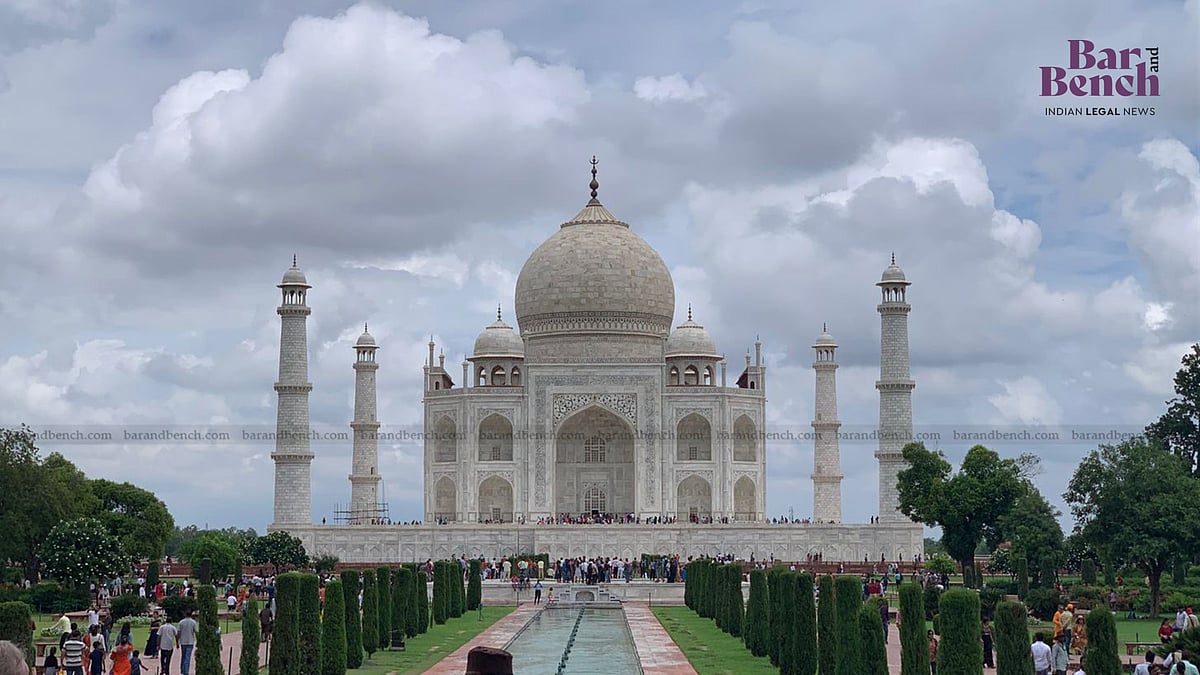
Court-Supervised Survey Request:
The Allahabad High Court has formally directed the Union Government and the Archaeological Survey of India (ASI) to file a counter-affidavit regarding a petition seeking a court-monitored survey of the Taj Mahal. The plea, which asserts that the monument was originally a Shiva temple known as 'Tejo Mahalaya', has reignited long-standing debates concerning the historical provenance and maintenance of the UNESCO World Heritage site.
Historical Context and Legal Claims:
The petition relies on various fringe theories that have circulated for decades, suggesting that the Mughal-era mausoleum was built over an ancient Hindu temple. Proponents of this claim argue that an ASI investigation is necessary to uncover potential underlying structures or archaeological evidence. However, such claims have faced persistent opposition from historians, heritage experts, and government agencies, who maintain that the monument is firmly established as a 17th-century construction built by Emperor Shah Jahan.
Judicial and Political Significance:
The court's decision to seek a formal response ensures the state and federal authorities provide an official stance on the petition, effectively moving the matter into the formal legal record. While the court has previously rejected similar demands for surveys, this development reflects the ongoing pressure on heritage management and judicial processes in India regarding historical monuments. The case remains a focal point for broader discussions about the intersection of religion, history, and the state-protected status of national landmarks.
Pulse Intelligence
AI AnalysisContext & Background
- The 'Tejo Mahalaya' theory, claiming the Taj Mahal is an ancient Hindu temple, has been a subject of various legal petitions in local courts for years.
- The Allahabad High Court and the Supreme Court have previously dismissed similar pleas due to a lack of concrete historical or archaeological evidence.
Key Consequences
- The Union Government and the ASI must now present a formal argument in court, clarifying the government's position on the monument's historical origin.
- The litigation will likely sustain media and public attention on the site's management and the protection of heritage monuments in India.
Market & Economic Impact
No direct market impact.